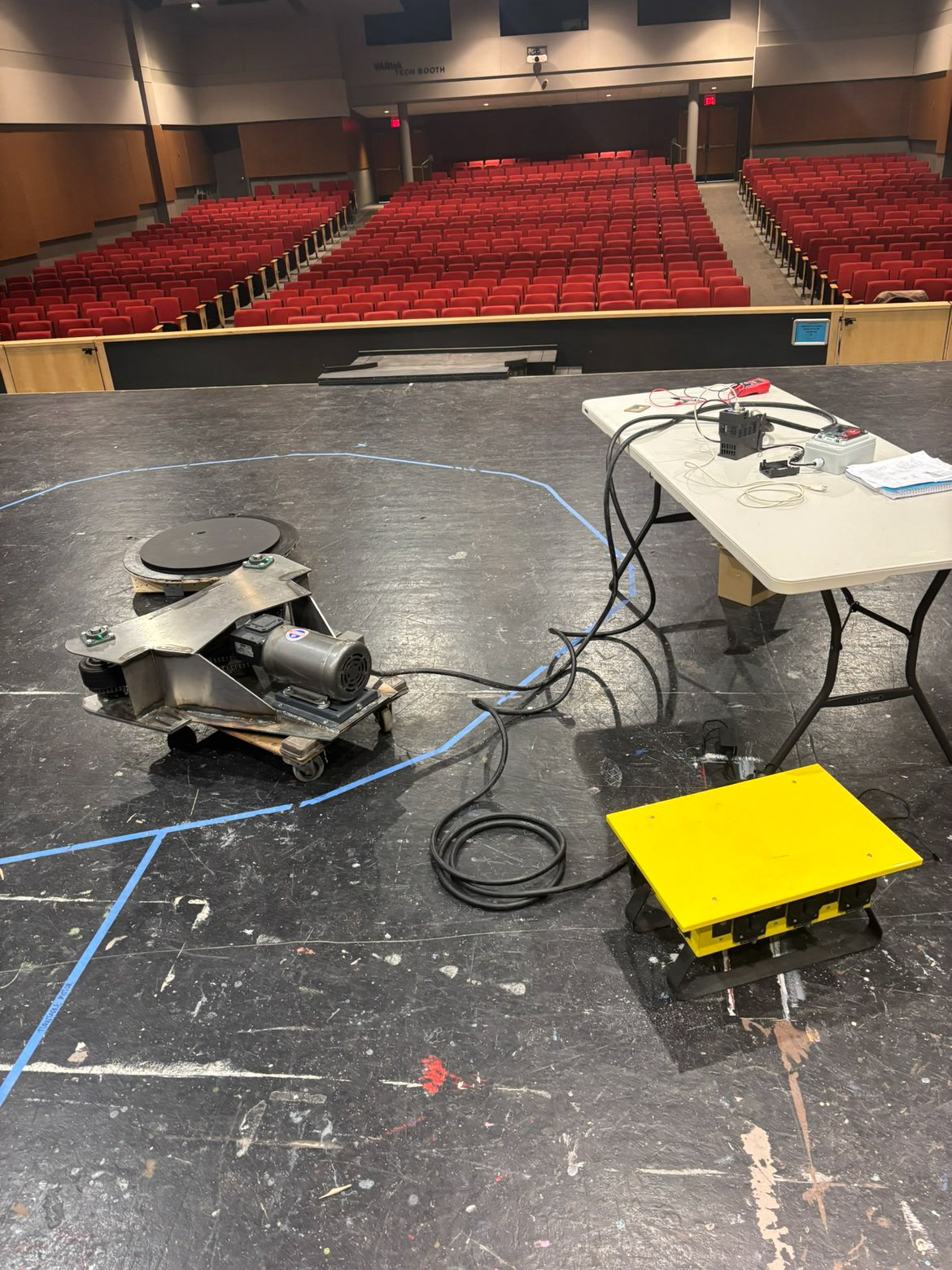
Role: Designed and built the complete turntable system, including mechanical drive, electrical control, safety integration, and system commissioning. Also contributed to scenic construction, lighting integration, and technical execution of the production.
This project combined mechanical design, electrical integration, and hands-on fabrication to produce a reliable system used in a live production environment.
12 ft rotating platform with stationary center
Traction-based drive system
Chain-driven motor + gear reducer
VFD-controlled speed and direction
Dual-channel STO safety system with distributed E-stops
Remote operator control (no line-of-sight)
Multi-camera live monitoring system
Underside
Underside
Full Stage Integration
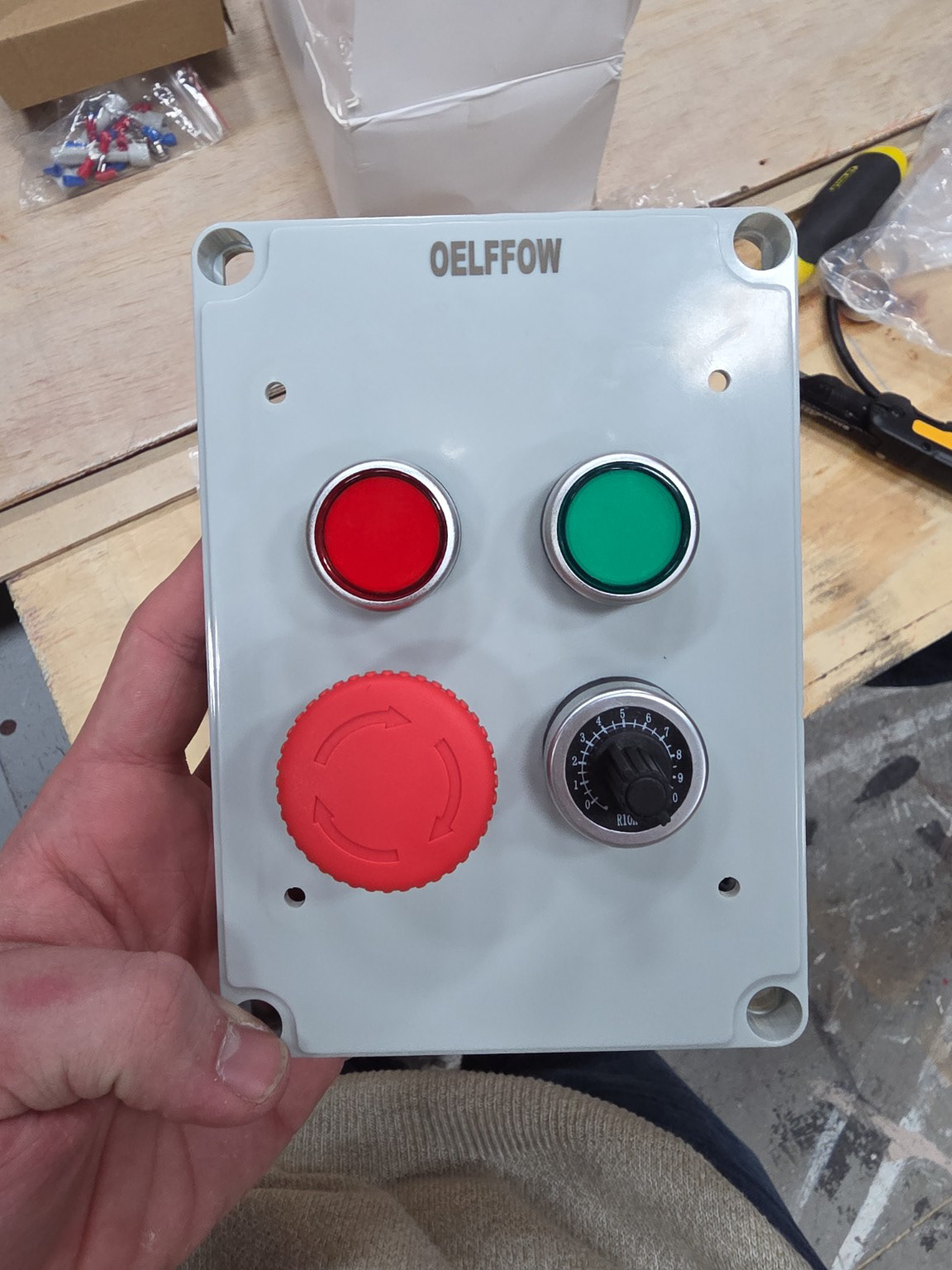
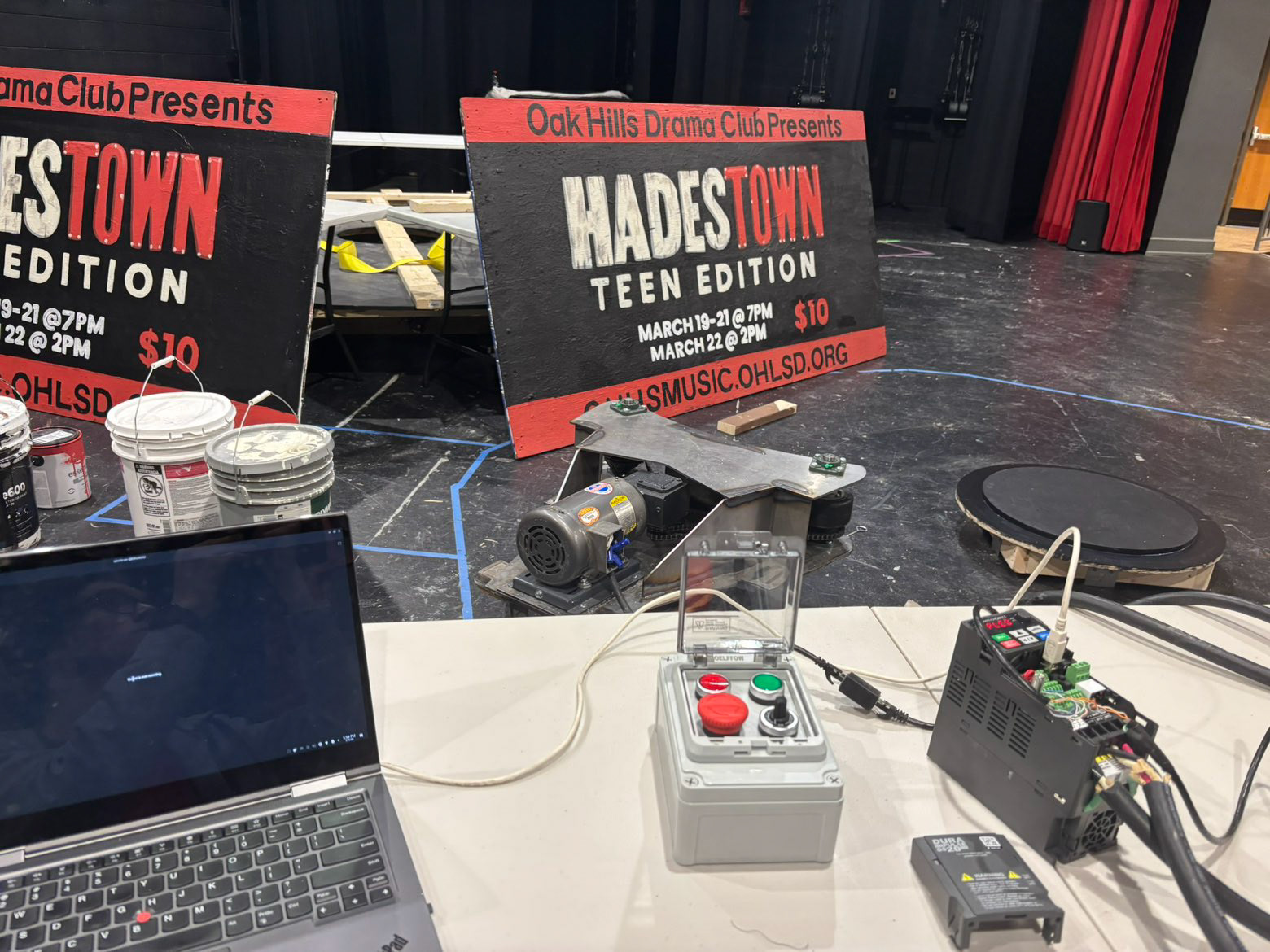
Controller
Controller
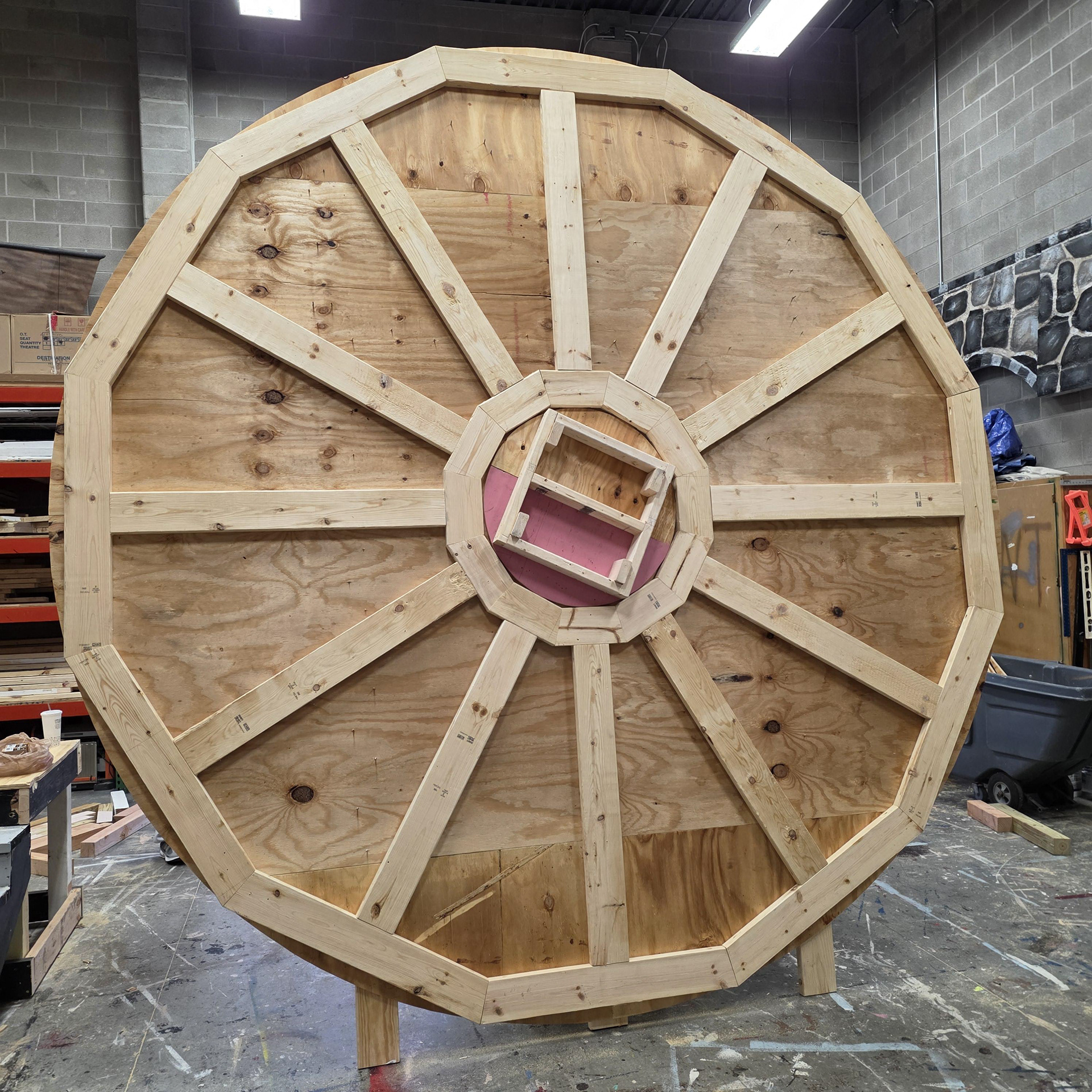
The platform was constructed as a large circular structure designed to balance rigidity, weight, and a low overall profile.
The build process focused on creating a stable foundation capable of supporting dynamic loads while maintaining consistent contact with the drive system. Structural integrity and alignment were critical to ensuring smooth rotation.
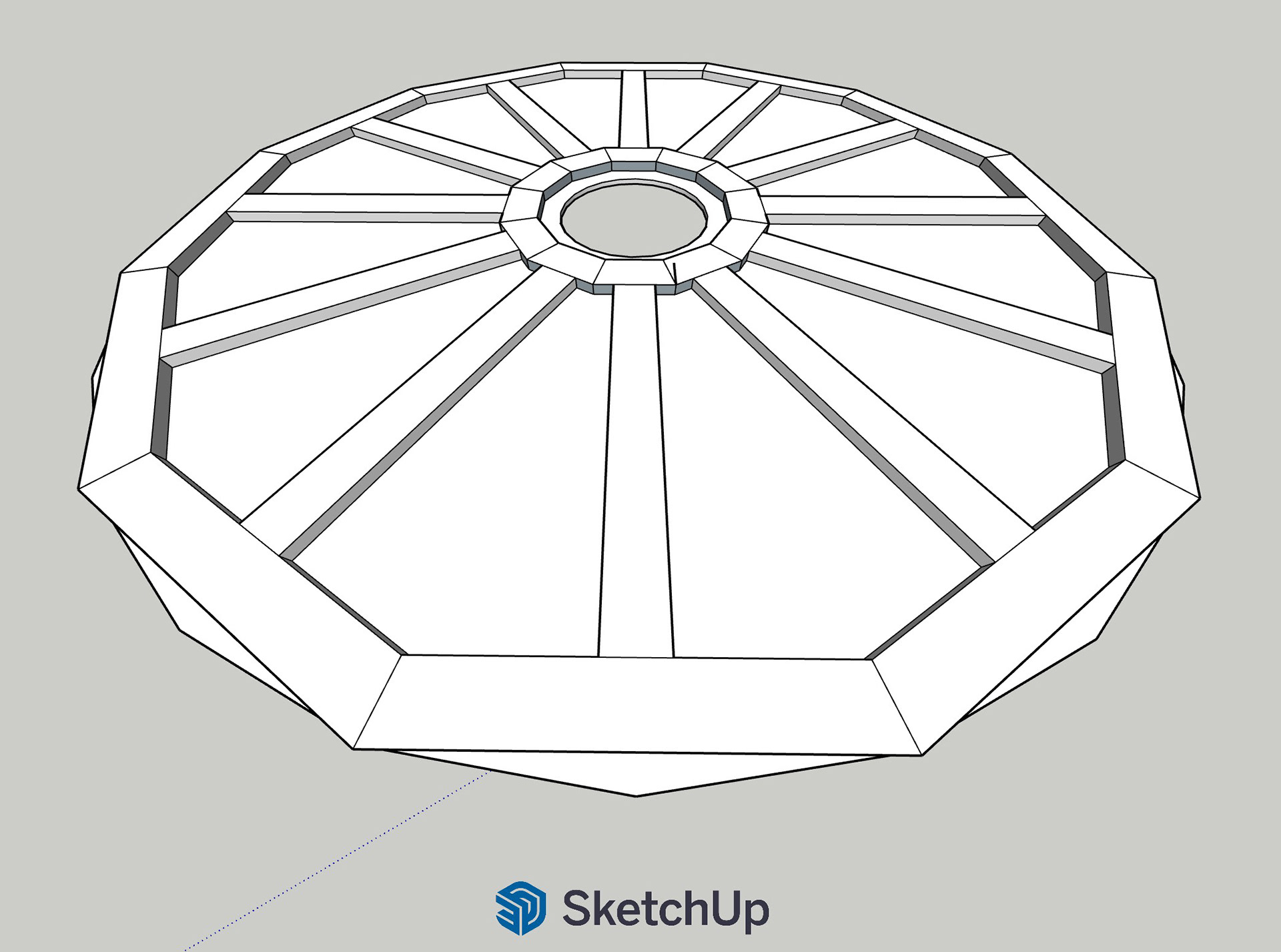
Early CAD Design on SketchUp
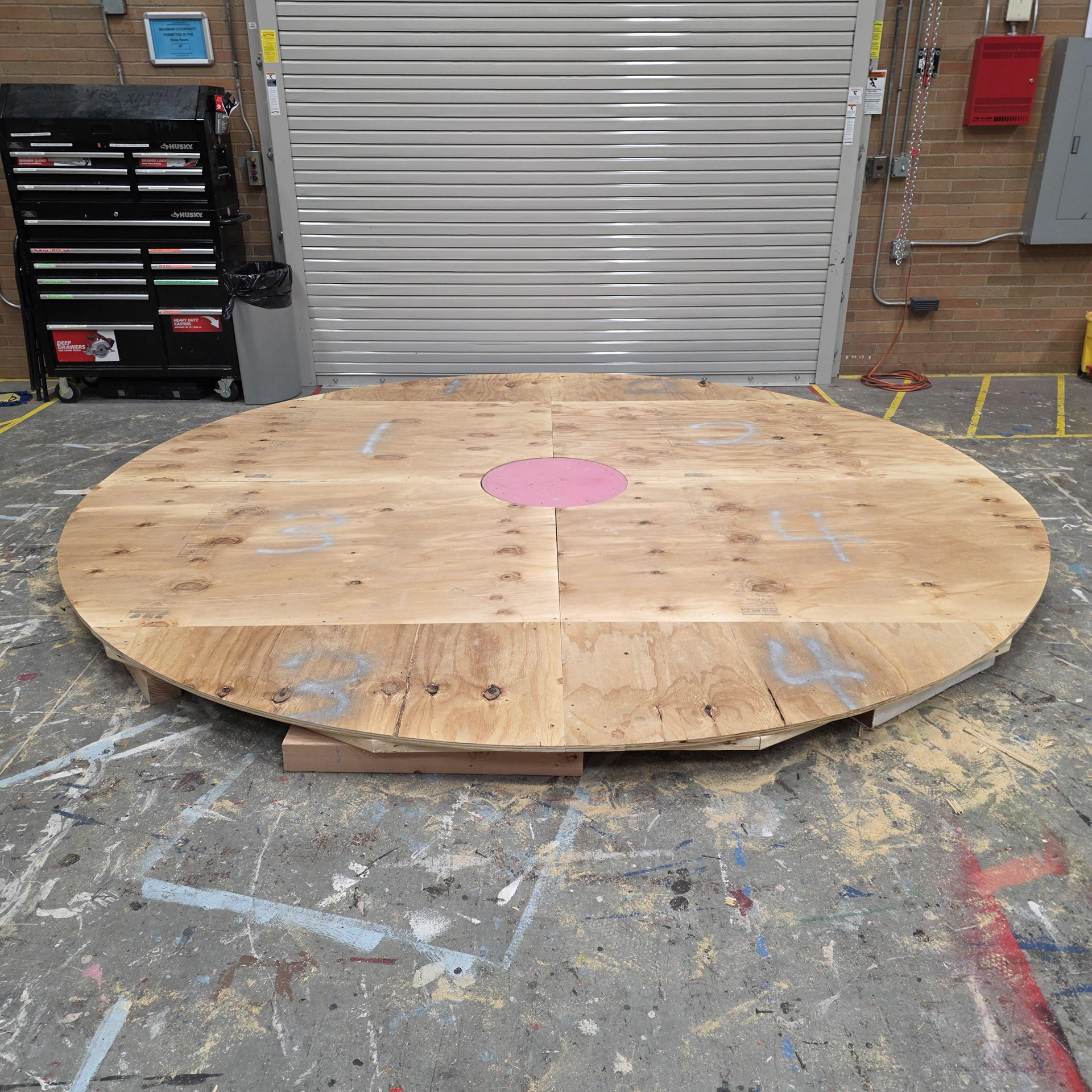
Fully Covered Structure
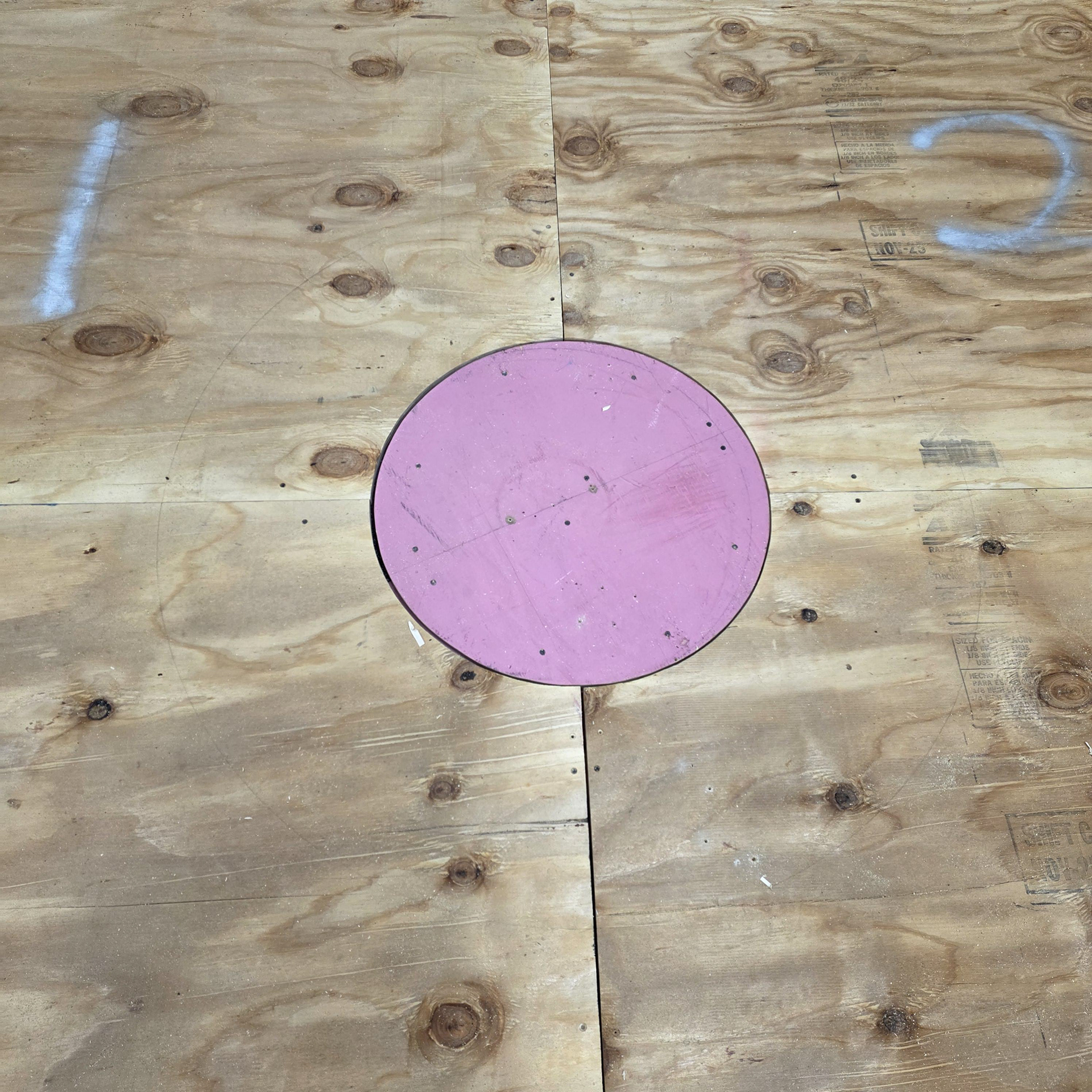
Center Platform
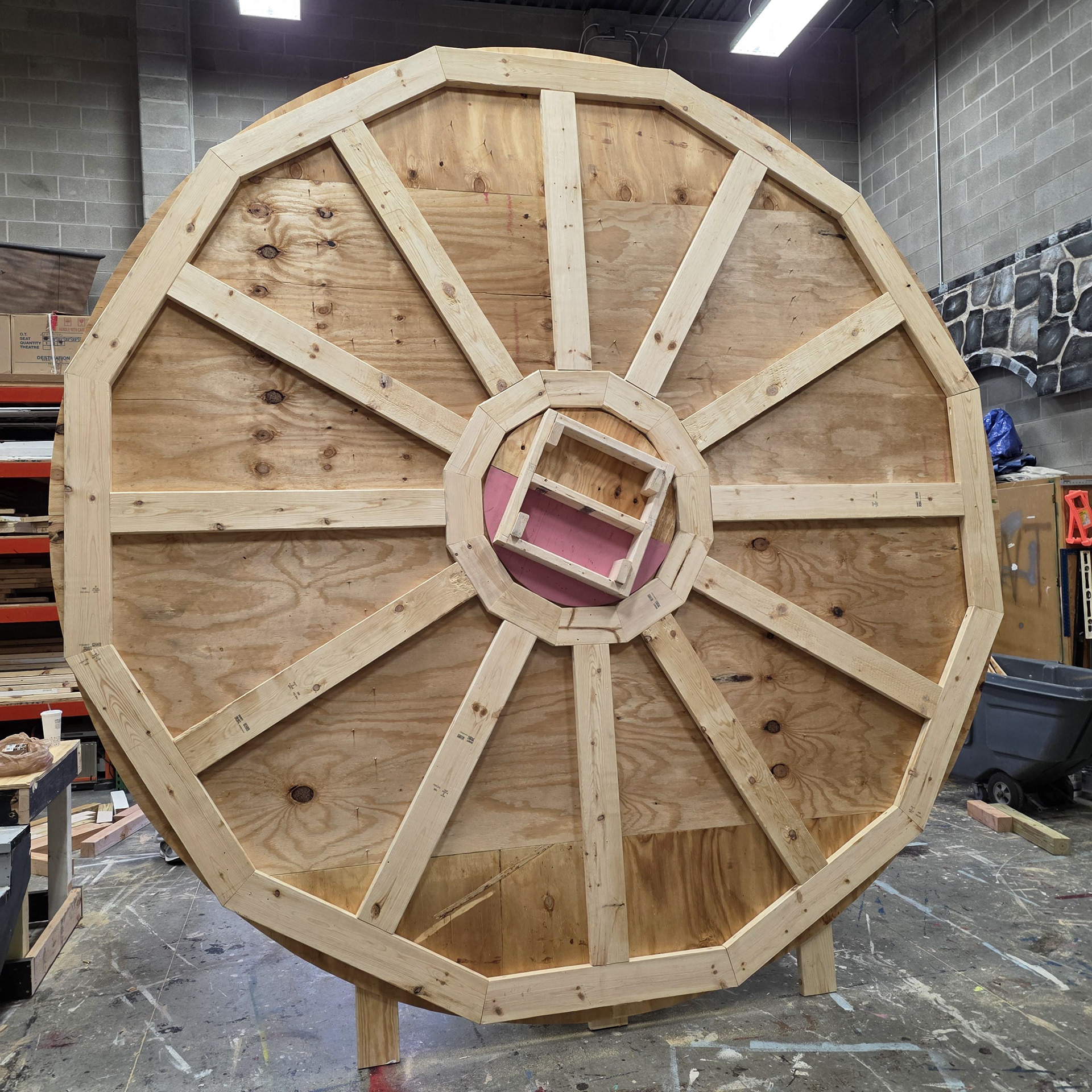
Center Platform
Framed Underside
Framed Underside
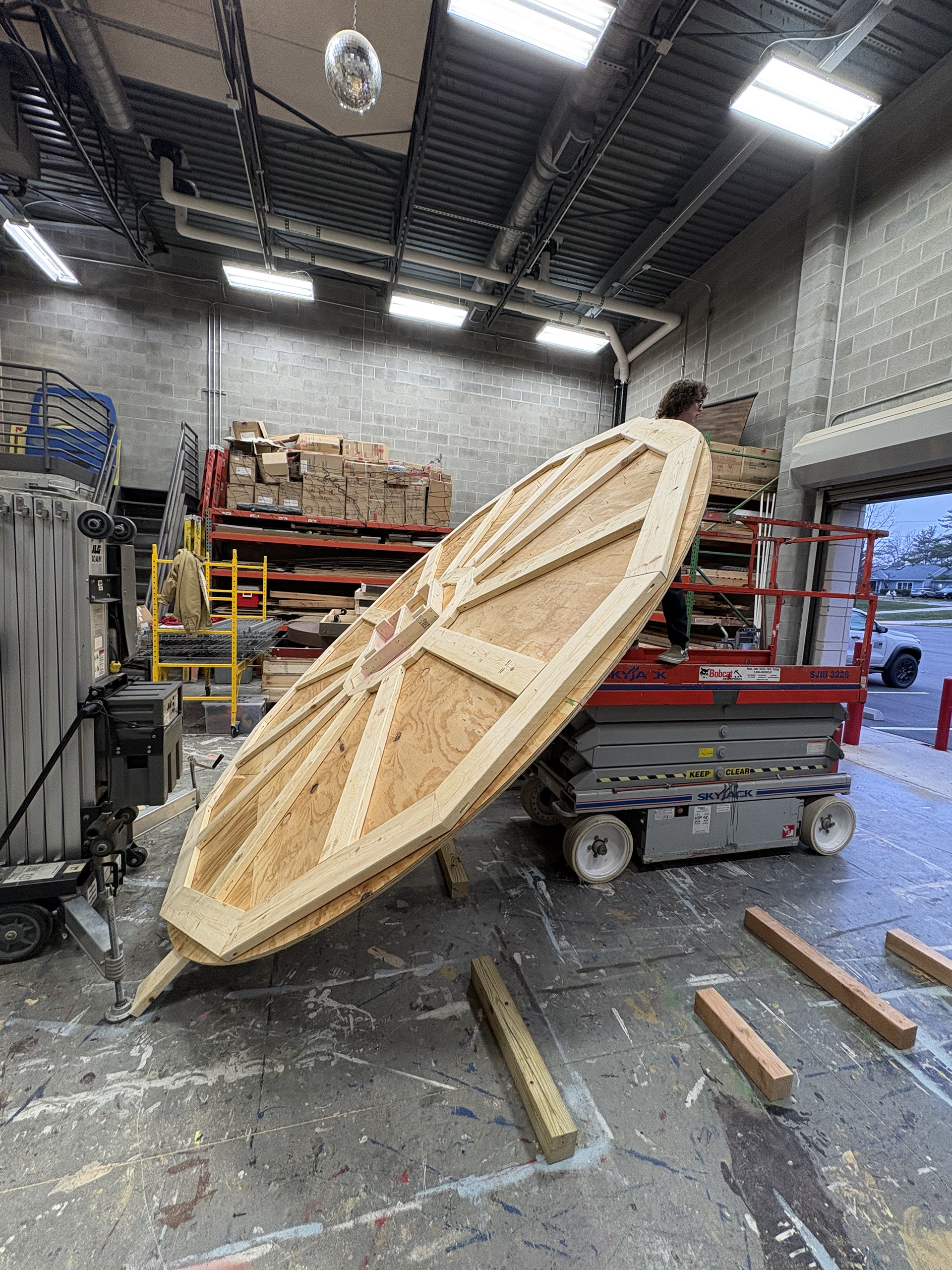
Flipping Structure for Wheel Installation
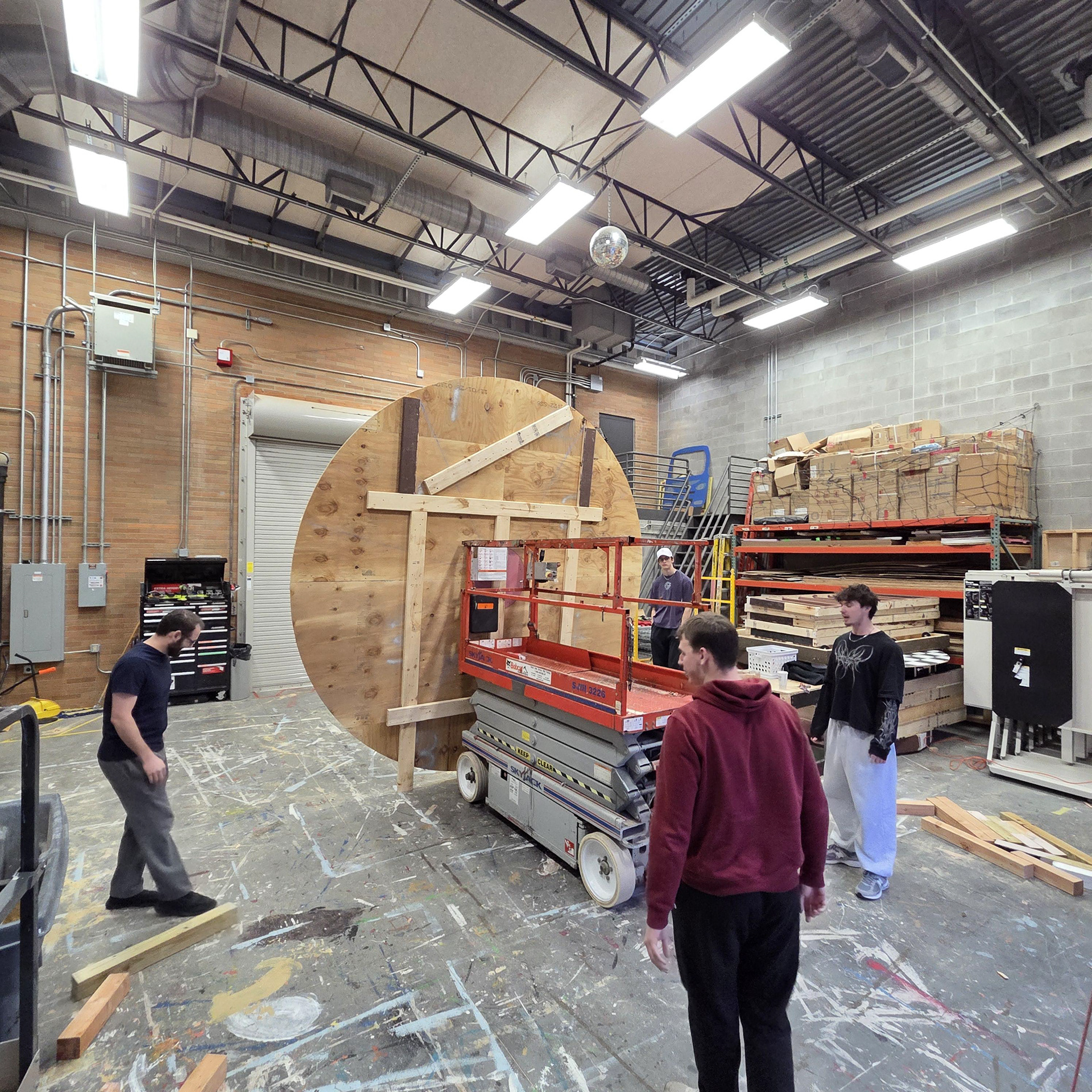
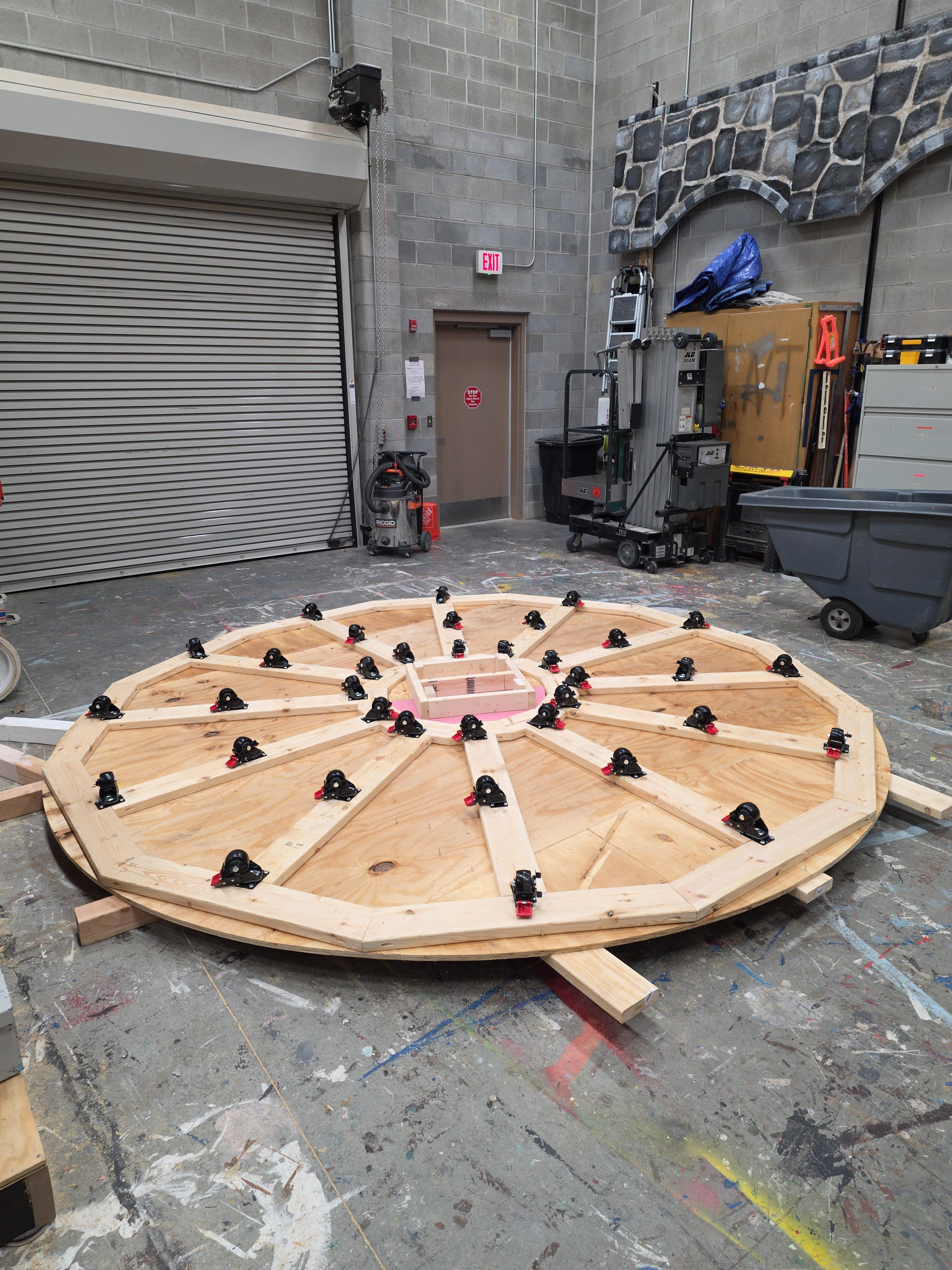
Caster Wheels Installed
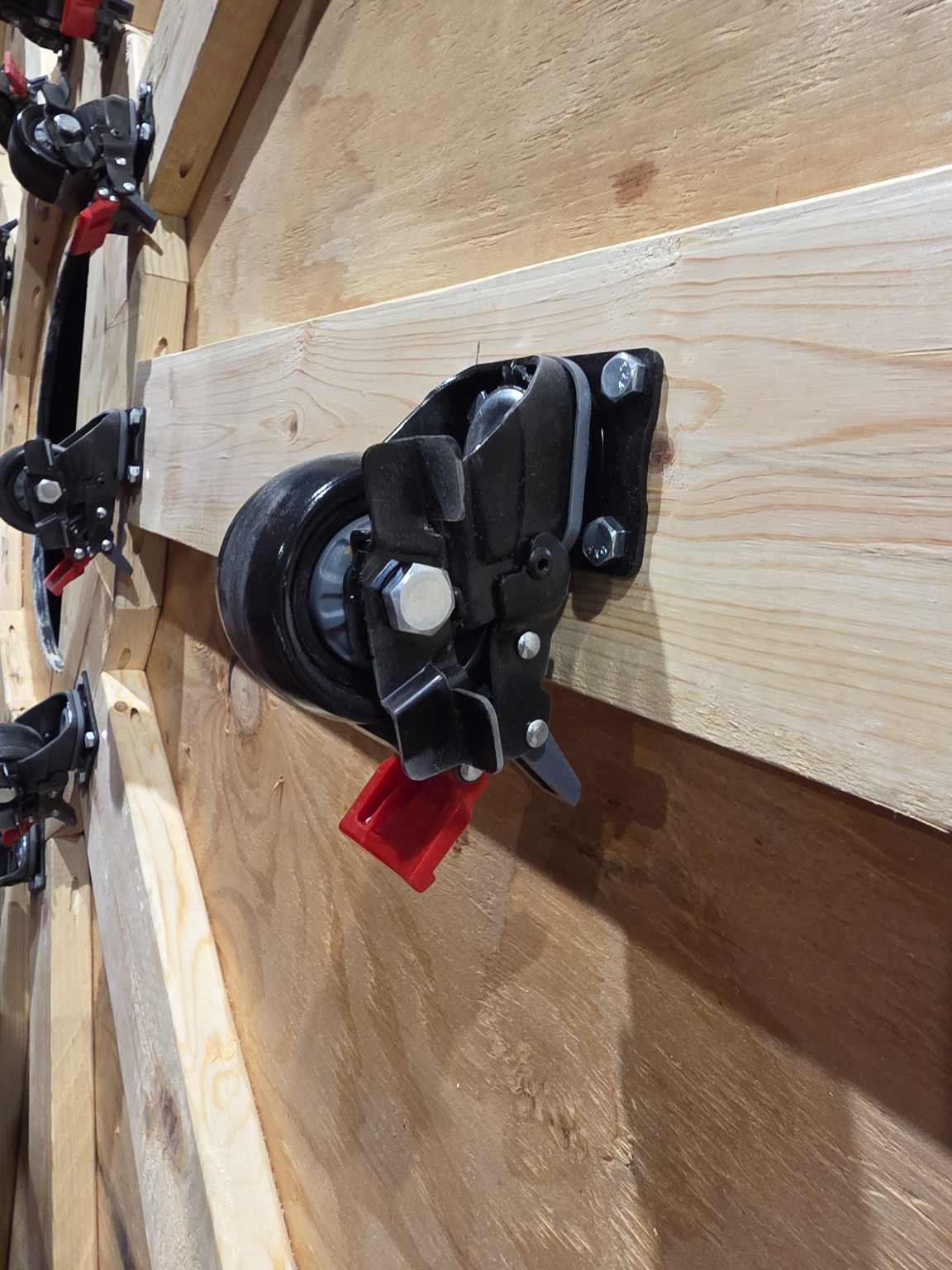
Close-up of Casters
Close-up of Casters
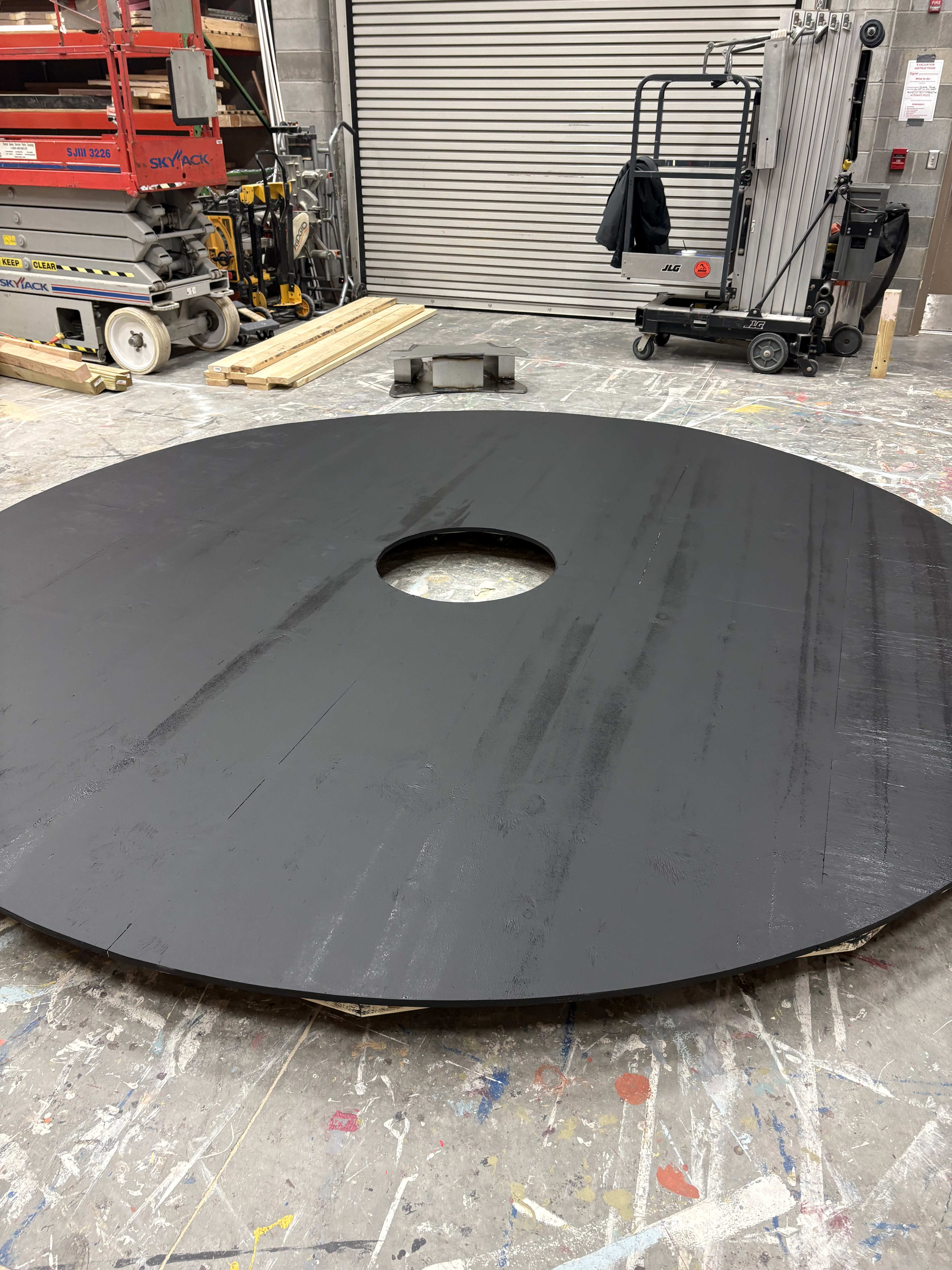
Structure Surface Prepped and Painted
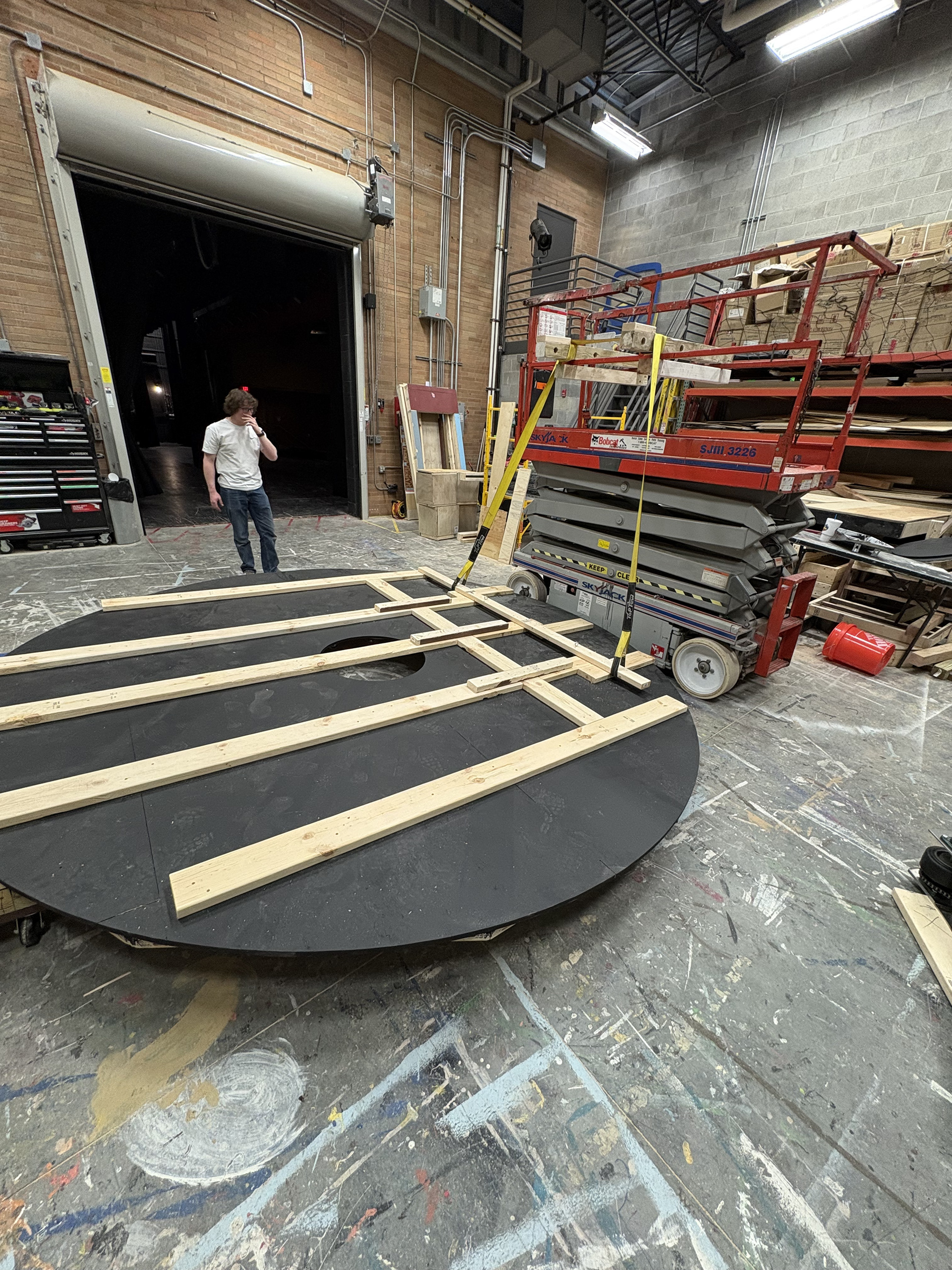
Structure Framed and Ready for Load-in
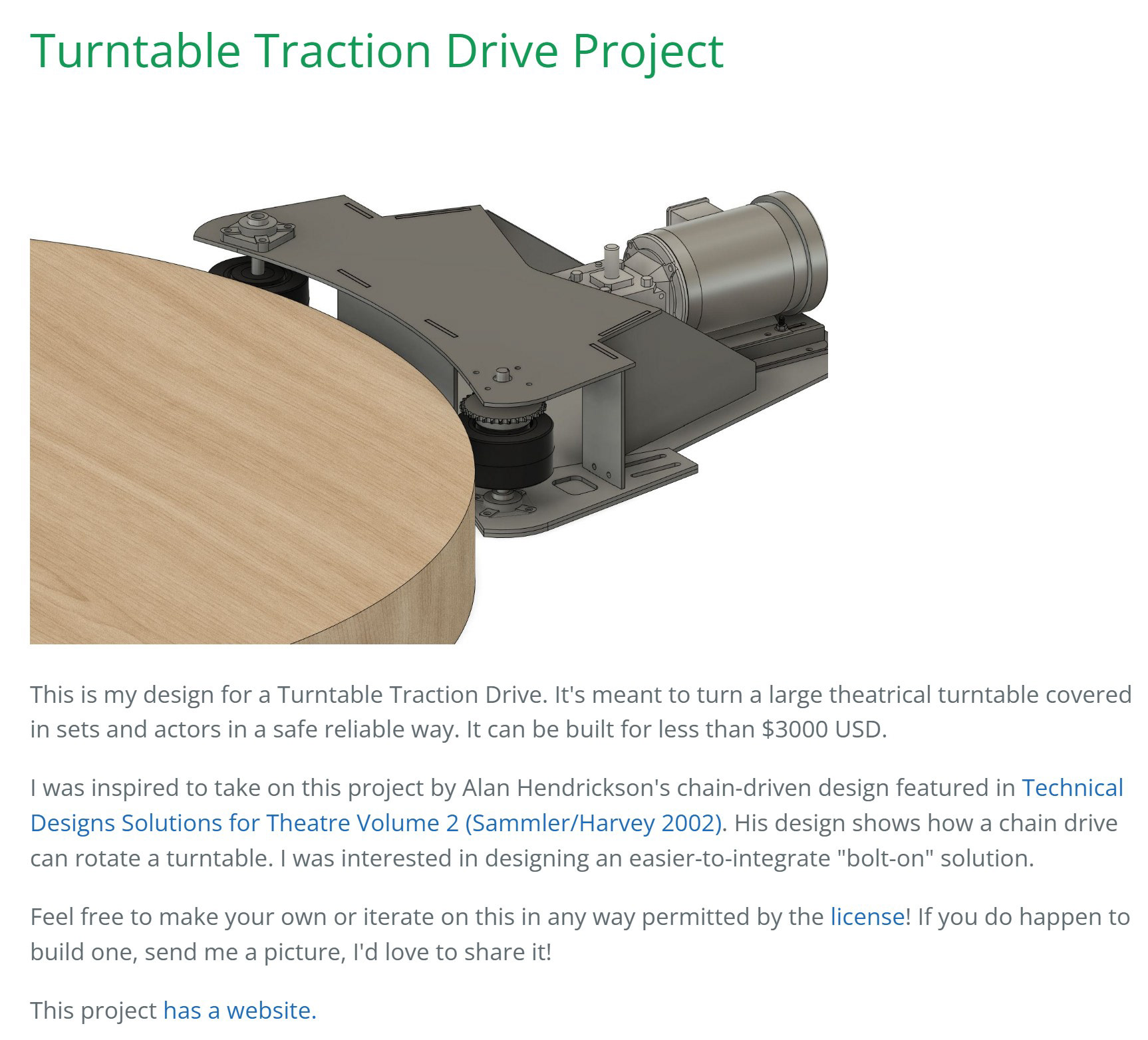
The turntable is driven by a traction-based system that transfers motor output into rotational movement across the outer edge of the platform.
This approach allowed for continuous contact and smooth motion without relying on a central axle, making it well-suited for the scale and constraints of the build. The system was designed to maintain consistent traction under load while minimizing slip and vibration.

The drive system reference project can be found on GitHub
Traction Drive System Reference Project on GitHub
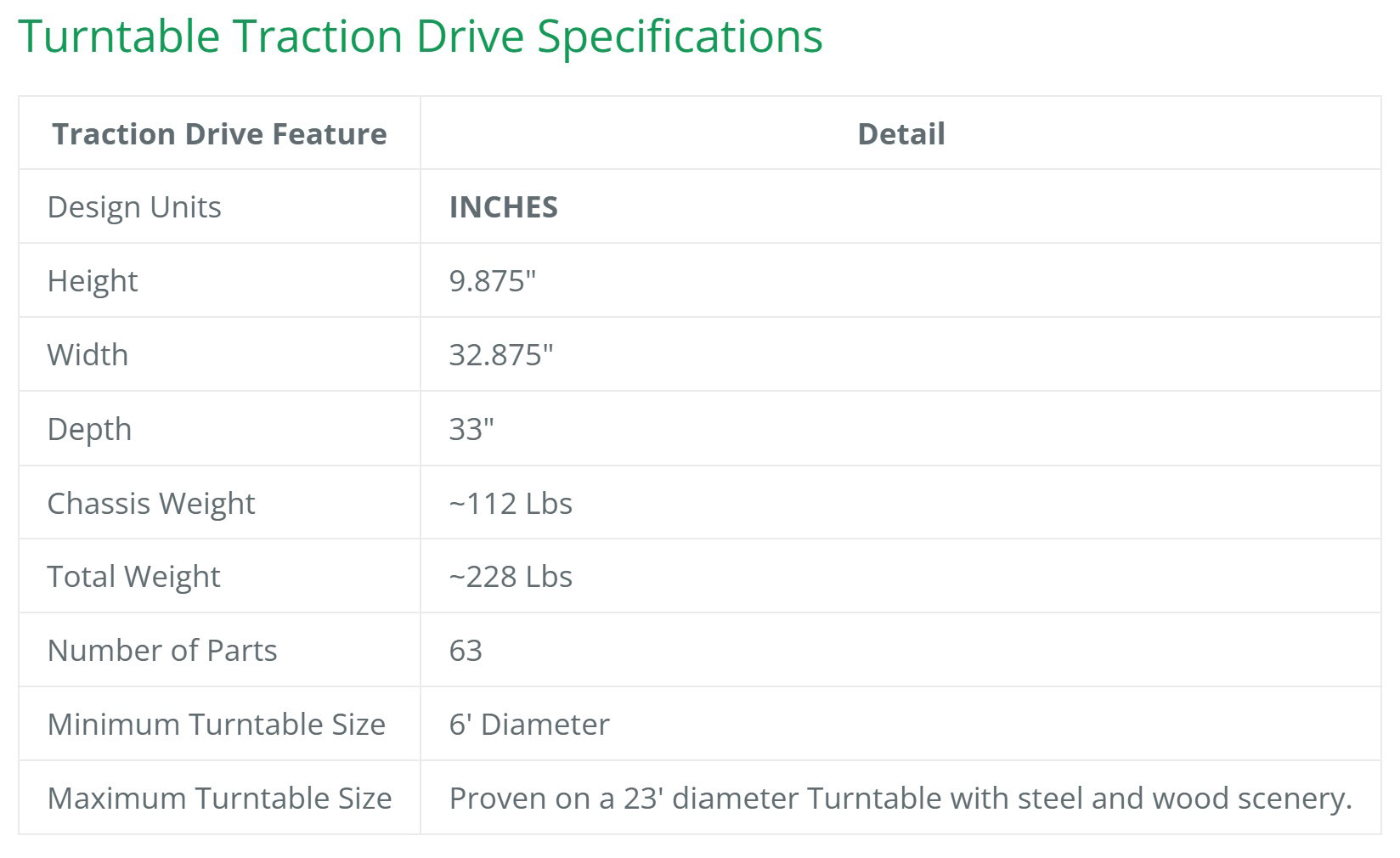
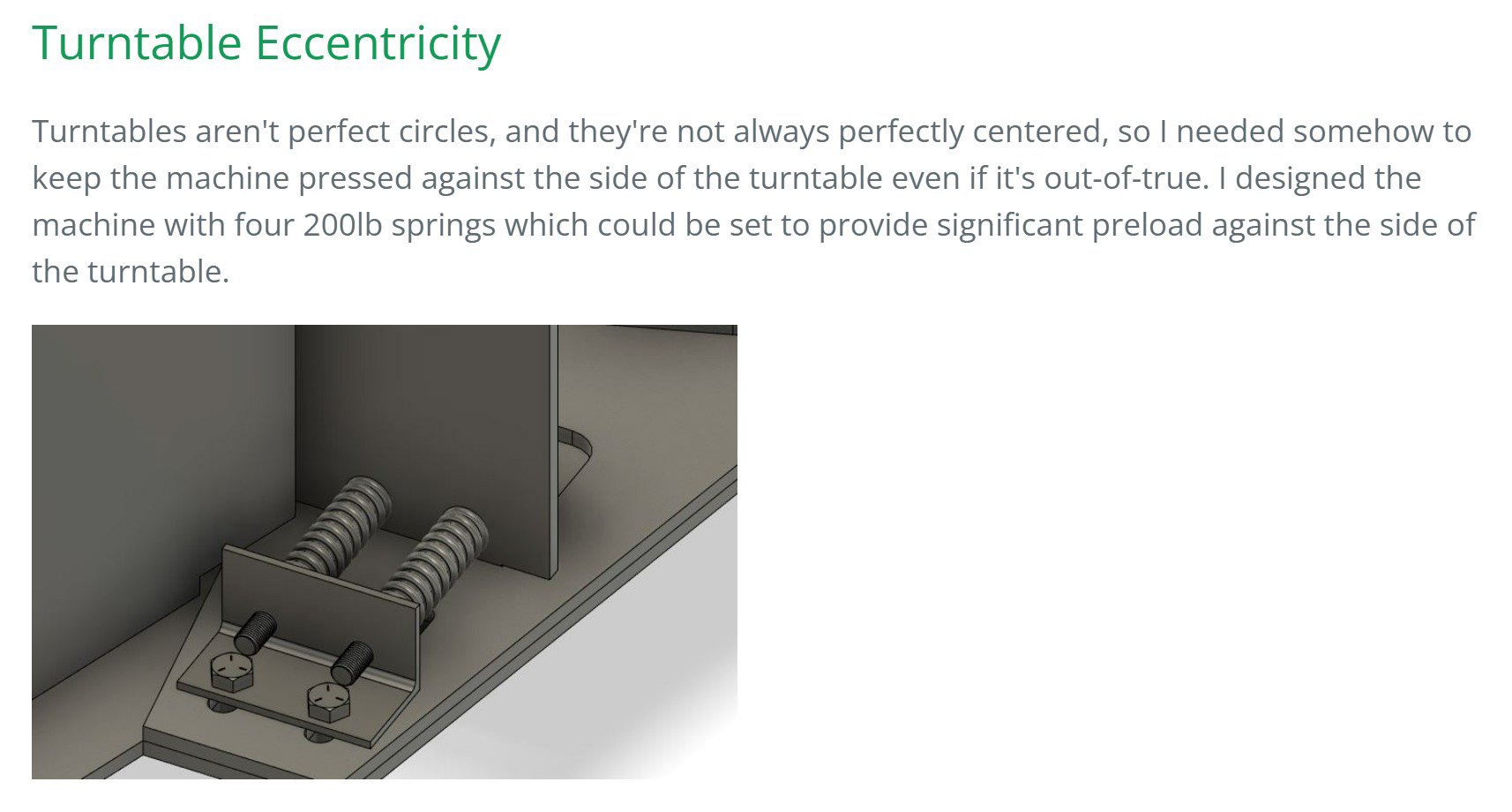
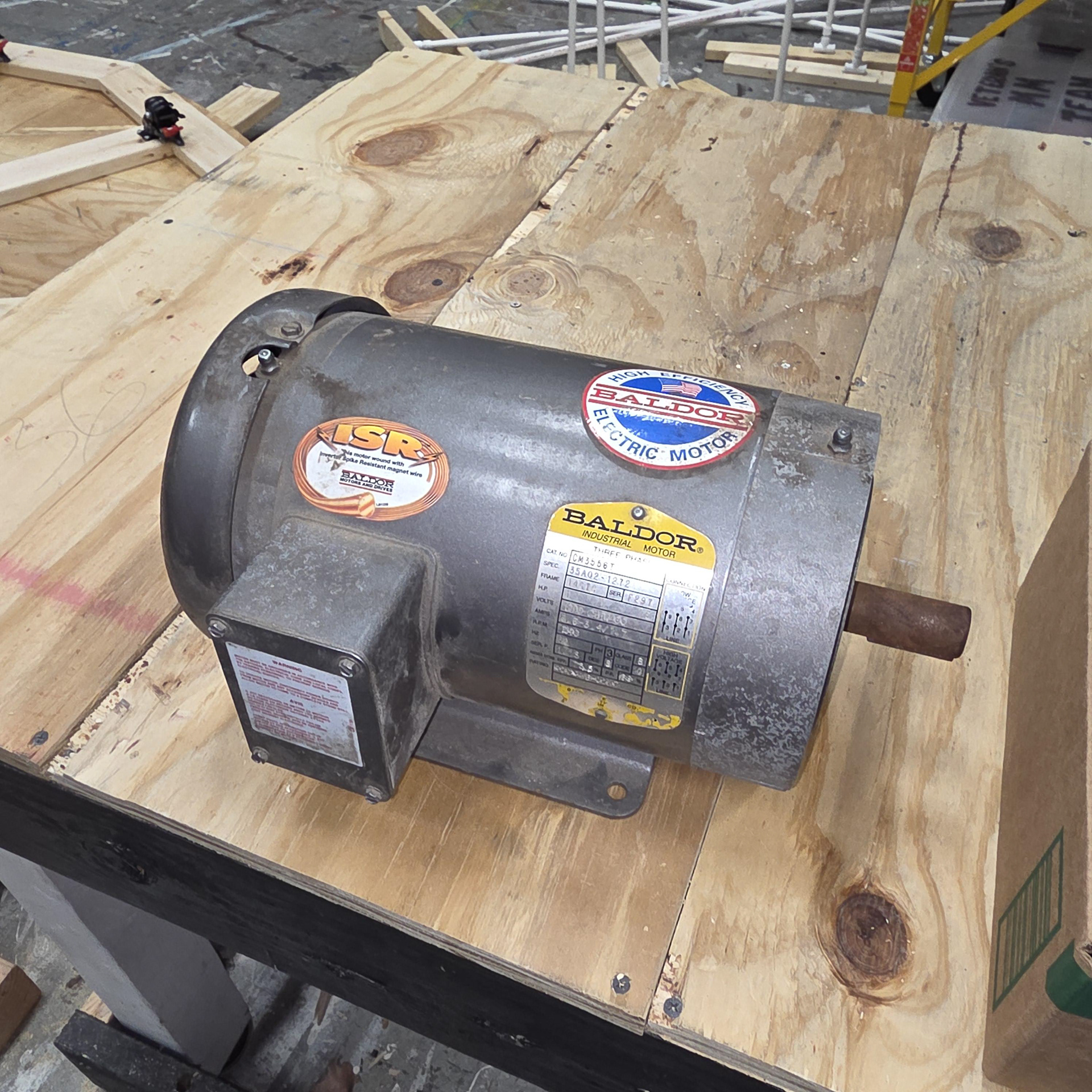
First Part Sourced - Drive Motor
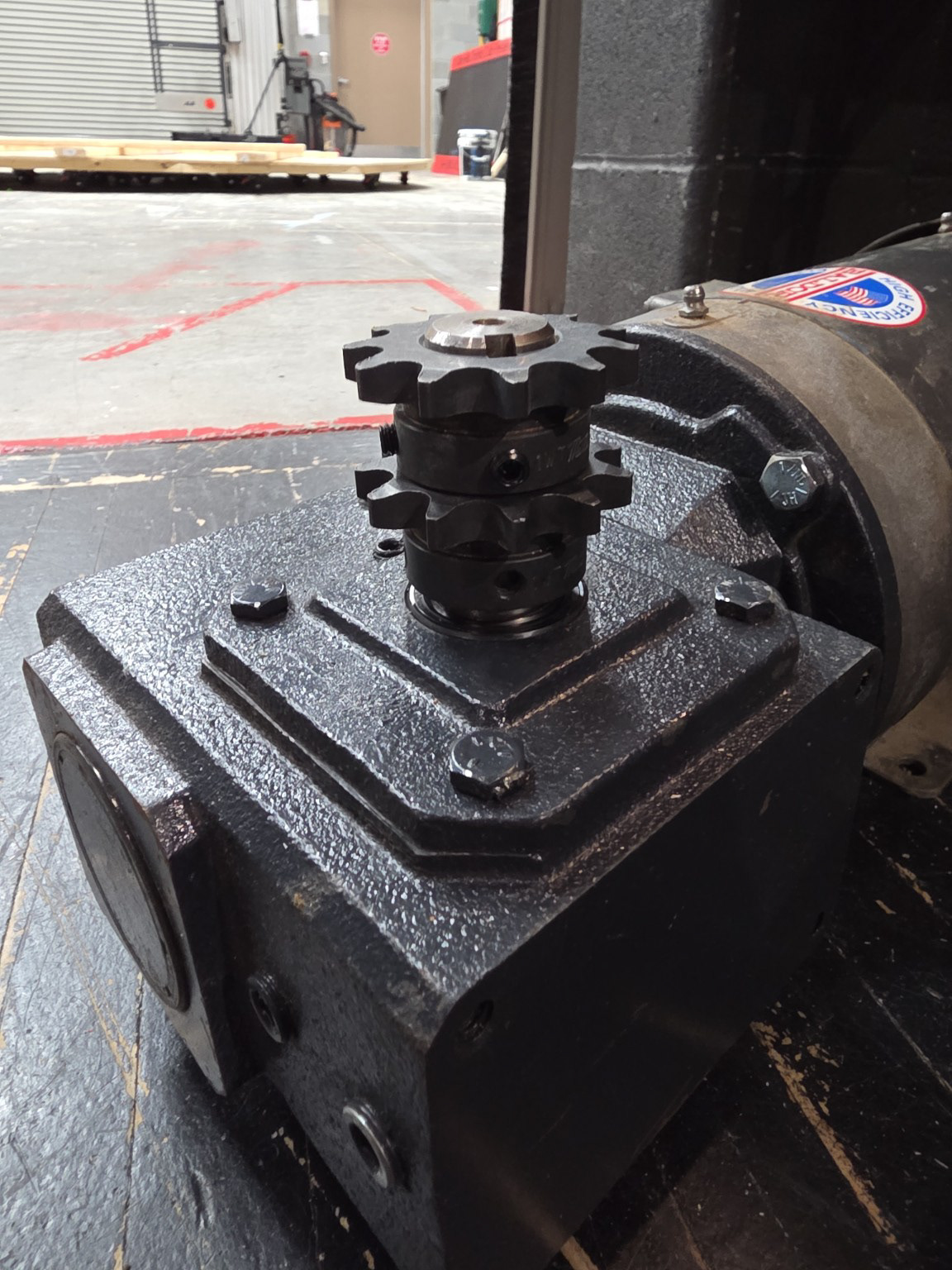
Early in the build, inconsistencies in the original design documentation created immediate challenges. Motor frame specifications, mounting details, and assembly references did not fully align, and a mount listed for a 145T/145TC frame did not fit the motor as expected.
Resolving this required verifying each assumption against the physical hardware, including motor frame sizing, reducer mounting, and actual geometry. This process clarified which elements of the design were directly usable and which required adjustment.
From this point forward, all major components were validated through physical testing rather than relying solely on documentation.
BOM Did Not Specify Double-Shaft Gear Reducer for Two Sprockets
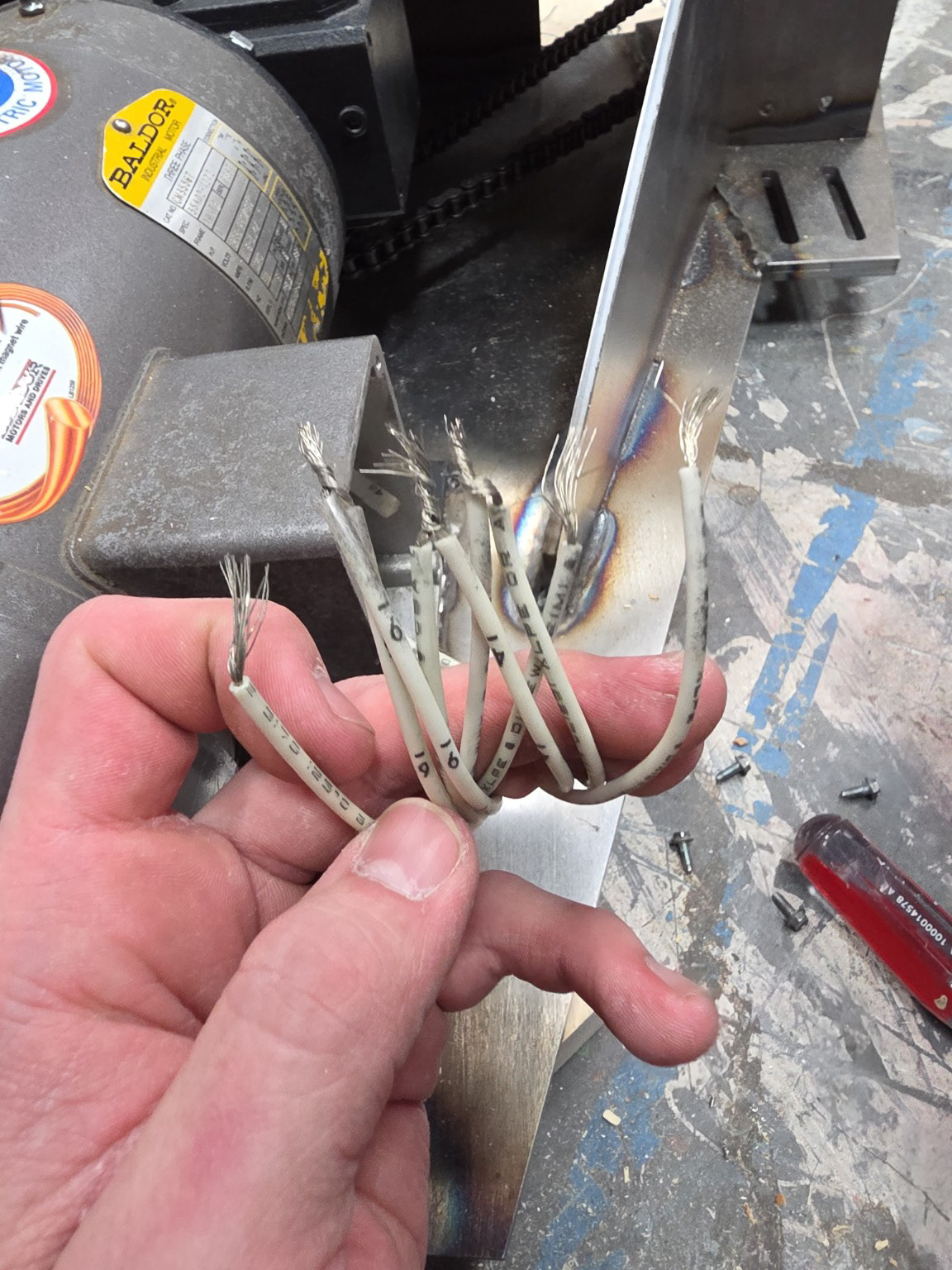
Wiring Diagram Did Not Account for Use of Alternative Drive Motors
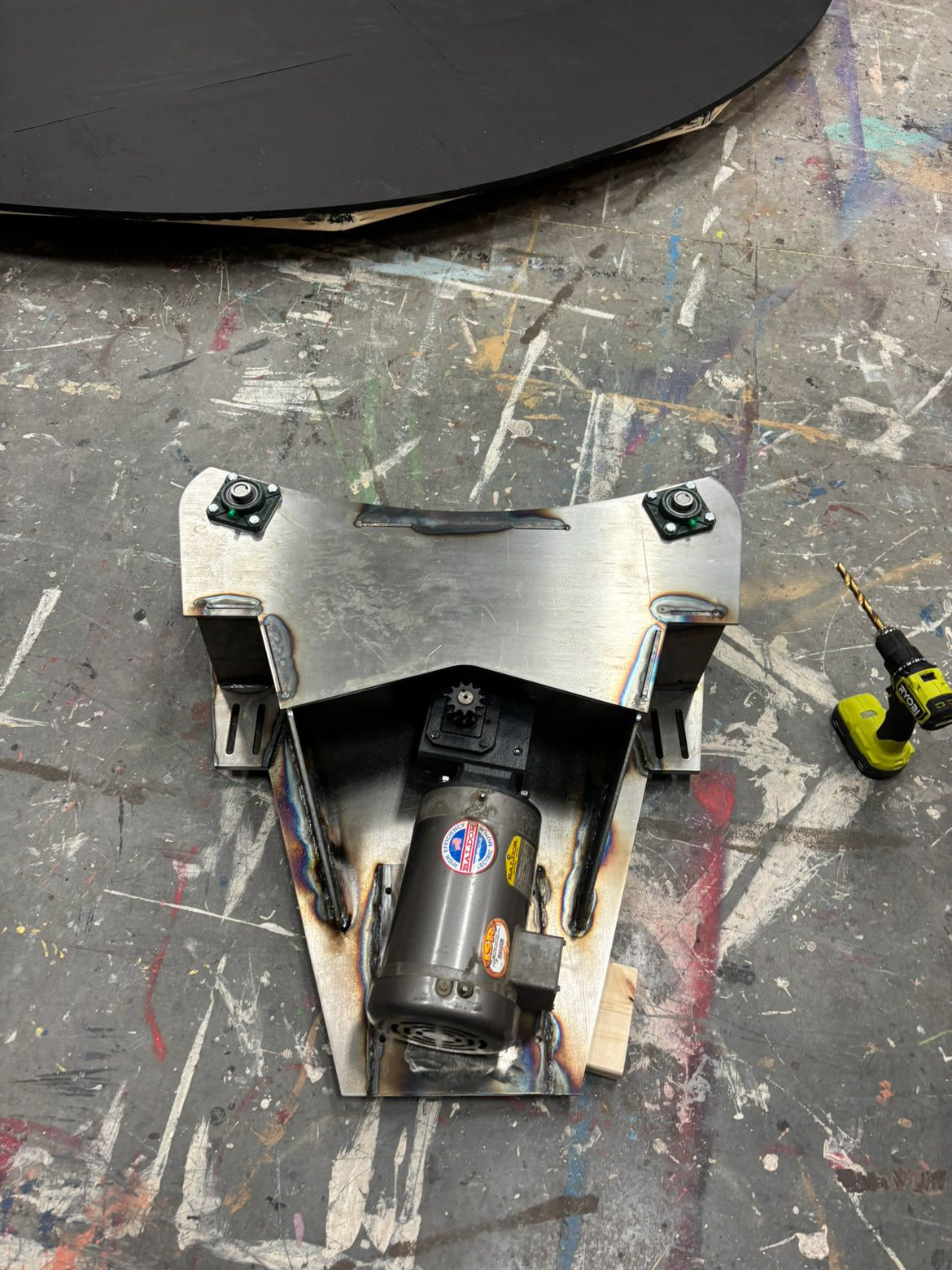
Motor Mount Required Modification to Motor Base for Compatibility
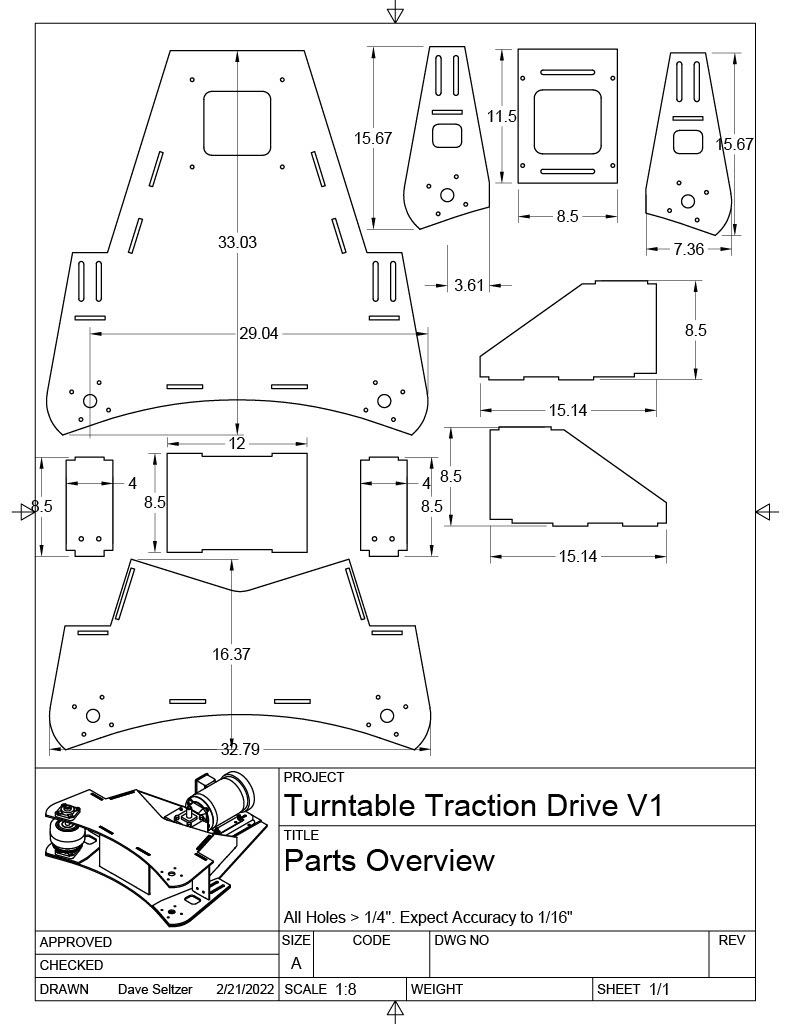
The first major mechanical challenge was mounting the motor and reducer within the constraints of the steel frame. The purchased motor mount did not function as expected, failing to provide a clean, adjustable axis for chain tensioning and introducing fitment conflicts. The reducer output geometry also differed from the reference design, complicating alignment.
This shifted the problem into one of packaging and integration. The motor required a secure mounting solution, while the reducer, sprockets, and chain needed precise alignment and adequate clearance. All components also had to fit within the custom steel frame without interfering with the drive path.
Rather than replicating the original mounting approach, the strategy was revised to focus on integrating the actual hardware cleanly within the available space, prioritizing alignment, clearance, and reliability.

Thanks to Hayes Ryland for welding the frame structure together for us.
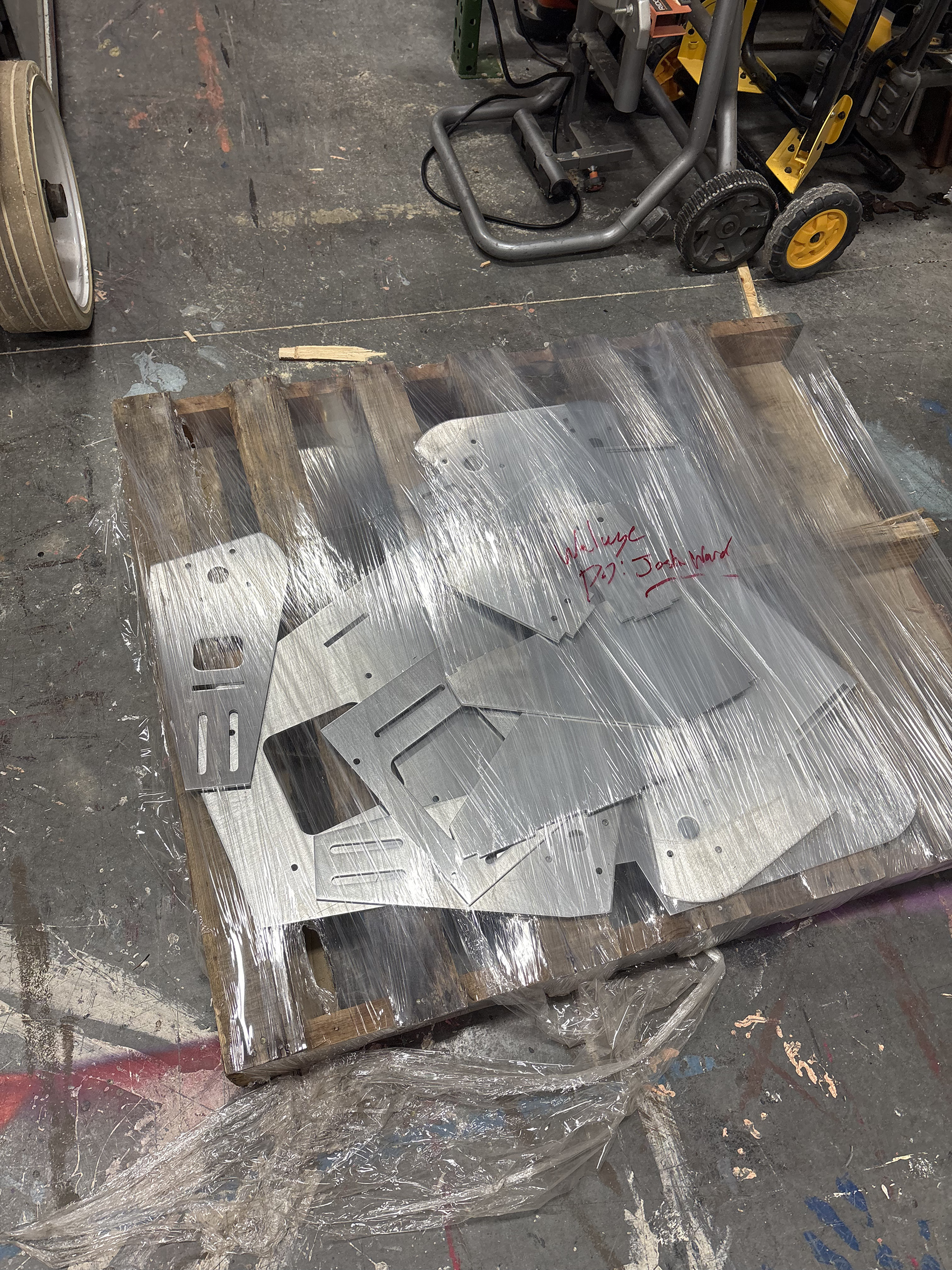
Custom Steel Part Drawings
Custom Steel Parts Delivered
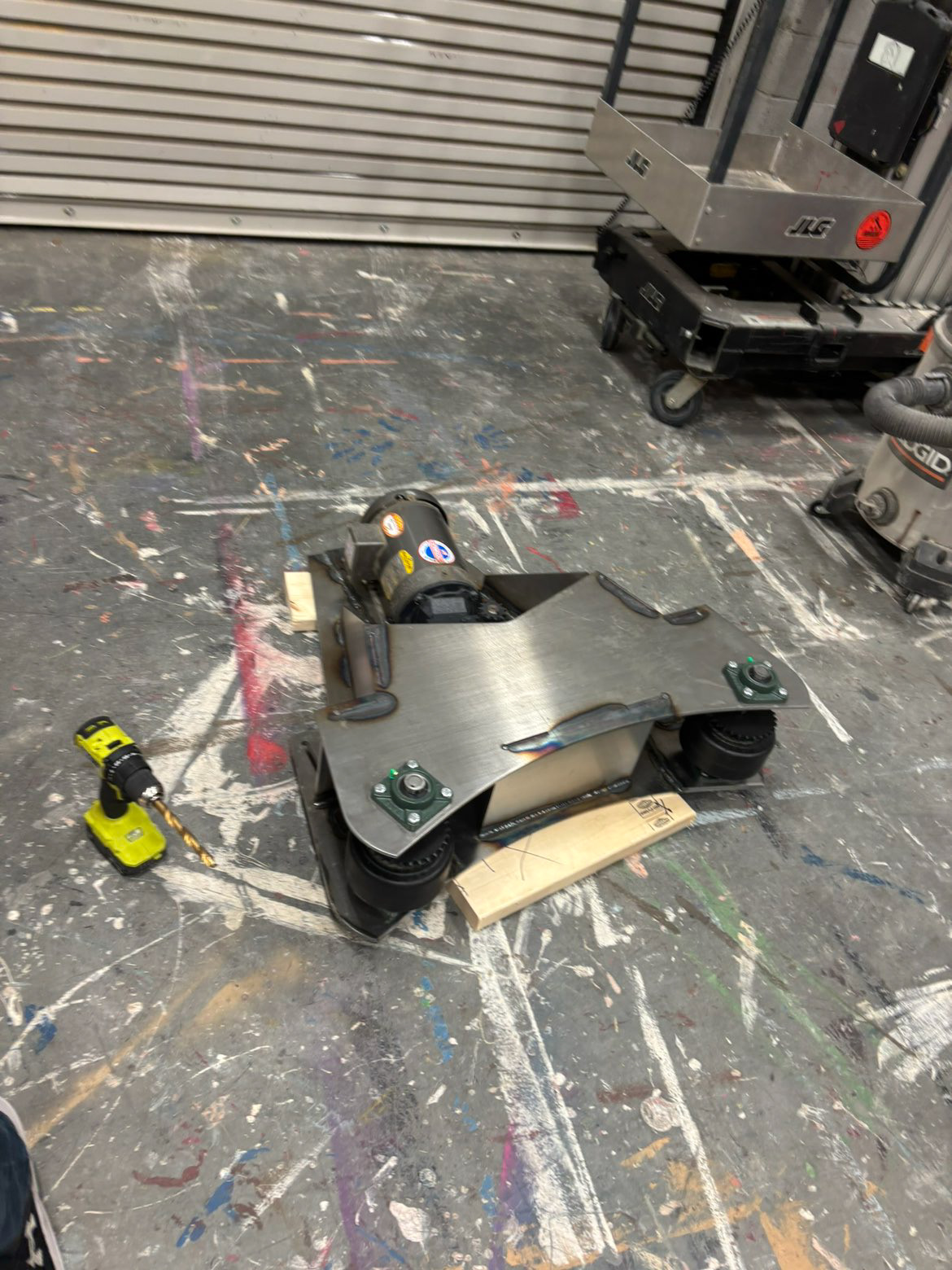
Drive System Assembled
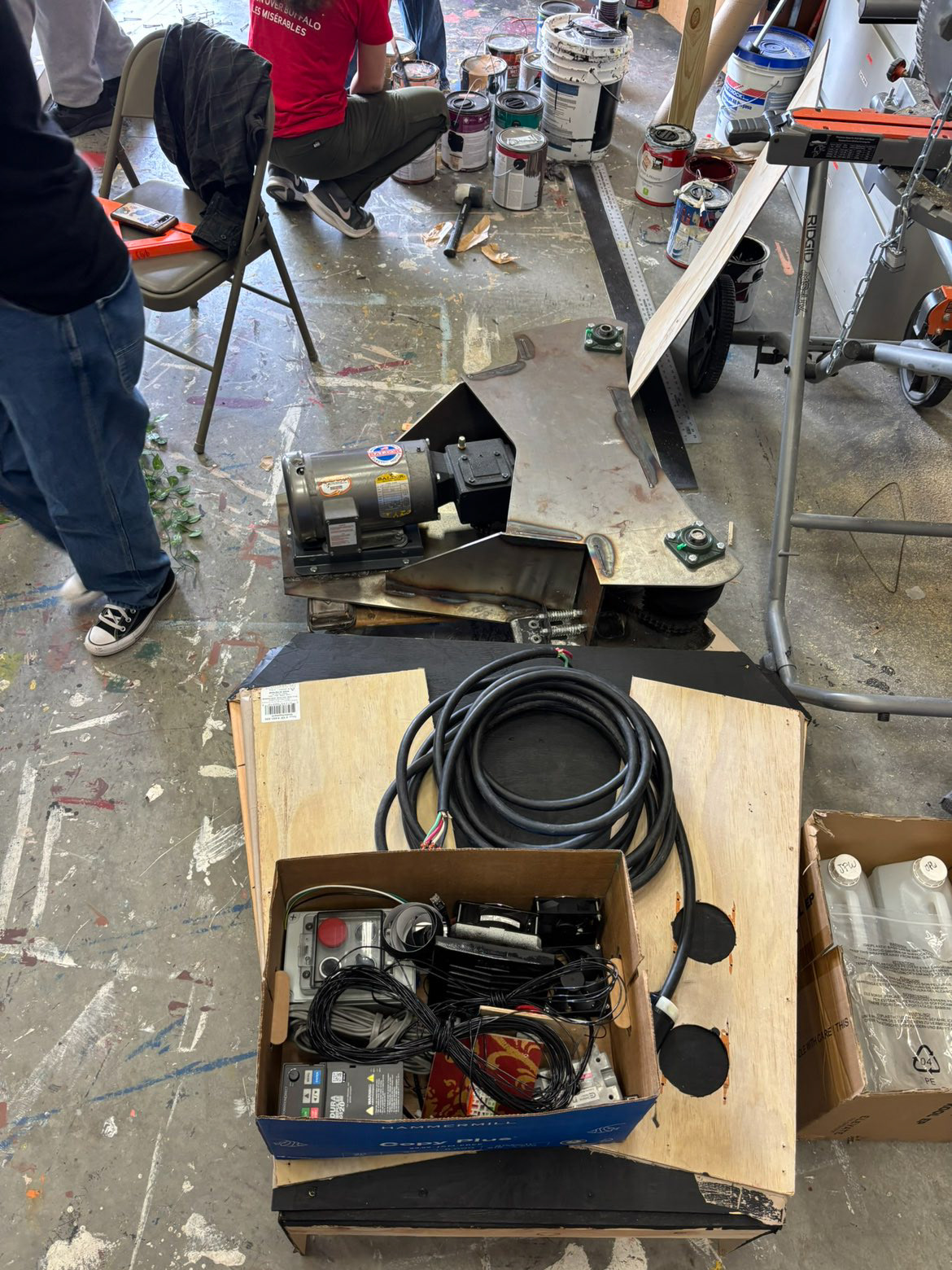
Preparing for Integration with Revolve Structure
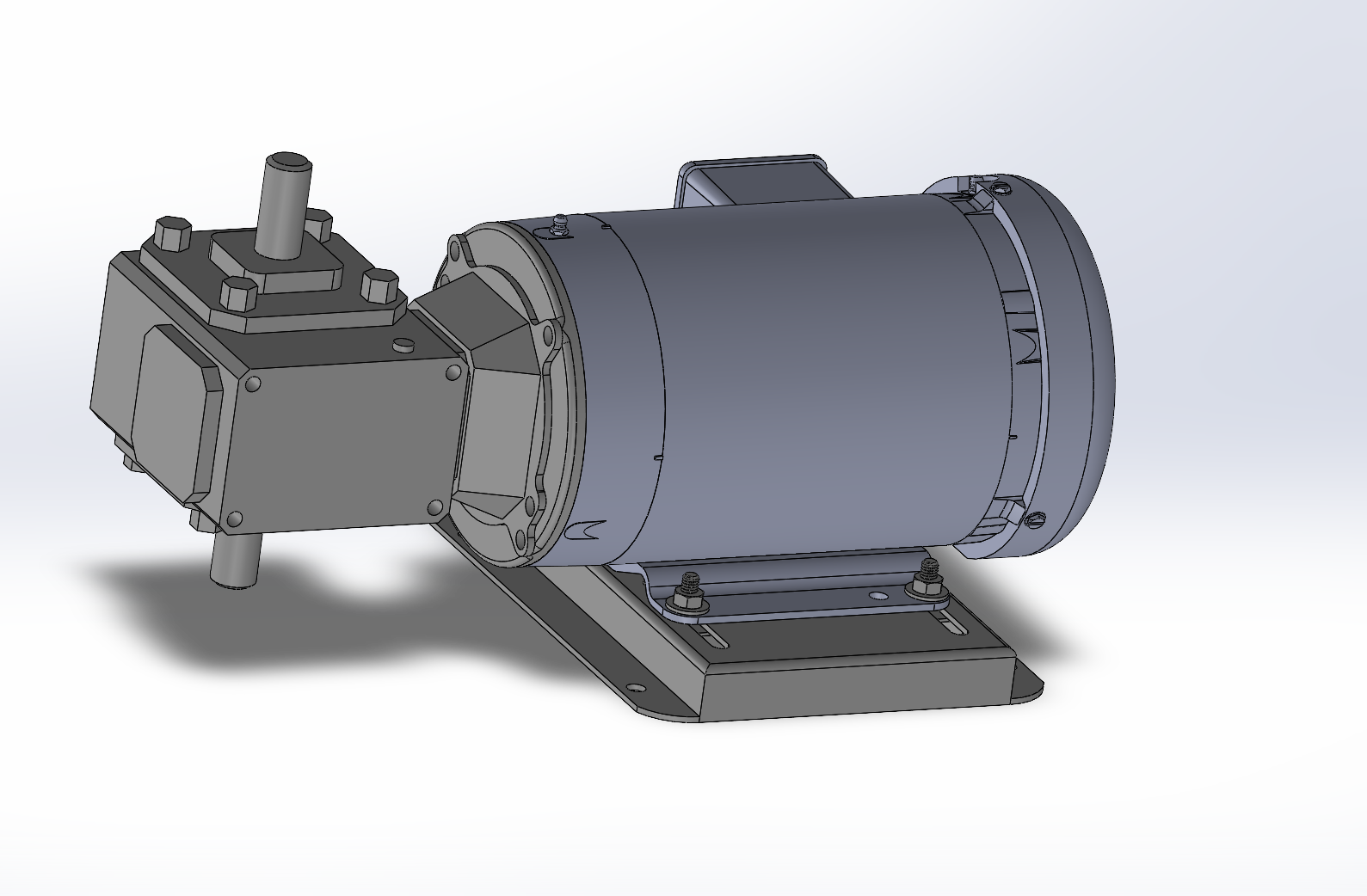
Once the drivetrain geometry was established, the next challenge was transmitting power from the reducer to the drive wheels. The reference design suggested a dual-chain system, but the actual reducer layout raised issues with shaft access, sprocket stacking, and centerline alignment.
To resolve this, a stacked sprocket configuration was developed, allowing dual chain paths from a single output shaft. This required verifying that unequal chain lengths were acceptable, determining how both sprockets could be securely mounted, and evaluating how much reliance could be placed on keying, clamping, and set-screw retention.
Chain fitment exposed a larger issue. With fixed center distances and no true tensioning method, one chain length fit correctly while the other fell between too-tight and too-loose options. This highlighted a key limitation in the original design: systems that appear resolved in CAD often still require adjustability in physical implementation.
This stage reinforced the importance of designing for real-world tolerance and adjustment, particularly in power transmission systems. With guidance from my brother, Jacob Willett (Mechanical Engineer, Bilstein), a viable dual-chain configuration was achieved with minimal modification to the existing drive system.
Reviewing CAD Part Files Revealed the Intent for a Double-shaft Gear Reducer to be Used
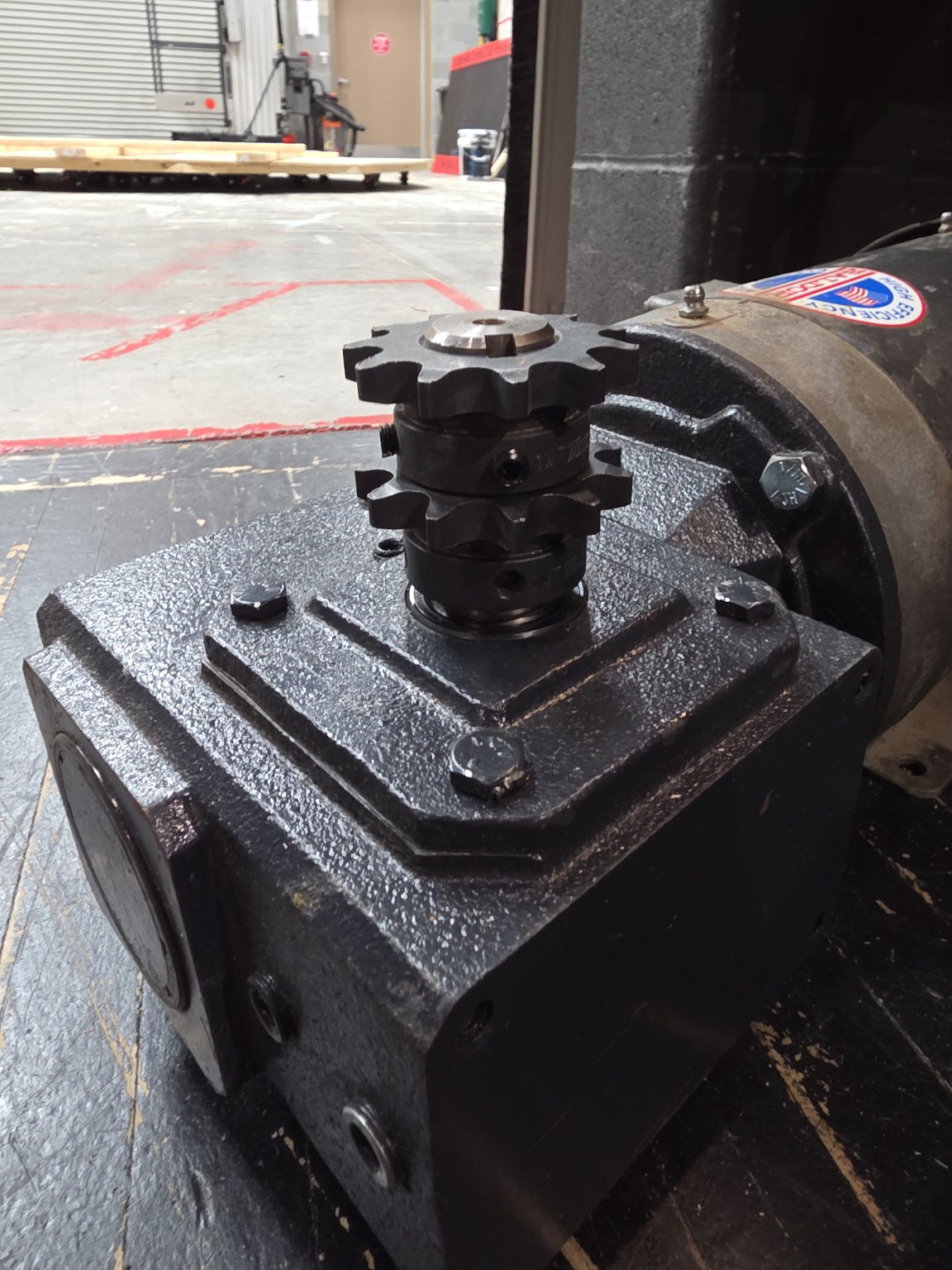
Stacked Sprockets on Our Gear Reducer
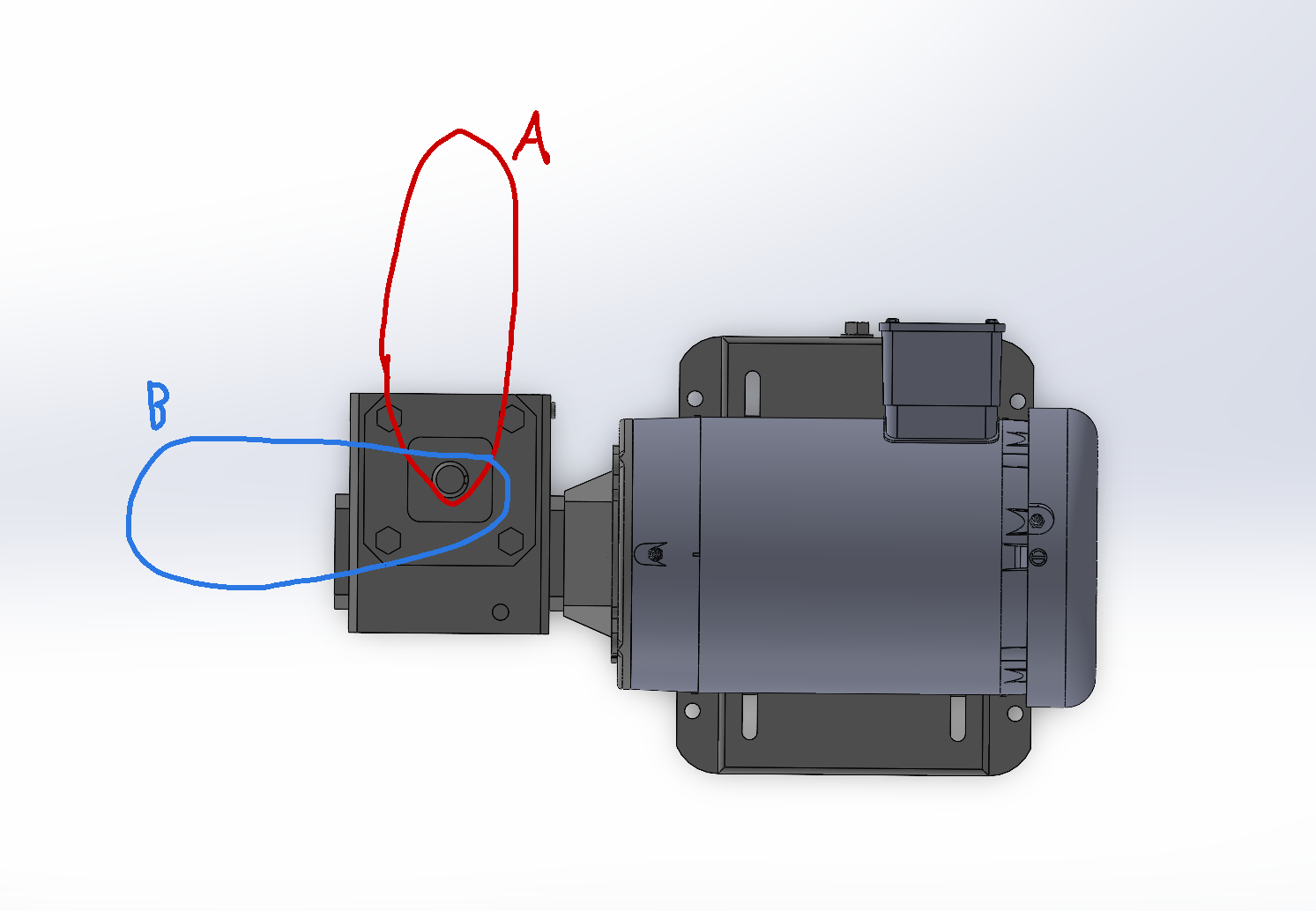
Exploring Drive Chain Path Options
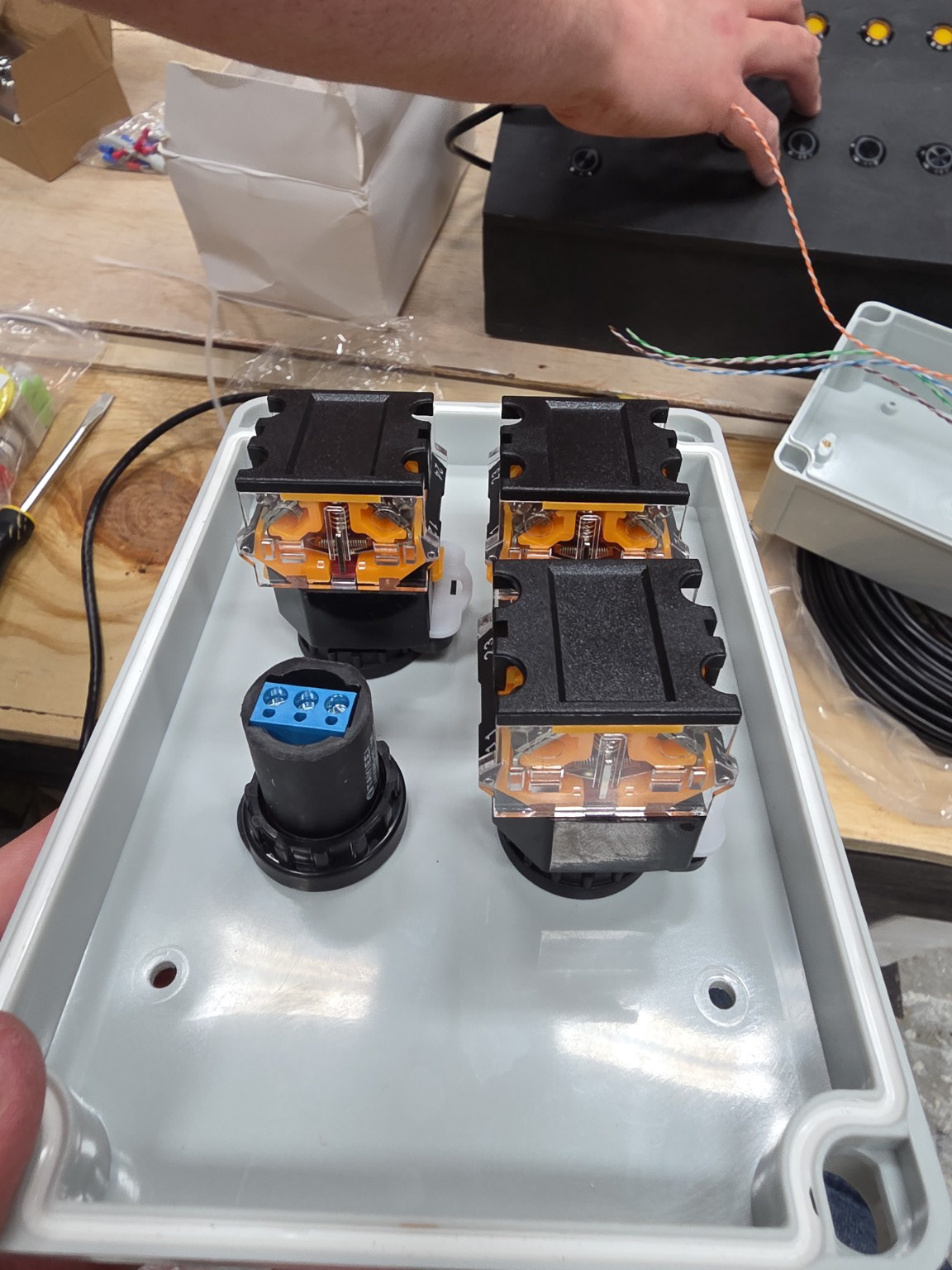
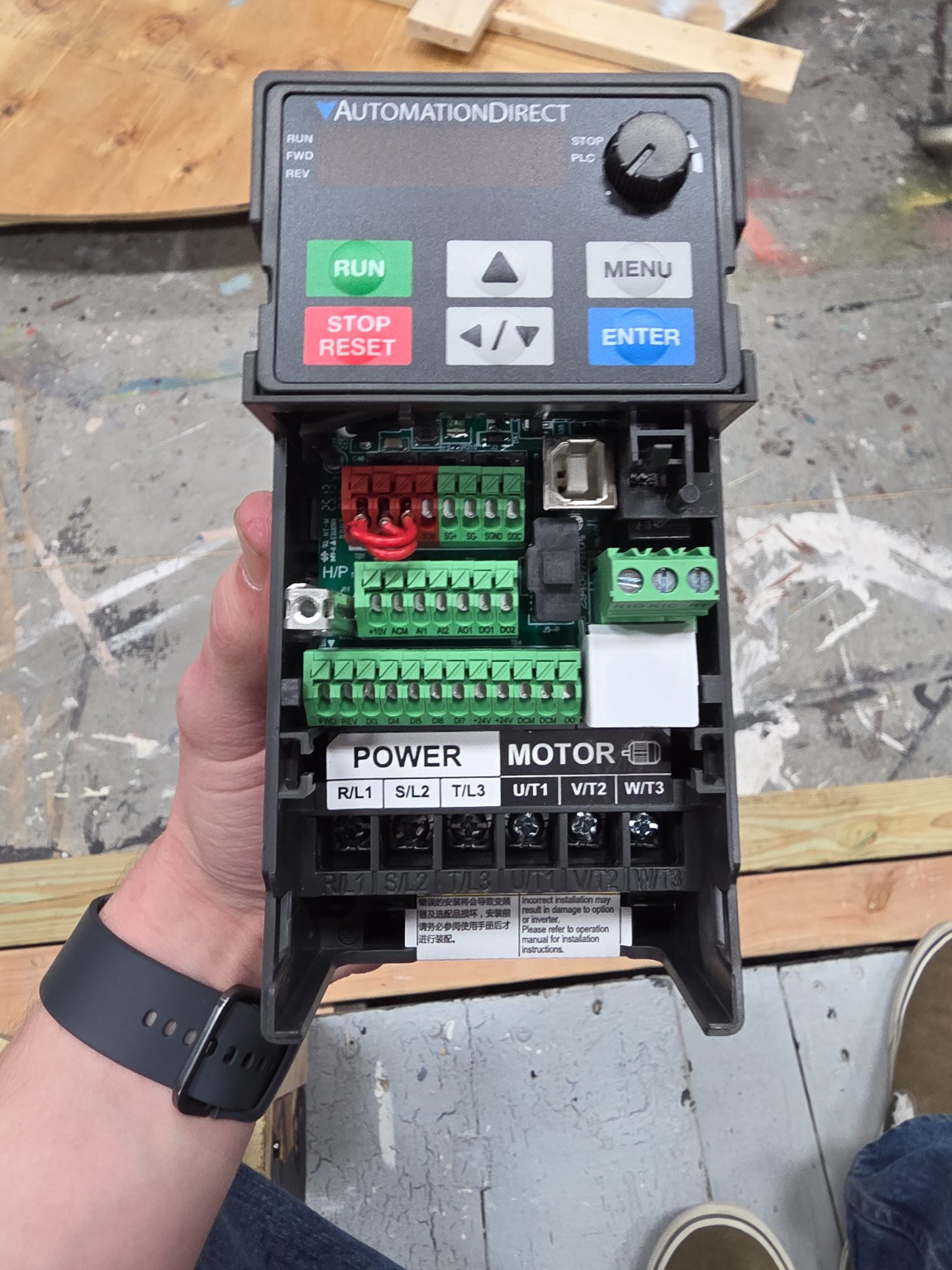
In parallel with the mechanical development, a custom control system was built around the VFD.
The goal was to create a simple, reliable interface for live operation, including variable speed control, forward and reverse movement, emergency stop capability, and portable control through a dedicated operator box.
A key decision was to keep the system fully hardwired, using industrial control logic rather than relying on a computer or microcontroller. This ensured reliability, simplicity, and immediate responsiveness during performance.
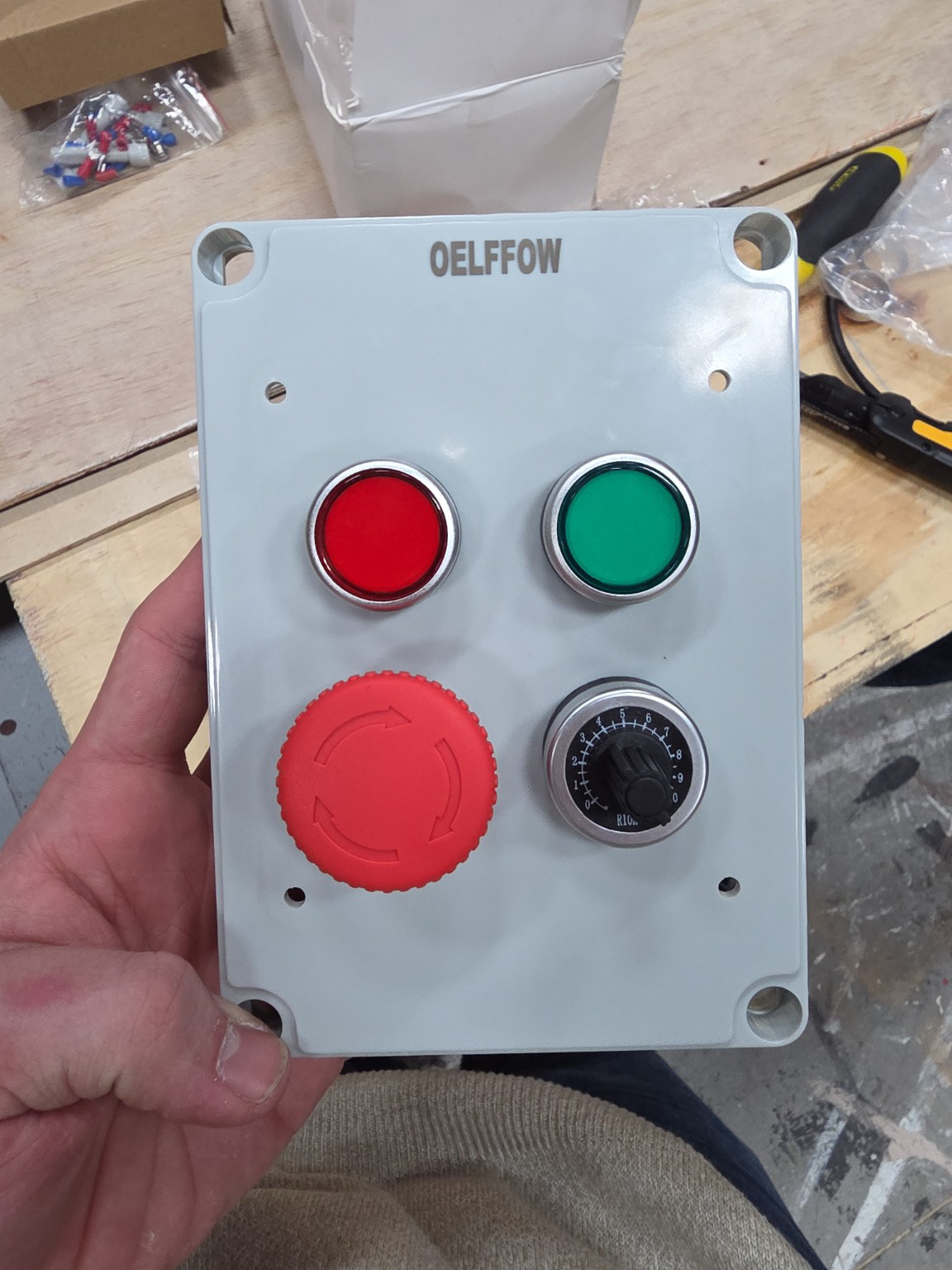
The controller was built using pushbuttons, a keyed switch, a 10k potentiometer, and low-voltage wiring routed back to the VFD.
The enclosure itself was designed to be physically intuitive, electrically sound, and safe for use in a live production environment.
Assembling the Controller
Initial Controller
Initial Controller
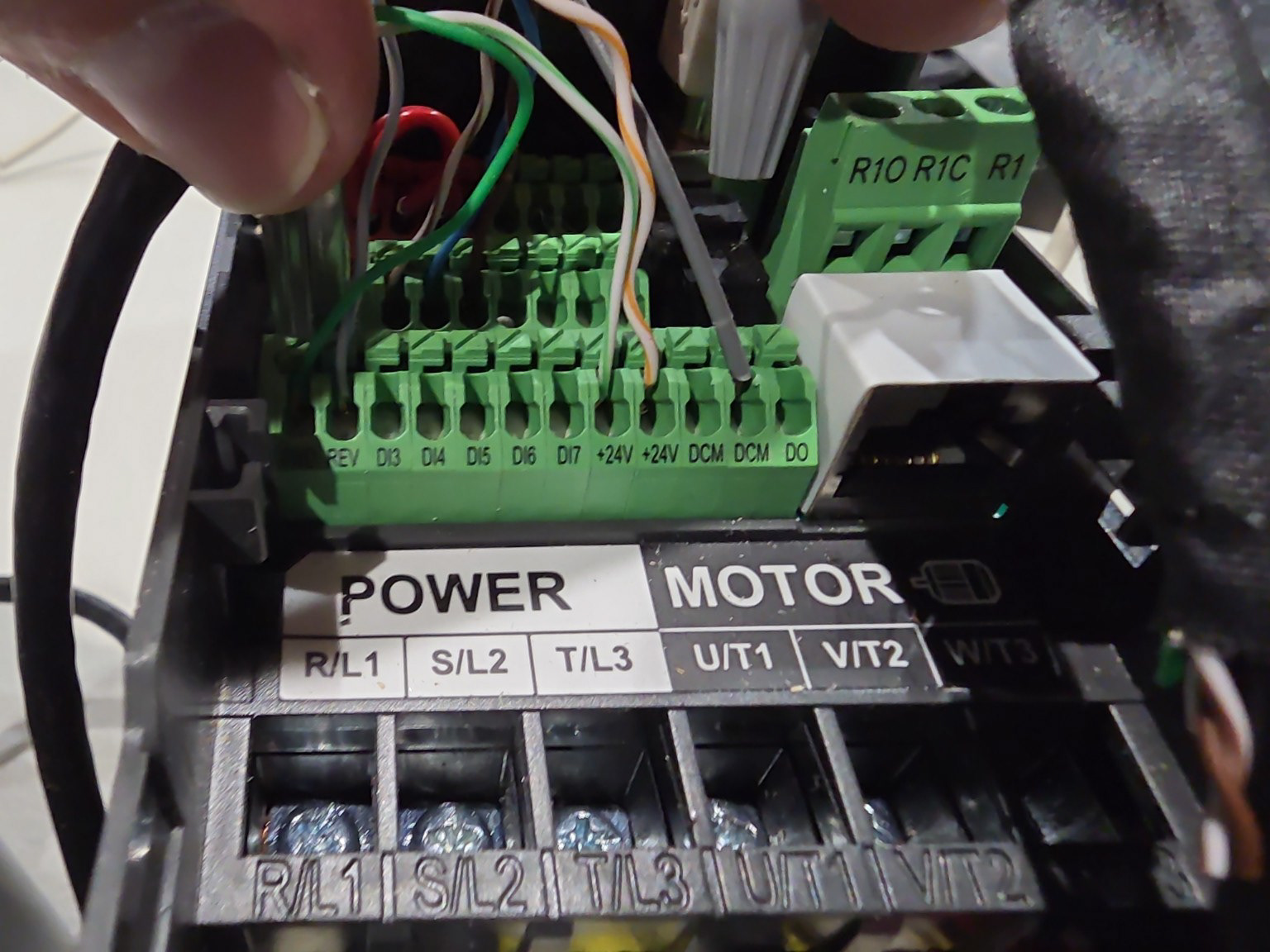
VFD
VFD
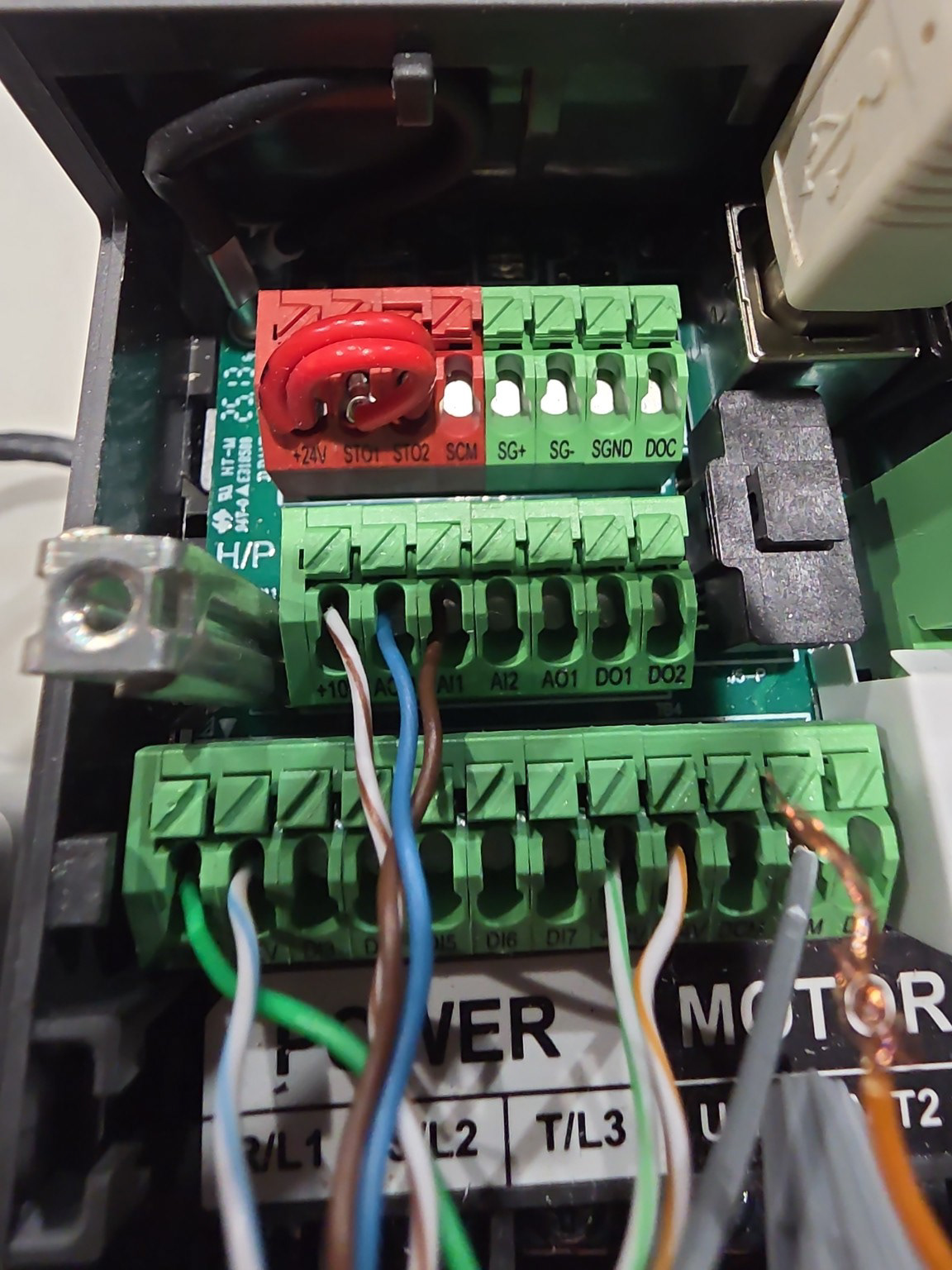
Controller Wired to VFD
Ensuring Proper Wire Termination
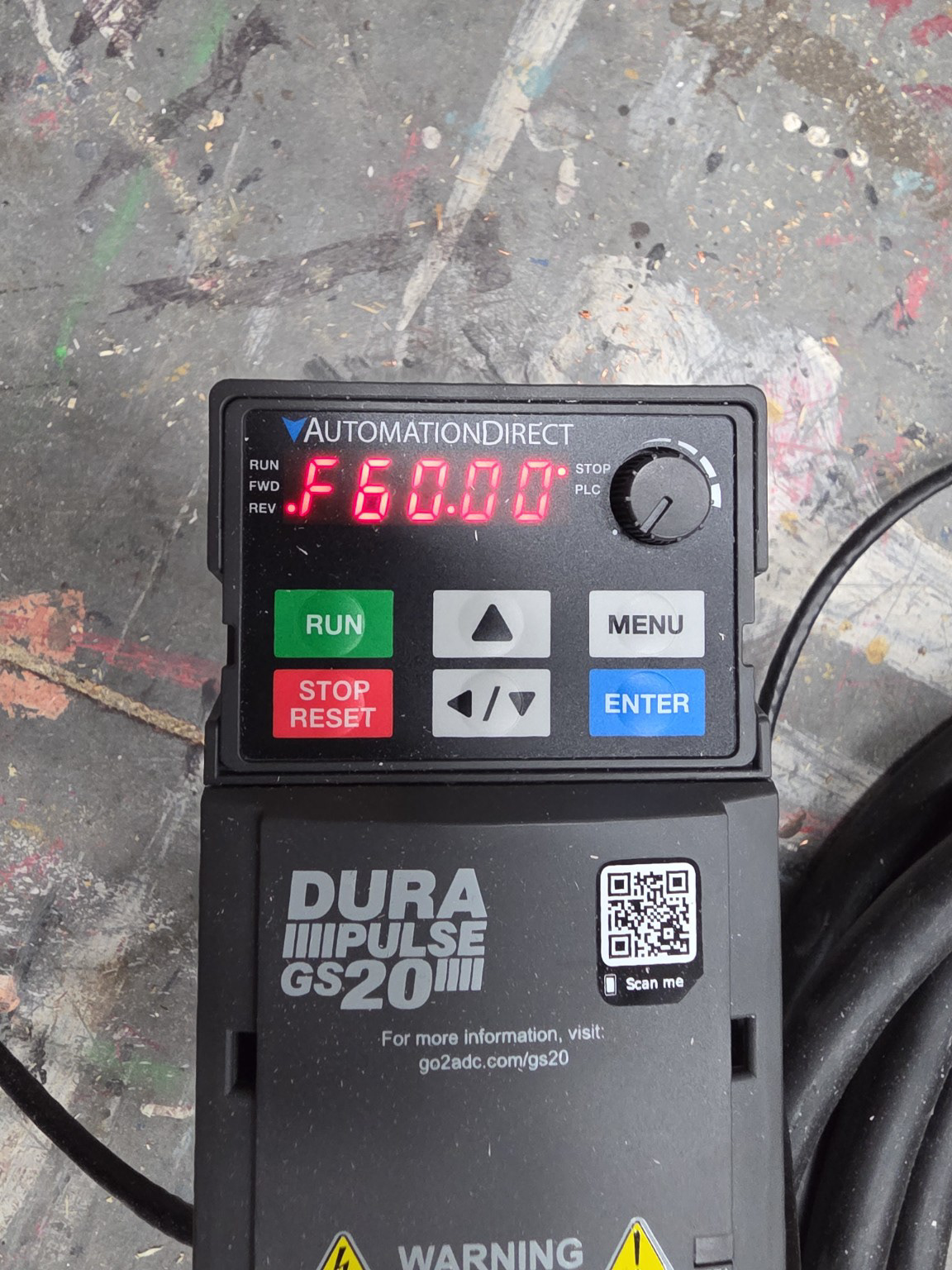
Commissioning the VFD was one of the most iterative phases of the project. While the analog speed input was configured successfully, forward and reverse command logic did not initially behave as expected.
Troubleshooting required working through multiple layers of control logic, including command source selection, sink/source configuration, input modes, digital input mapping, STO behavior, and local vs. remote control authority.
This phase revealed how a VFD can appear partially functional while still ignoring critical external inputs. The issue ultimately traced back to a higher-level parameter that kept the drive under keypad control despite correct terminal settings. Once corrected, the external controller behaved as intended.
This process reinforced the importance of systematic commissioning—verifying analog input, confirming digital input response, validating safety behavior, and only then evaluating full system operation. It also highlighted that VFD setup is not just parameter entry, but an understanding of layered control logic where one setting can override many others.
VFD Powered
VFD Powered
Initial Testing Setup
Programming VFD to Remote Control
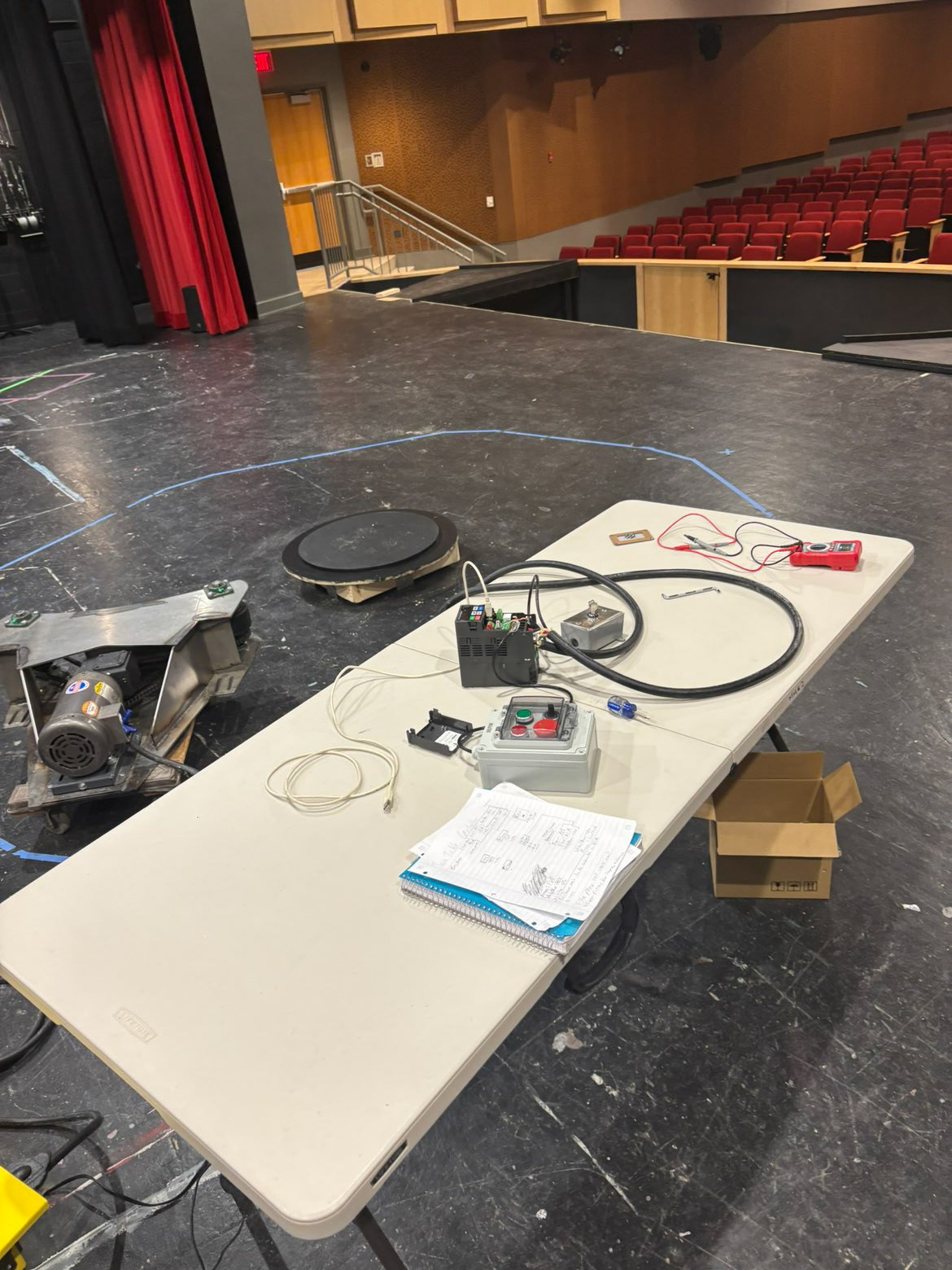
Swapping Buttons for Selector Switches
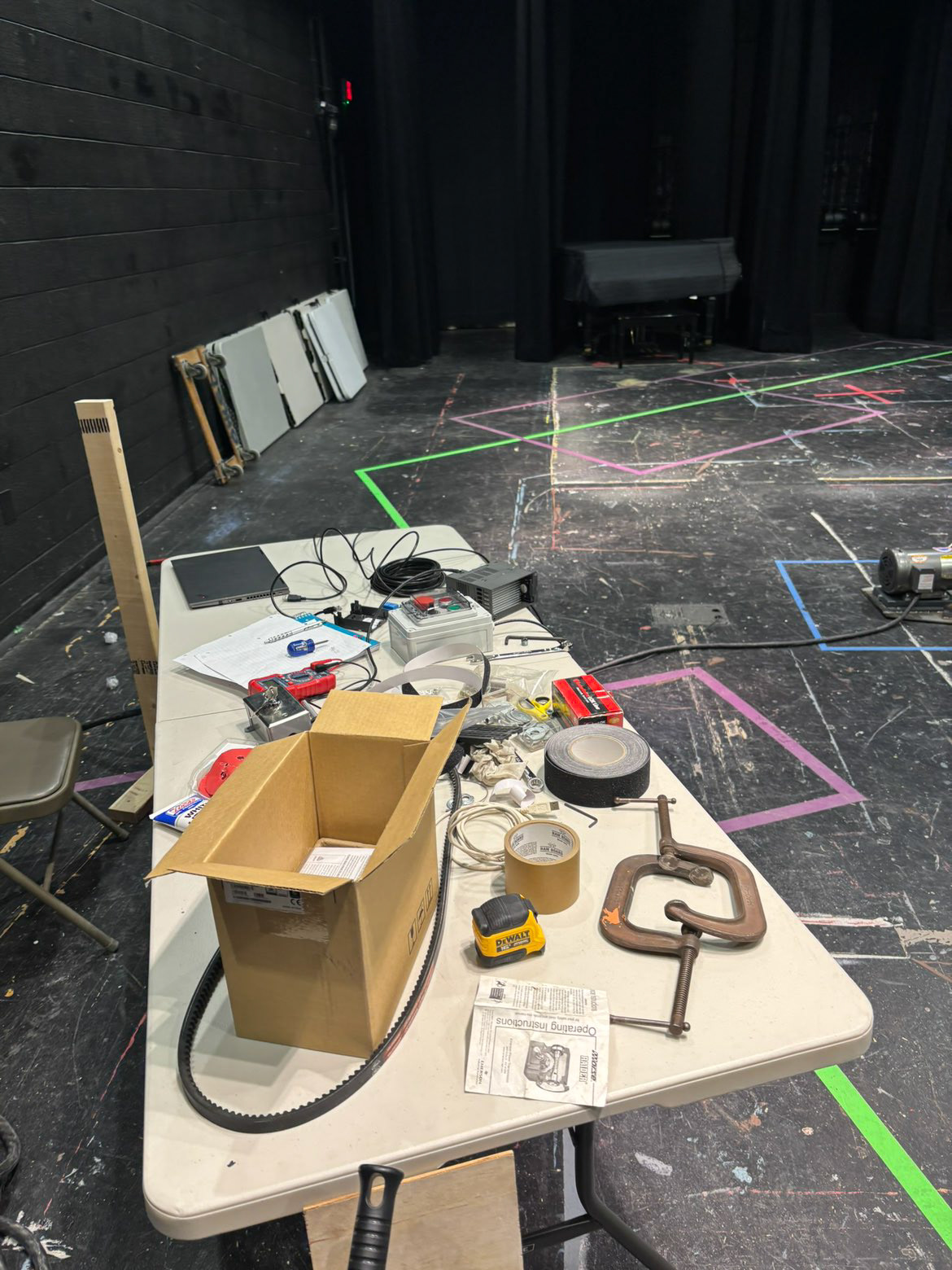
Integrating Keyed E-stop
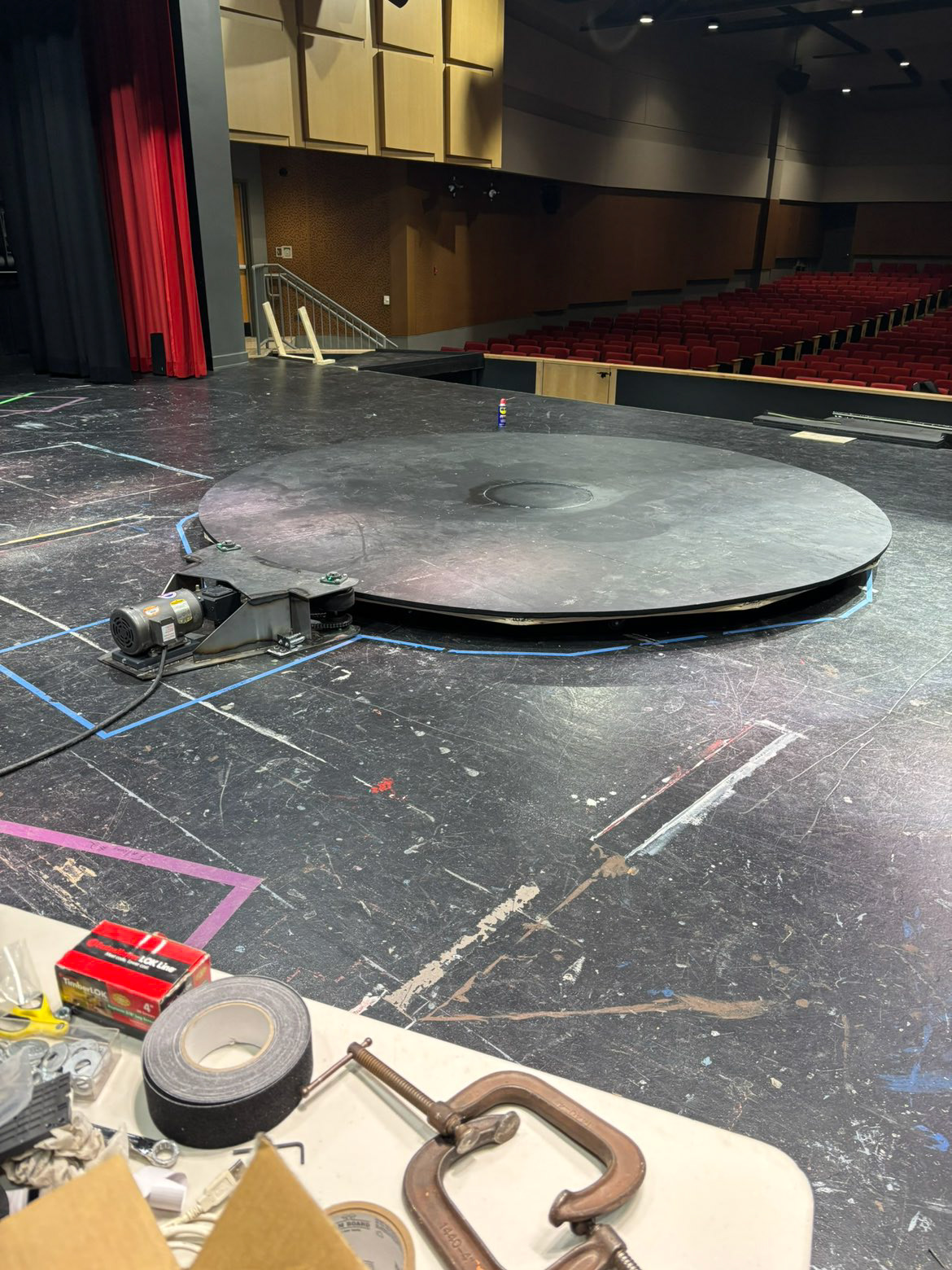
Revolve Structure Loaded

Initial VFD programming, which revealed that our momentary start and stop buttons were not the correct hardware for the control process we wanted. 

Momentary buttons were swapped for selector switches, which allowed for open and closed circuits to trigger run/off modes as well as forward/reverse direction control.
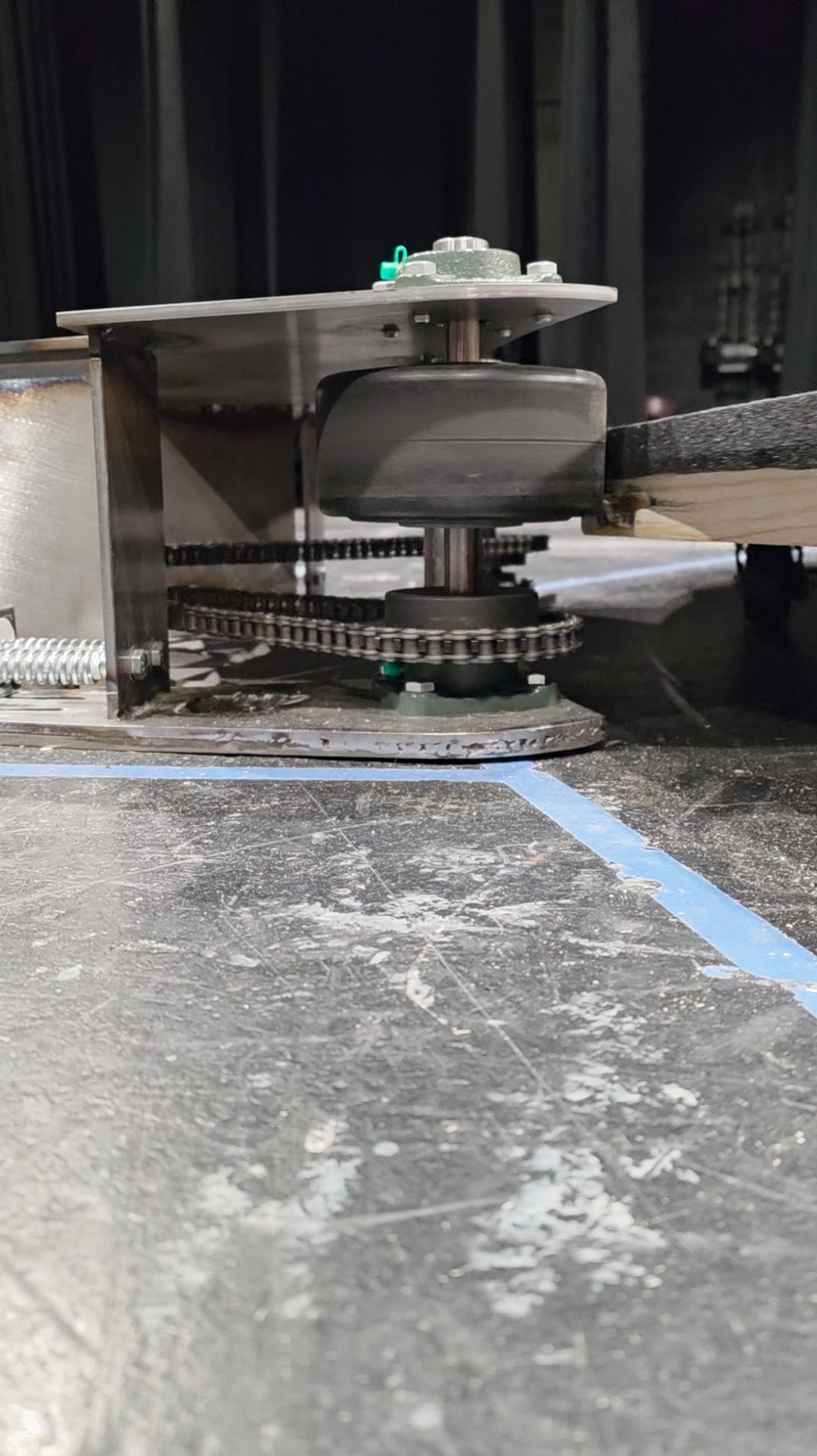
Safety was a critical component of the system, as the platform was designed to carry performers during live operation.
Early in development, the emergency stop system was treated as a standard 24V control loop, which did not provide a meaningful or reliable stop condition. This approach was reworked to use the VFD’s Safe Torque Off (STO) inputs, allowing the system to directly disable motor torque independent of normal control commands.
The final safety chain routed 24V through the keyed enable switch, the controller E-stop, and two additional E-stop stations located on-stage, before feeding both STO channels.
This marked a major shift in the system design by clearly separating control logic from safety logic. Rather than interrupting a command signal, the safety system now physically removed the drive’s ability to produce torque, bringing the system closer to an industrial standard.
Because the turntable was operated without direct line-of-sight, accessibility of these E-stop stations was essential. All operators and performers were trained on their location and use, and this requirement later informed the integration of a live camera monitoring system.
Once the drivetrain and control system were operational, the next major challenge was traction at the drive interface.
Initial attempts used grip tape along the rim of the turntable. While this provided high friction at first, it failed quickly under load. The lateral shear from the drive wheels caused the tape to peel and deform, creating both performance issues and safety concerns.
This shifted the material strategy entirely. Grip tape is designed for vertical foot traction, not sustained lateral drive forces. In this application, the adhesive became the failure point, making the material unsuitable for continuous use.
The focus moved from simply increasing friction to developing a durable drive surface capable of handling sustained shear without degradation.
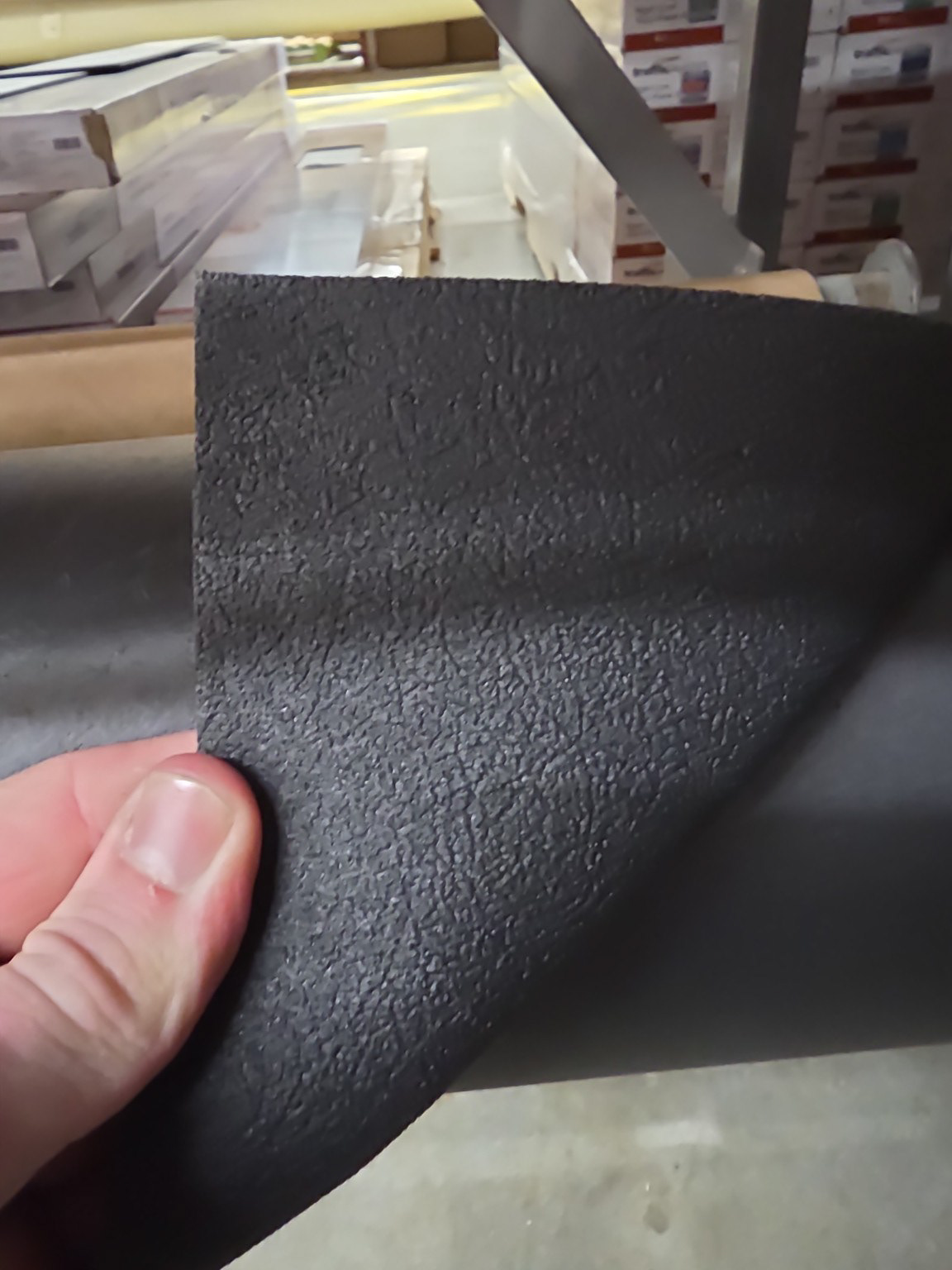
This led to testing more appropriate rubber-based materials. The final solution used a thick rubber equipment underlay, cut into strips and secured to the rim using a combination of construction adhesive and mechanical fastening for long-term reliability.
Initial Grip-tape Traction Material
Rubber Material Used After Failure of Grip-tape
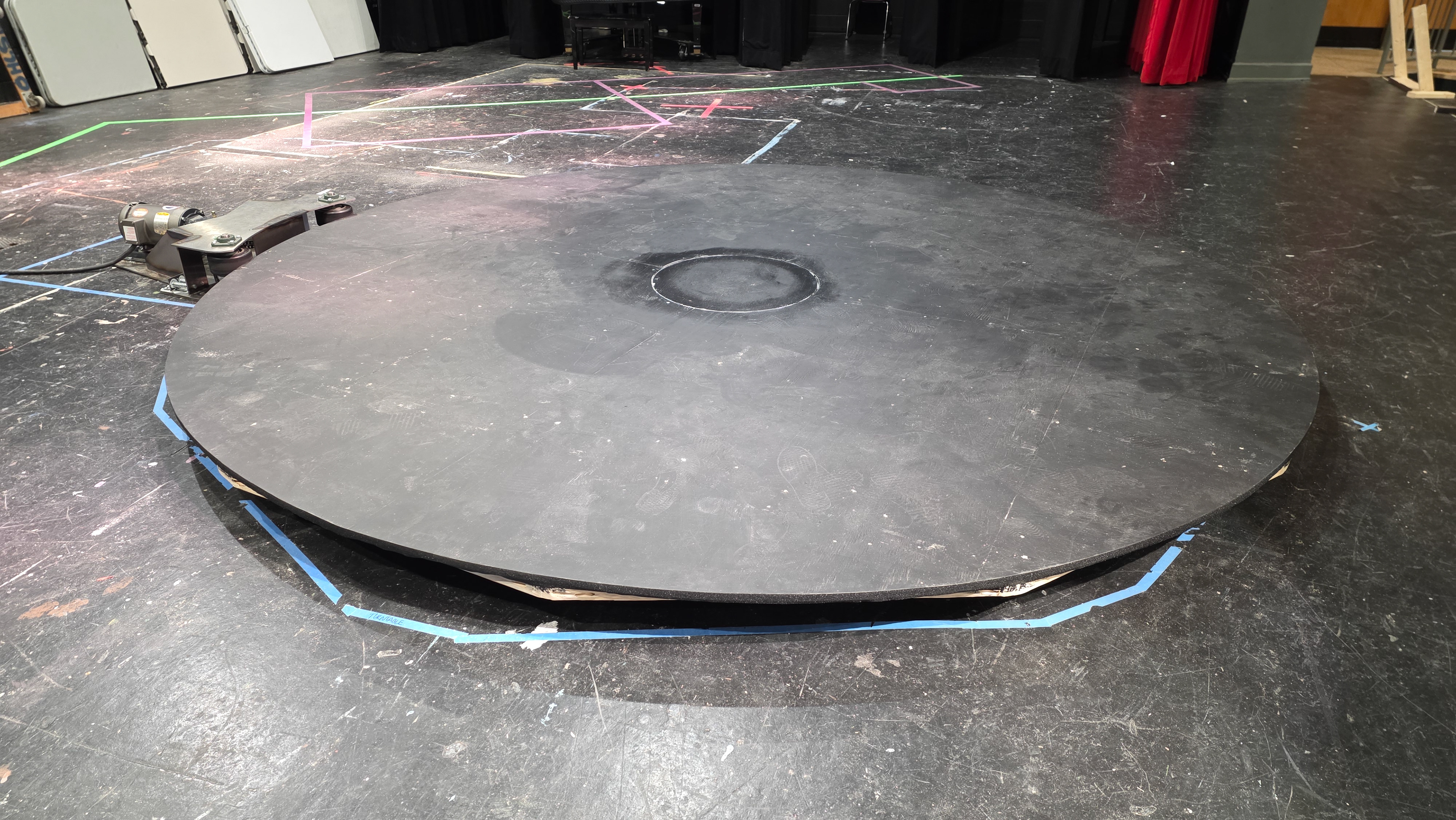
After resolving initial squeaks and brake noise, a different acoustic issue became apparent: the turntable produced a loud rolling rumble across the stage, especially at low speeds.
This was traced not to the drivetrain, but to the interaction between the hard rubber wheels, the painted hardwood floor, and the large plywood platform. The structure effectively acted as a resonant body, amplifying low-frequency vibration into a noticeable rumble.
This phase required distinguishing between mechanical faults and structural resonance. Not all noise indicated failure—some was inherent to material stiffness, surface texture, and system mass. As the platform broke in to the stage surface, the resonance became less pronounced. A foam skirt added around the perimeter further reduced noise by absorbing vibration.
Additional refinements improved overall system performance. The worm gear reducer was found to contain degraded factory oil, which was replaced to restore proper operation. High-frequency motor noise was reduced by adjusting the VFD output frequency.
A protective outer shell was also constructed around the drive system to contain mechanical noise and shield performers from exposed components. This enclosure incorporated filtered airflow to manage heat buildup, particularly during low-speed operation.
Together, these adjustments significantly reduced acoustic impact and allowed the system to integrate more seamlessly into live performance.
Revolve System Fully Loaded and Operational
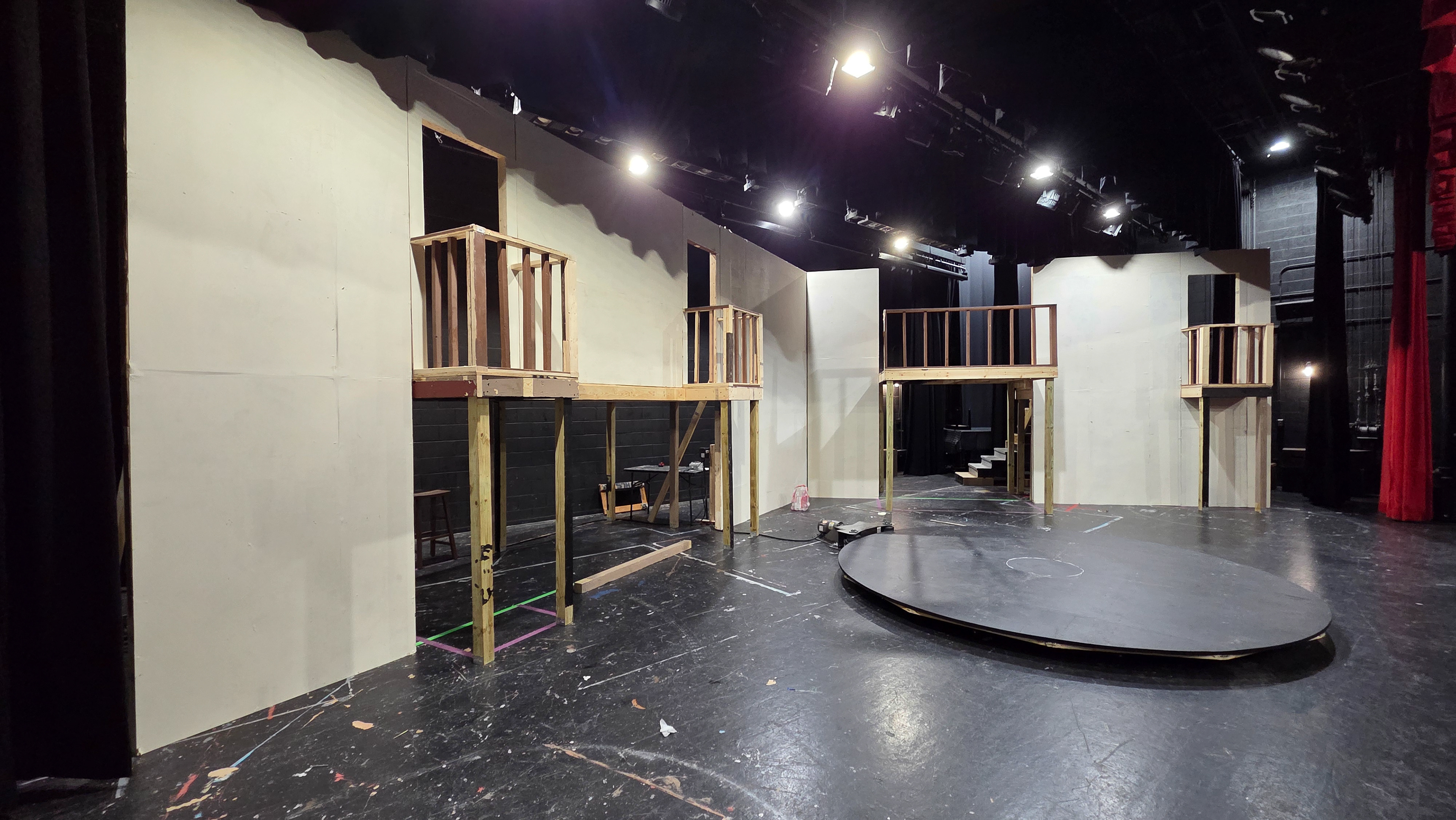
Additional Set Load-in Progress
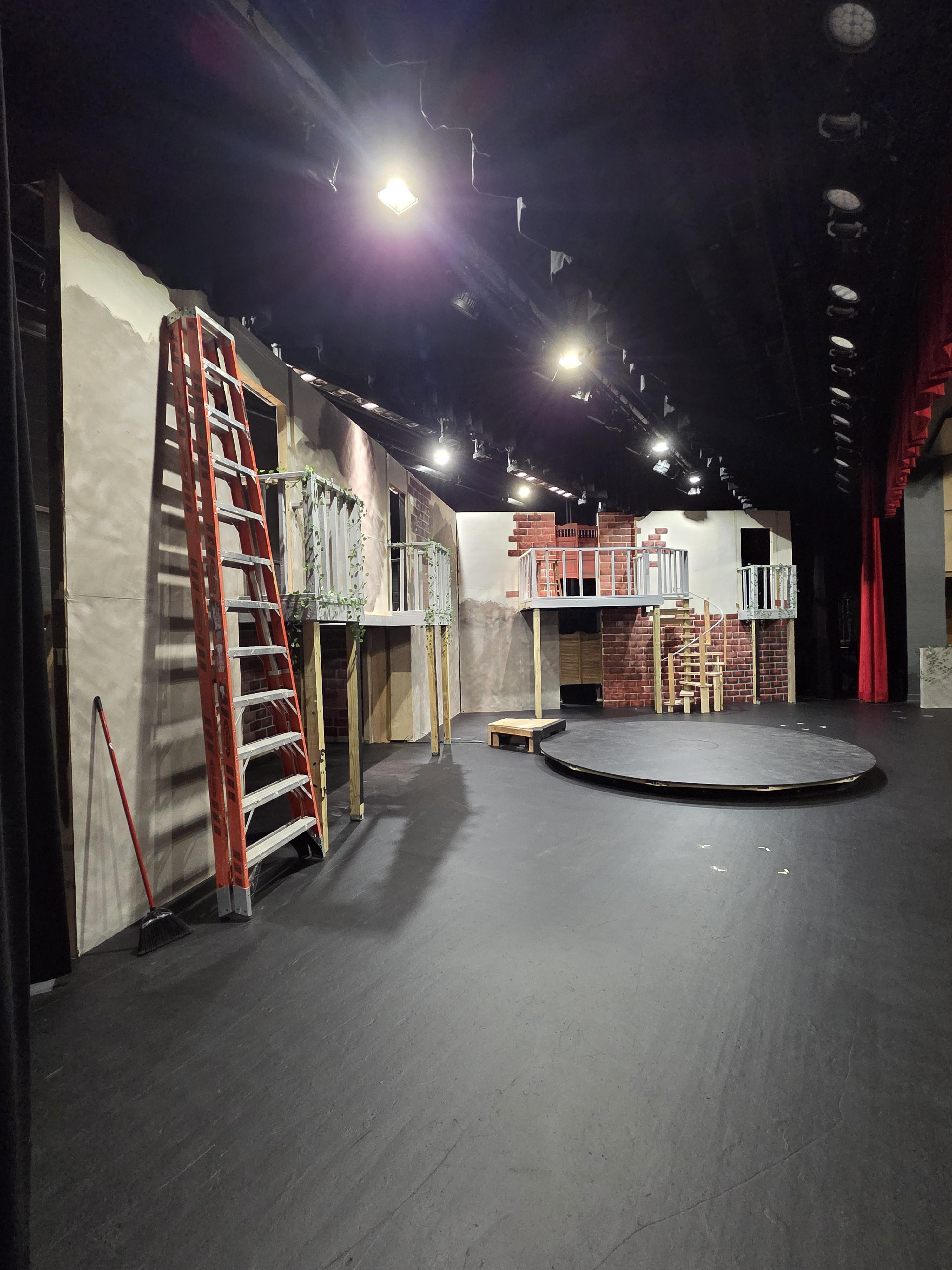
Floor Surfaces Freshly Painted and Initial Integration of the Outer Shell
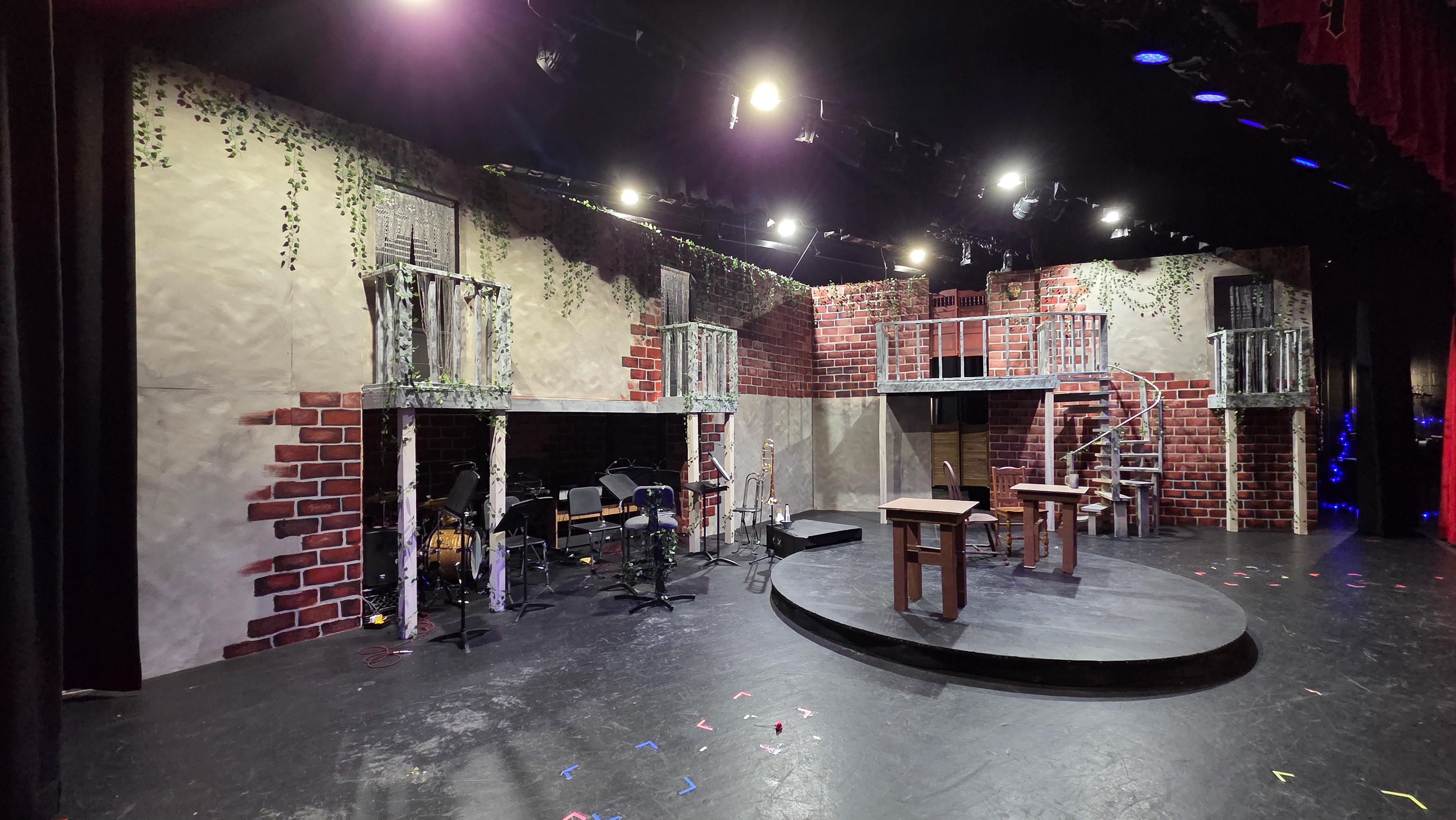
Set Load-in Completed
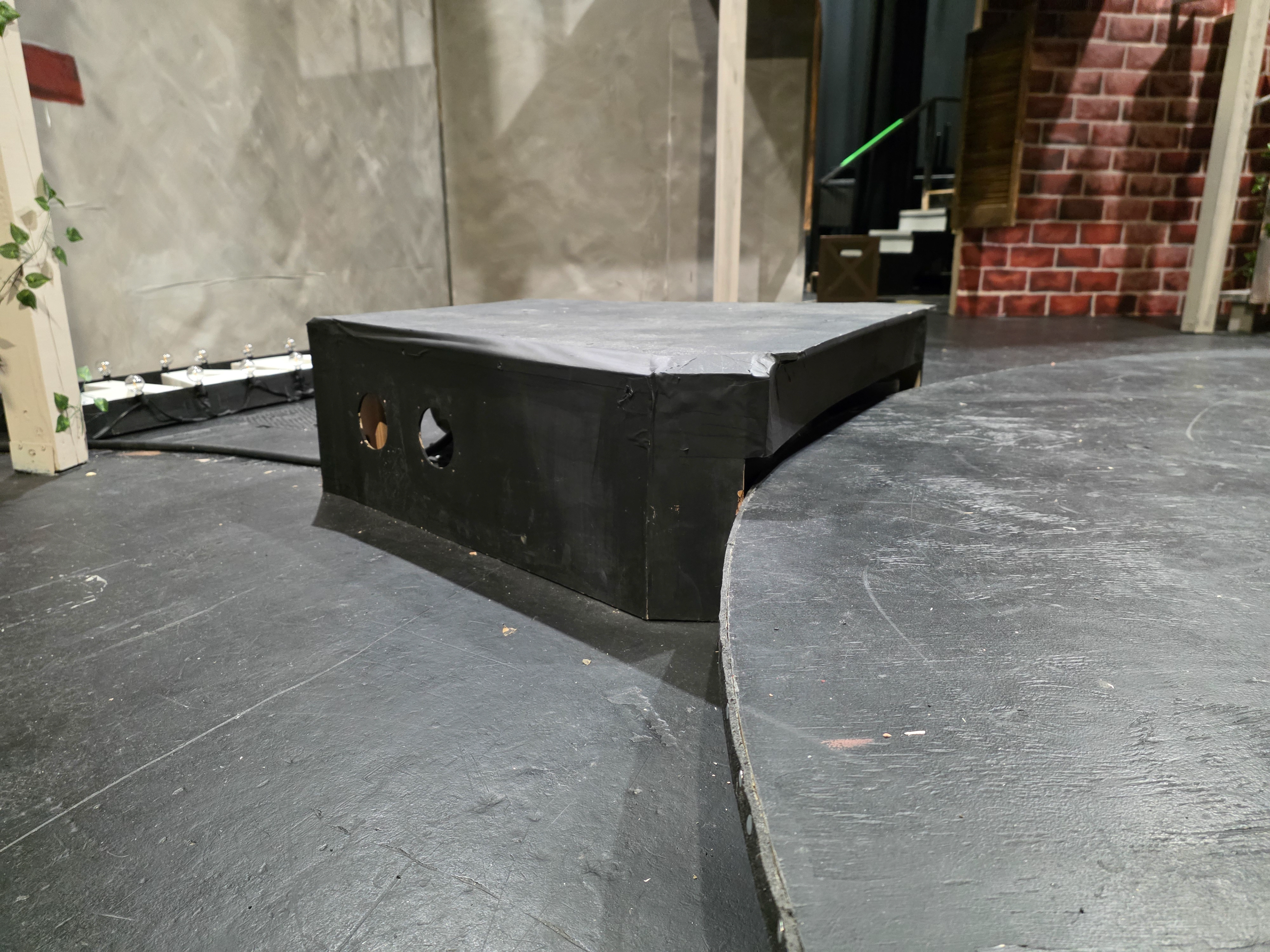
Cooling System Preparation
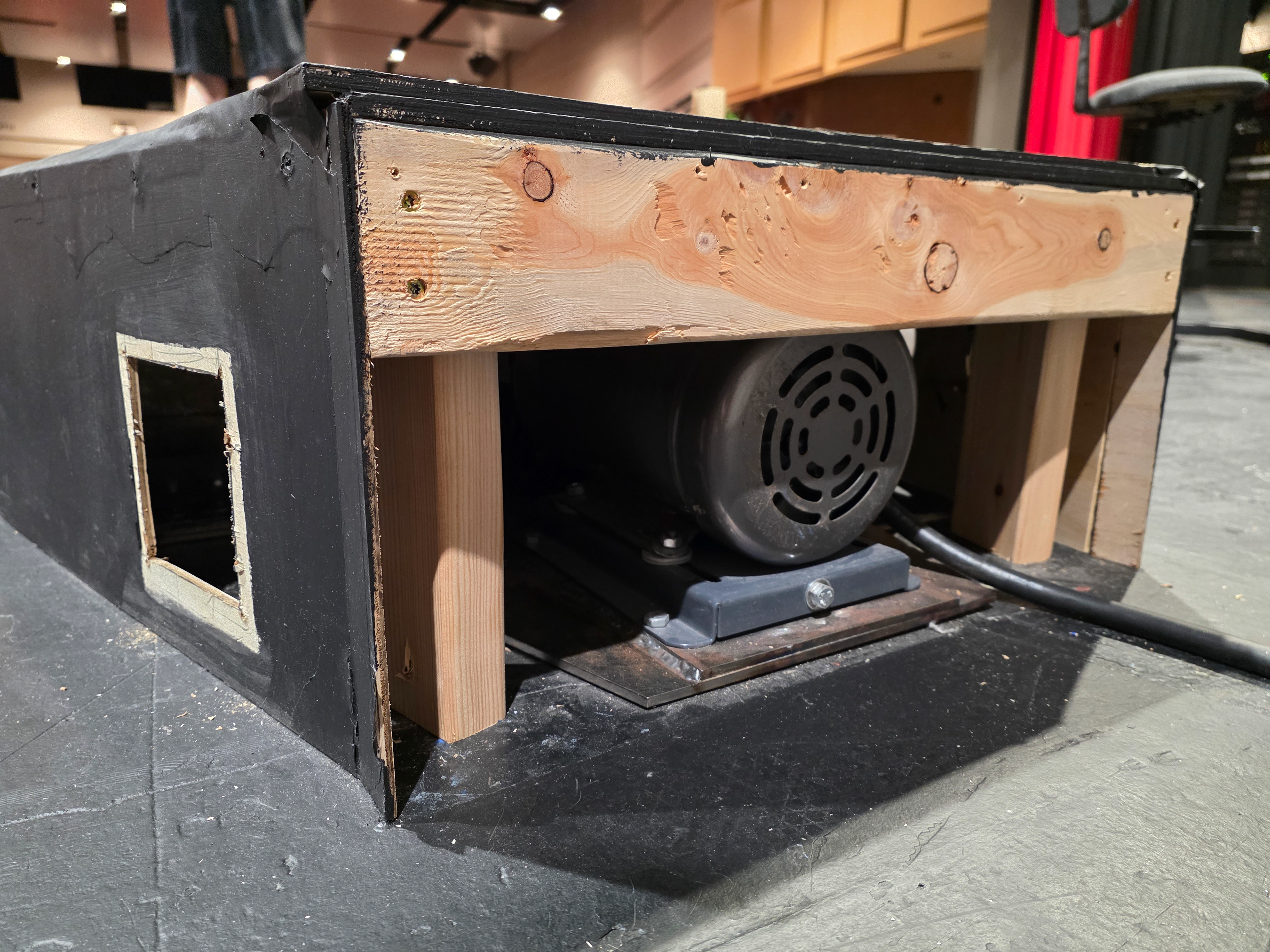
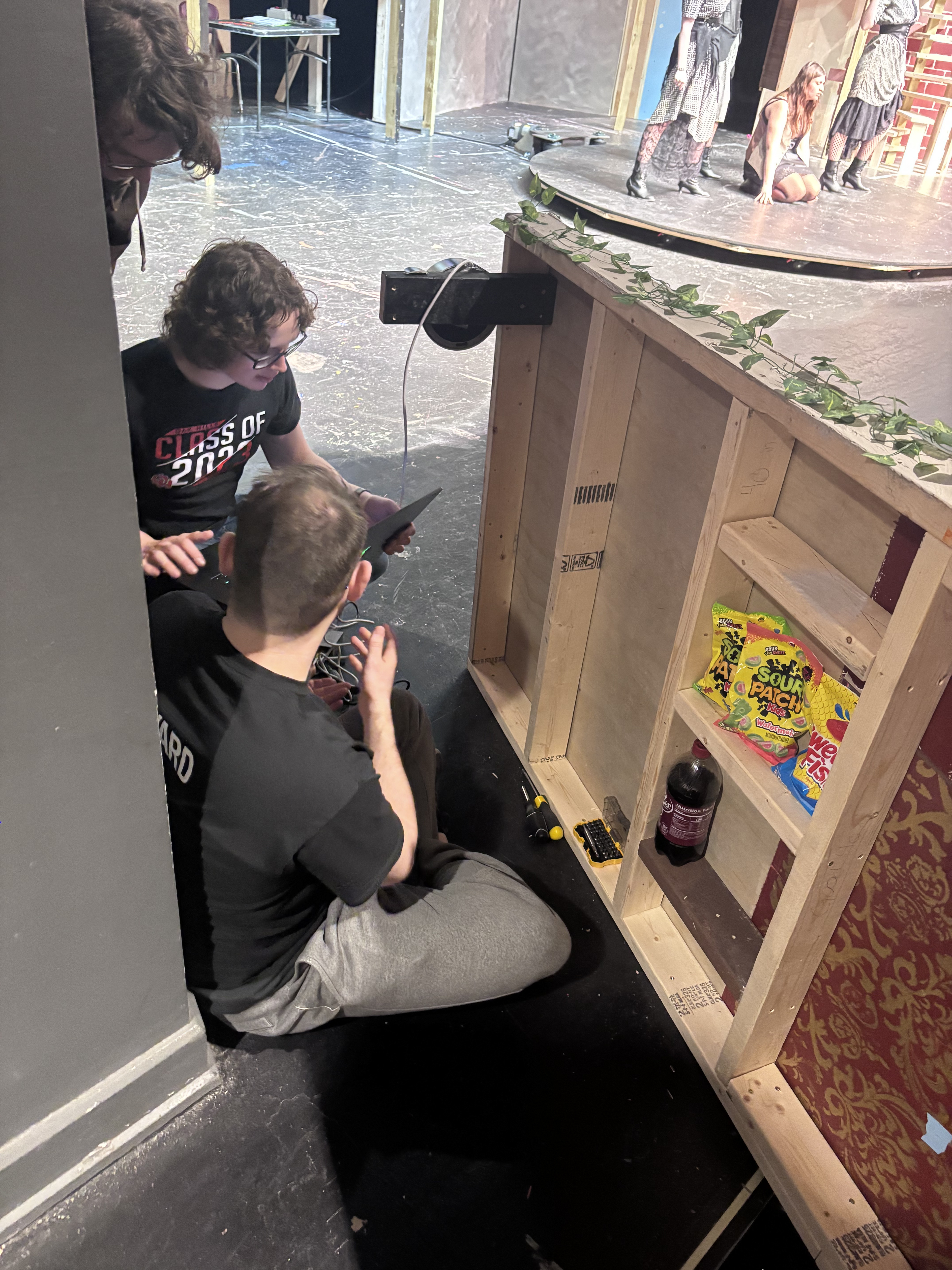
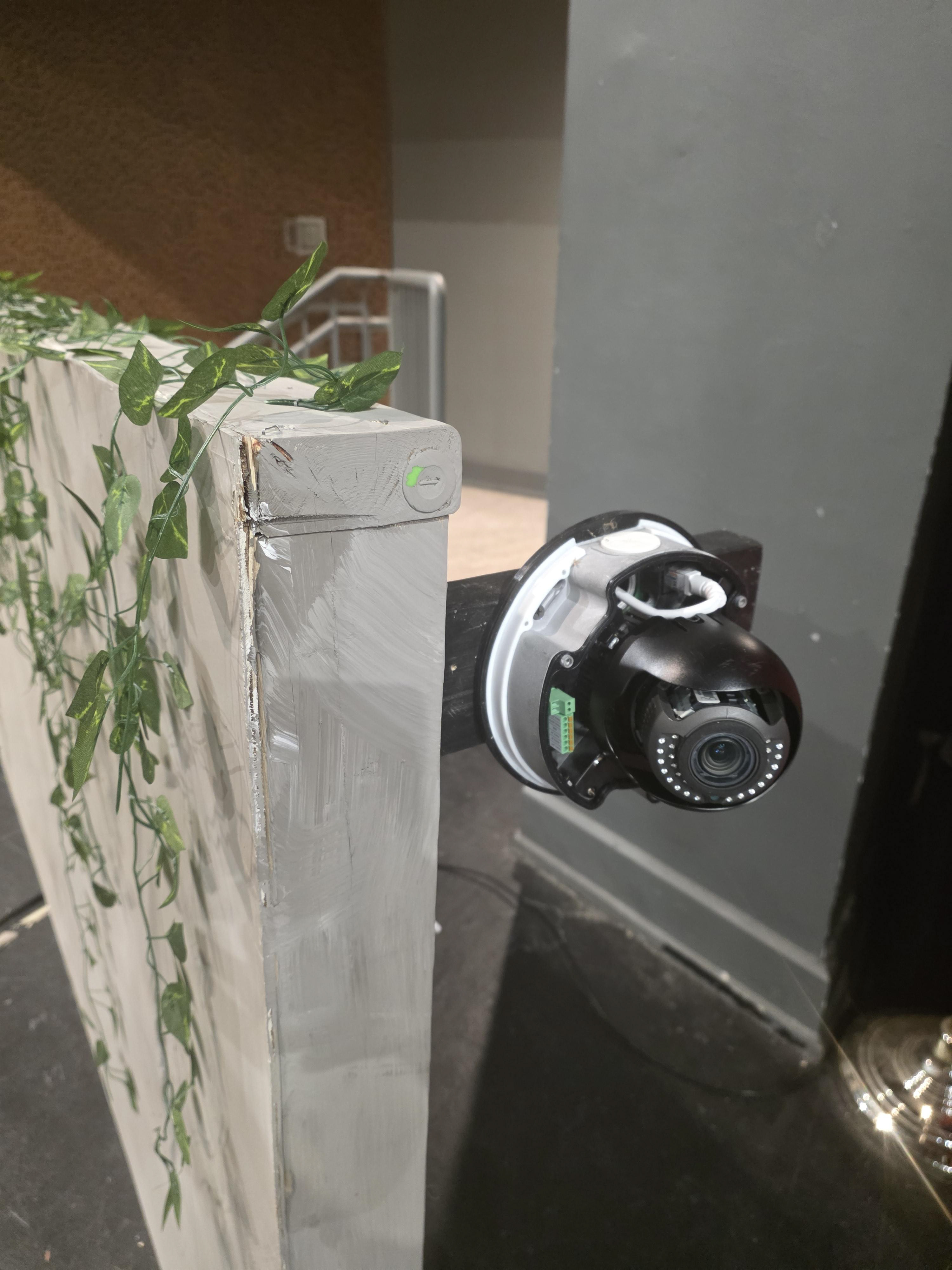
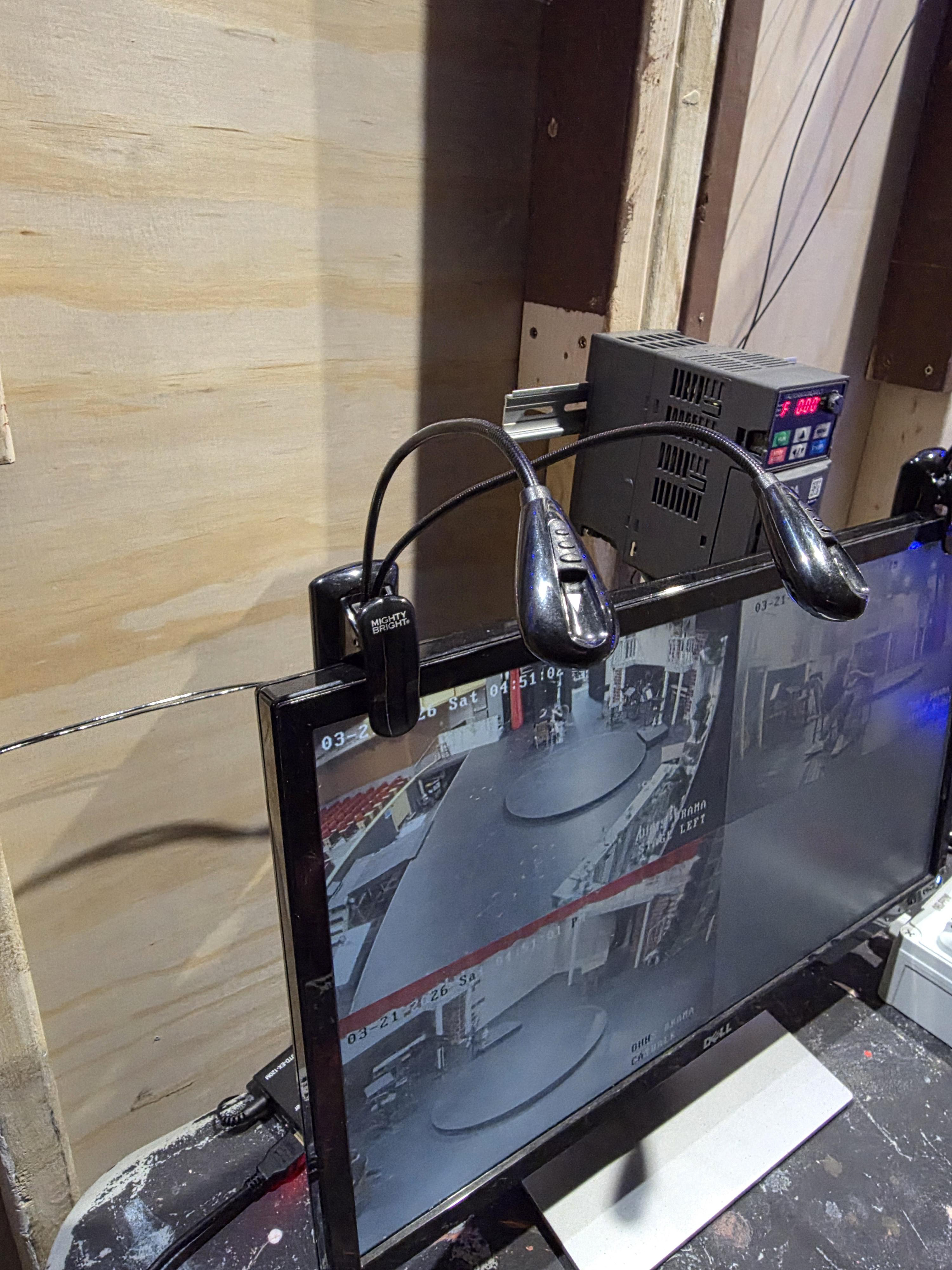
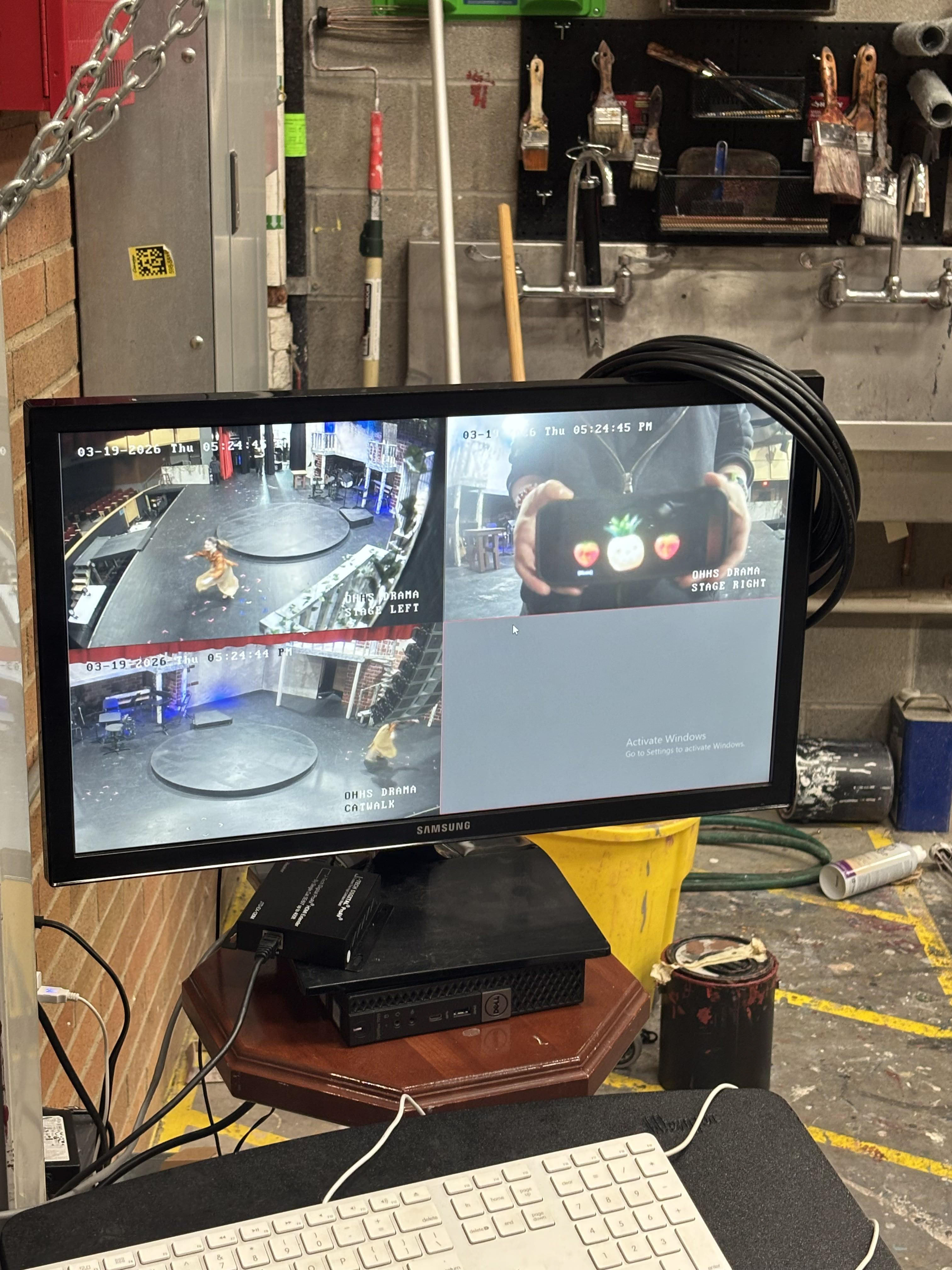
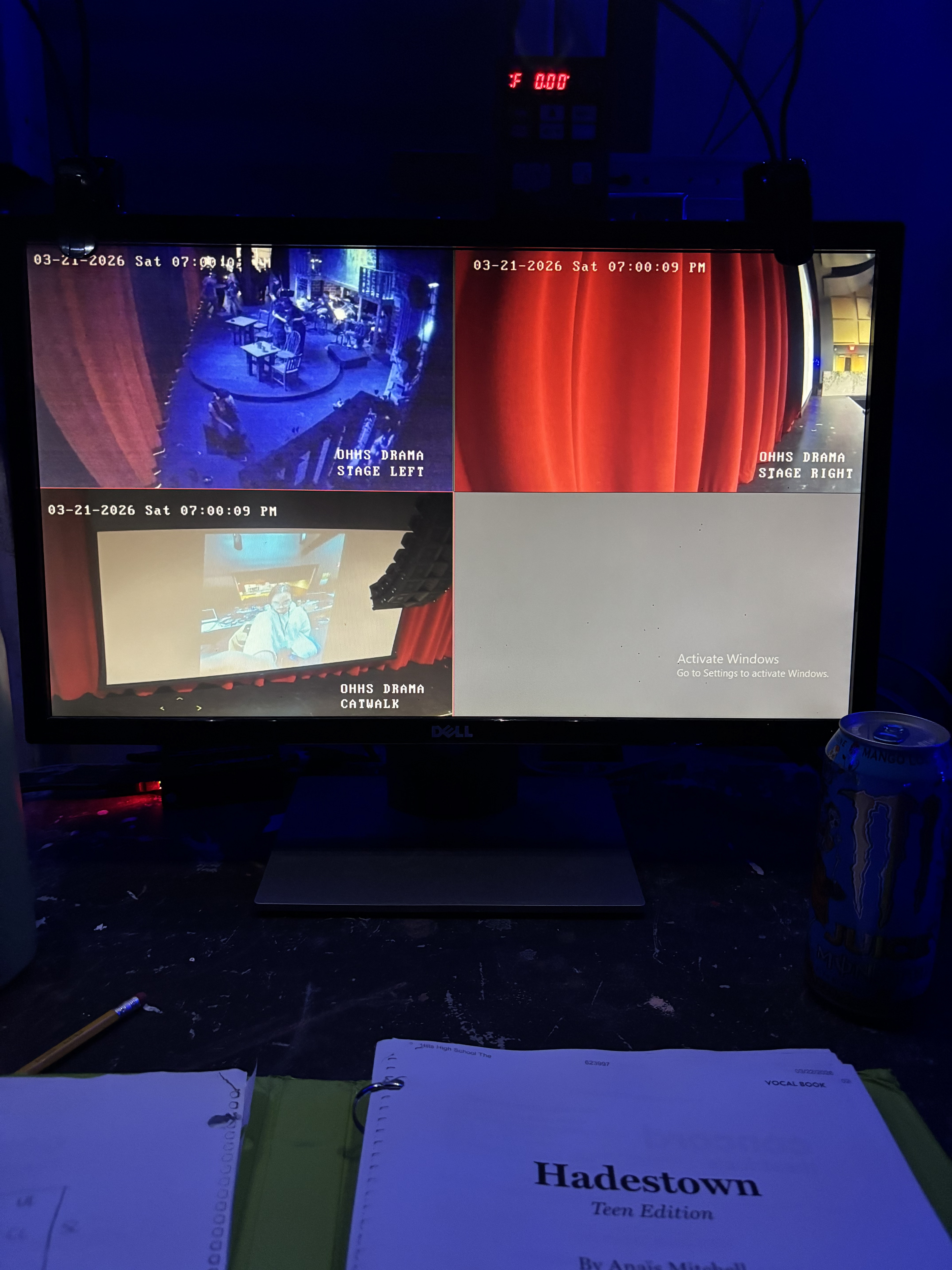
In the final stage of the project, a live camera monitoring system was integrated to provide real-time visibility during operation.
Because the turntable operator was positioned behind the set, the system could not be safely operated without a live video feed of the stage. The auditorium’s existing IP cameras were not accessible, so a custom multi-angle system was built using decommissioned security cameras.
Three camera positions provided full coverage:
- Catwalk view for full-stage visibility
- Elevated on-set view from stage left
- Ground-level view from stage right
Video was distributed over Ethernet and monitored simultaneously by the turntable operator, stage manager, and performers in dressing rooms.
This system became a critical part of the operational workflow rather than a secondary feature. It enabled accurate, coordinated, and safe use of the turntable despite the lack of direct line-of-sight during performance.
Mounting the Stage Right Camera
Mounted Stage Right Camera
First Views of Live Feed from Turntable Operator's Desk
Added Monitor for Stage Manager
Feed in-use Pre-Performance
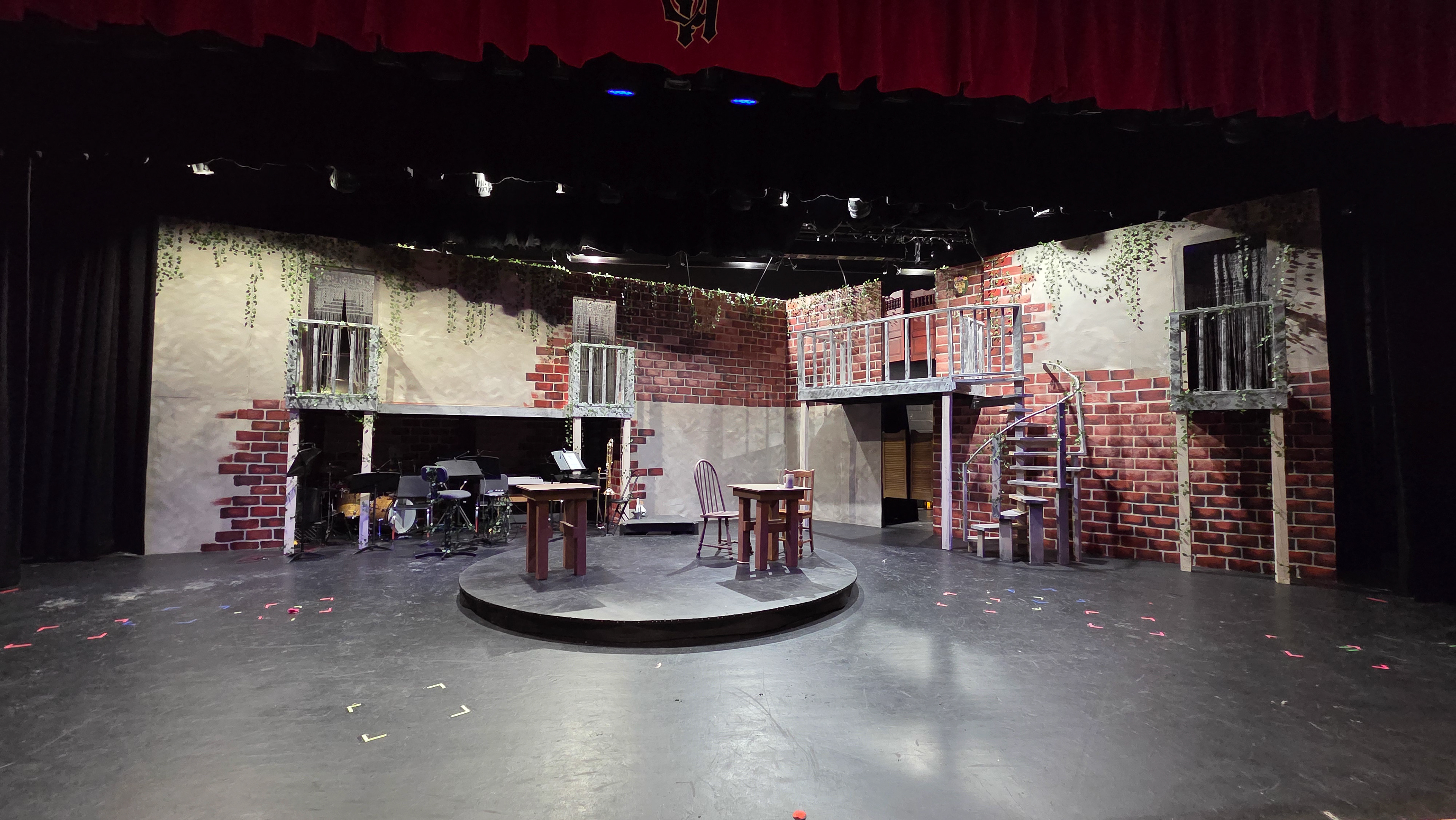
The completed system integrates:
- A 12 ft. rotating platform with a stationary center
- A traction-based drive system
- Variable speed and directional control via a remote analog interface
- A multi-point STO-based safety shutdown system
- An enclosed, air-cooled drive assembly
- A live camera monitoring system for real-time operation
The project evolved significantly from the original reference design, resulting in a more robust and reliable system. Each challenge required adapting the design to real performance conditions rather than relying on documentation alone.
The final build reflects not only fabrication, but commissioning, debugging, and systems-level problem solving.​​​​​​​

Technical Aspects of the Production are Fully Operational and Cleared for Performances

This project demonstrated that the most valuable part of building a live-performance system is not the initial plan, but the revision process.
At nearly every stage, theoretical solutions had to be adapted to real geometry, materials, loads, and user interaction.
Key takeaways from this project:
- Verify assumptions through physical testing
- Design for adjustability
- Separate safety logic from motion control
- Treat commissioning as part of the design process
- Select materials based on force and wear, not intuition
More than anything, this project strengthened my ability to break down a complex system into manageable subsystems and work through them methodically. What began as unfamiliar territory—from structural construction to drive system troubleshooting and final system integration—became a cohesive and controllable system through iteration and persistence.
The result is a system I am confident in, both in performance and in the process used to achieve it.
The final system successfully operated during 4 live performances, supporting multiple performers delivering varying dynamic loads throughout each 2+ hour show.
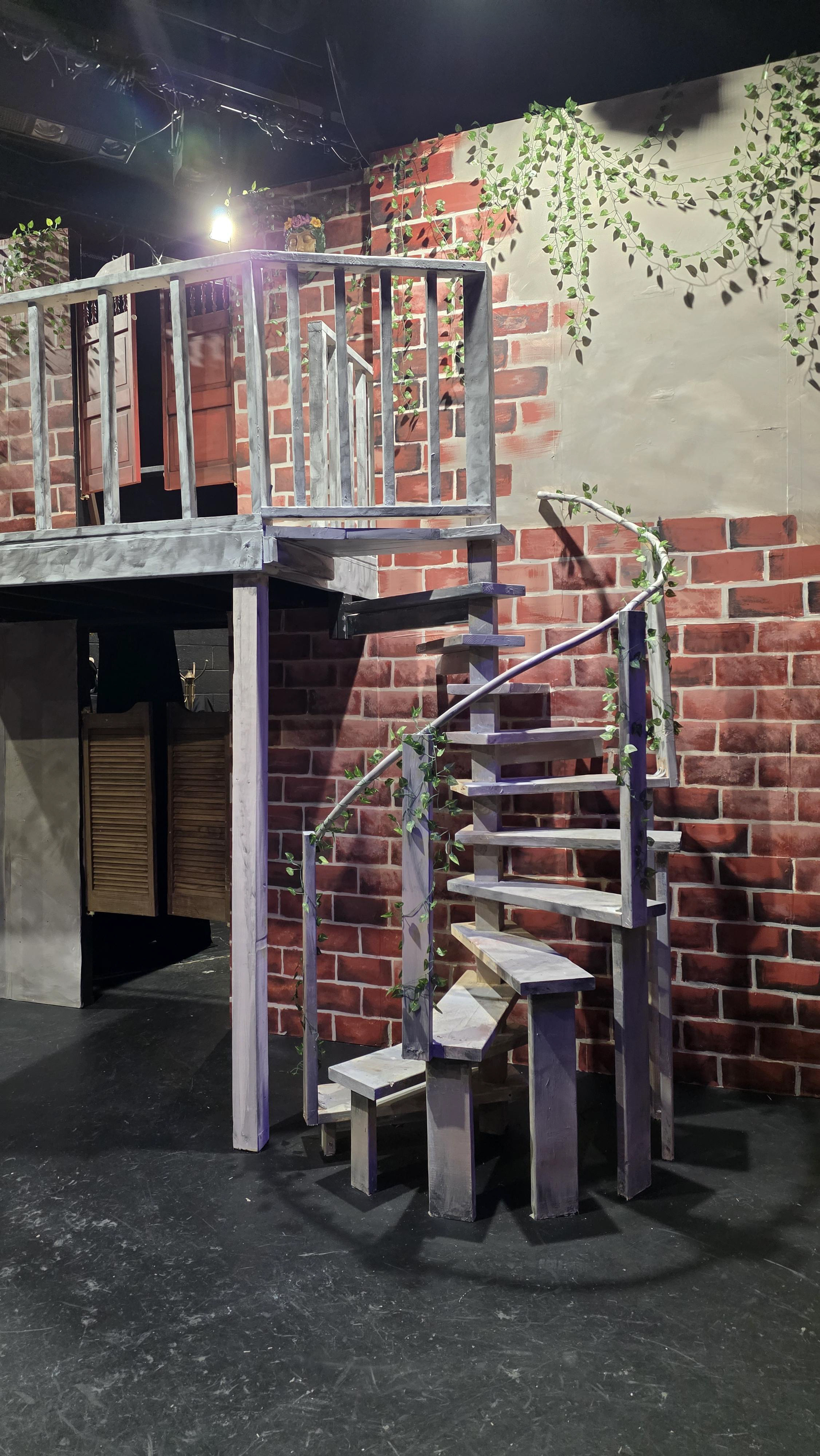
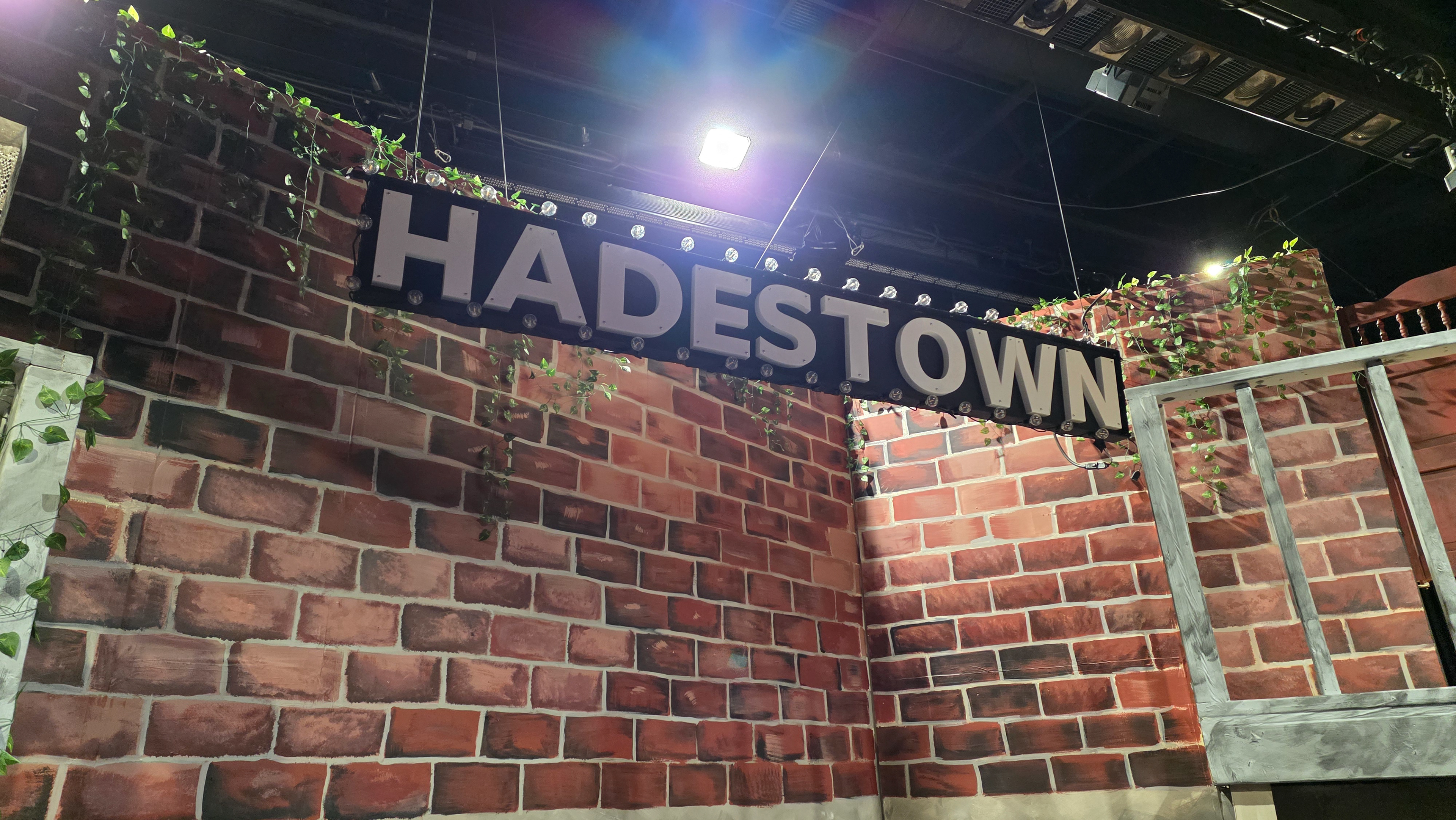
In addition to the turntable system, I designed and constructed the spiral staircase and the “HADESTOWN” marquee sign for the production.
I also mentored students and supported all technical aspects of the show, including lighting, scenic construction, system integration, and live operation.
Spiral Staircase
Spiral Staircase
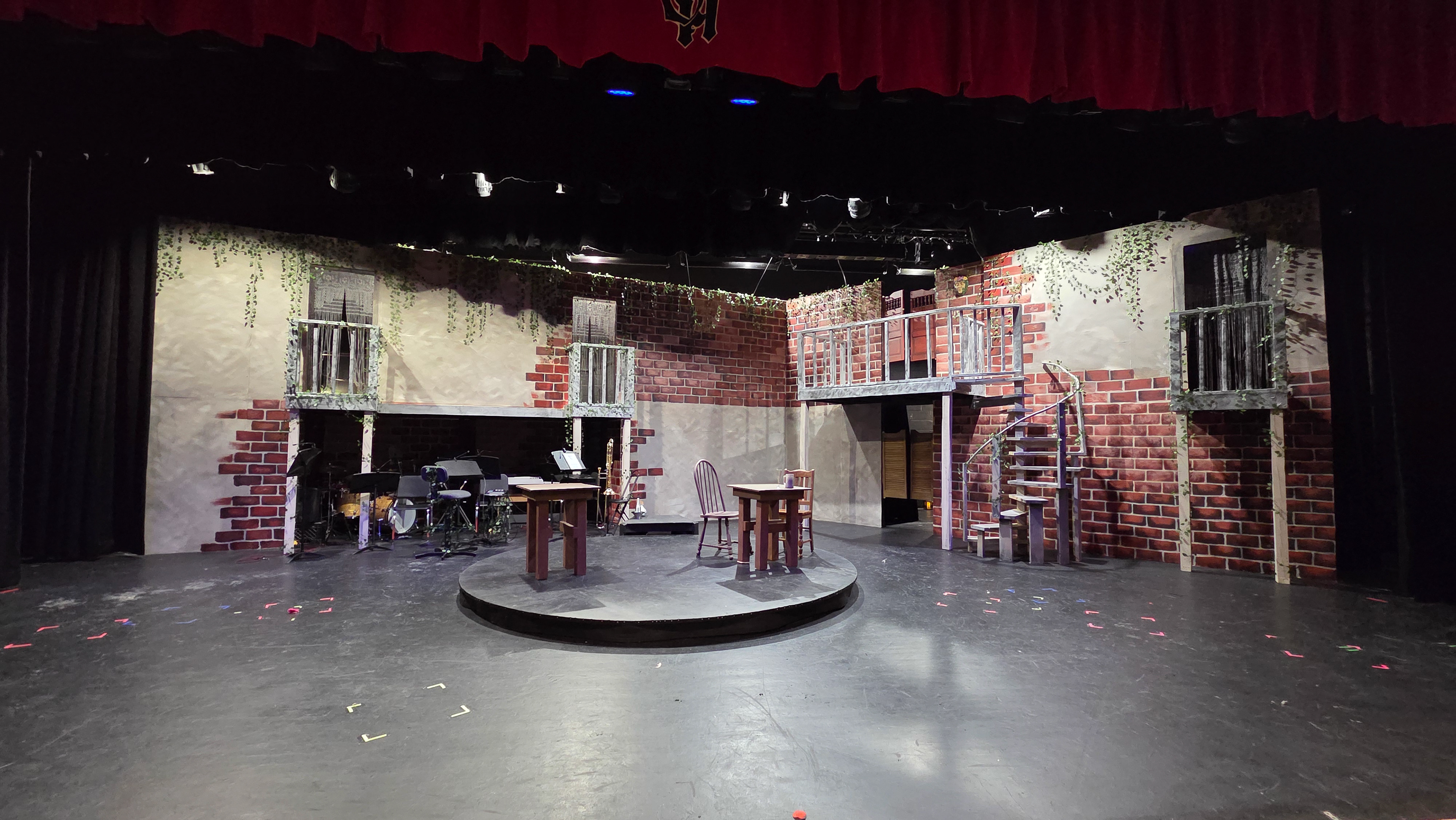
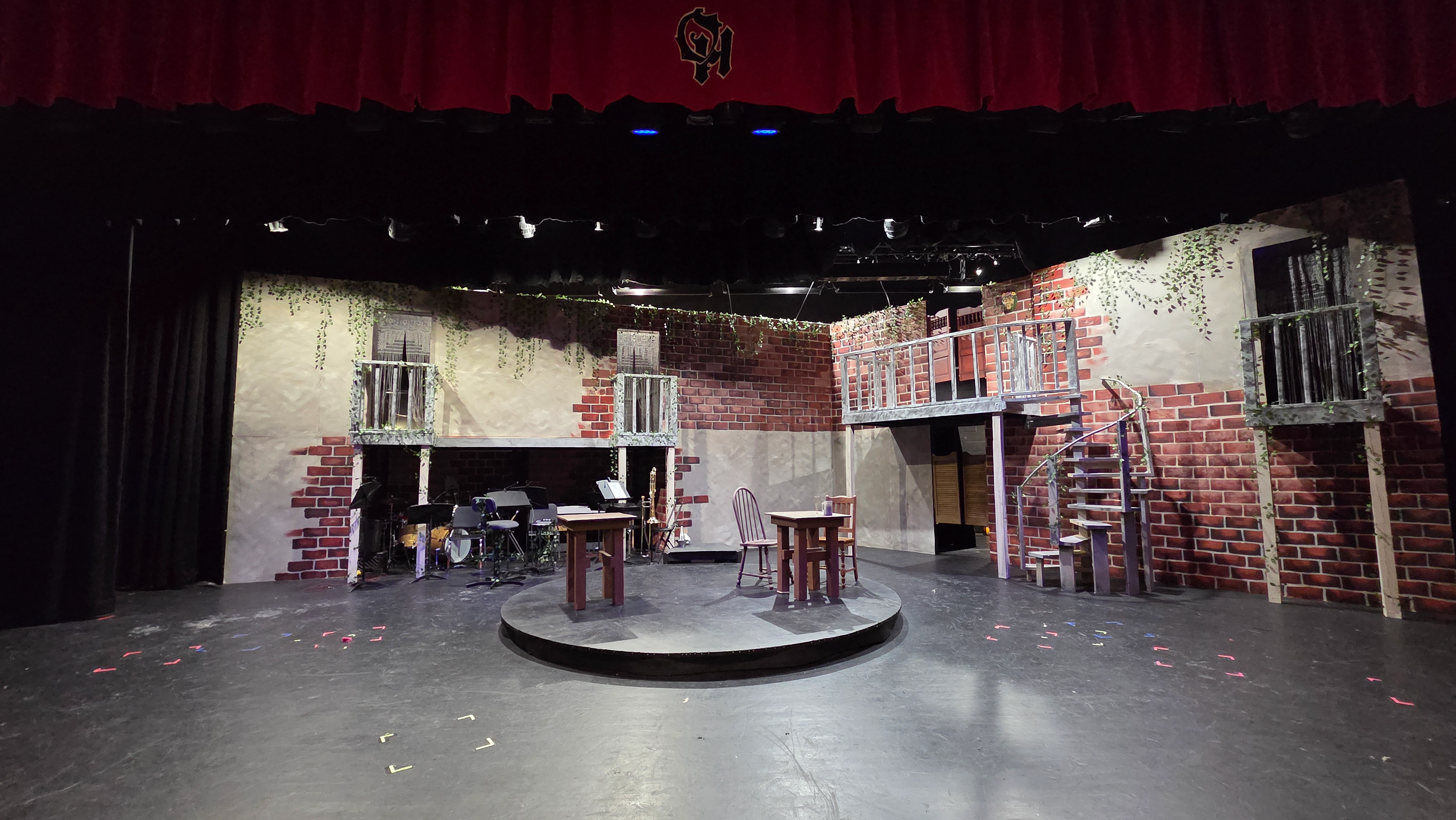
Fully Completed Set
Fully Completed Set
"HADESTOWN" Marquee Sign
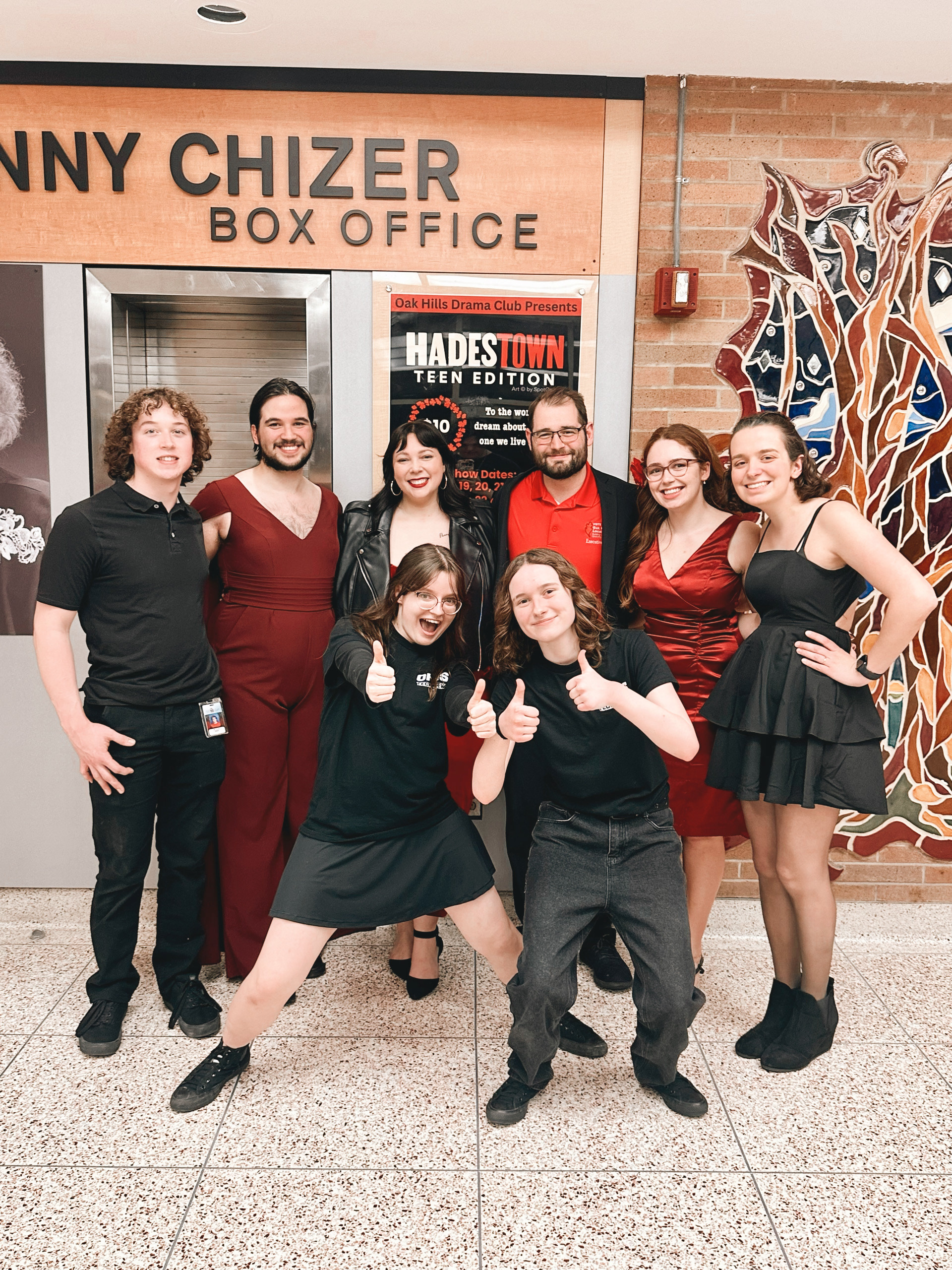
This project was made possible through the support and collaboration of the production team, including director Josie Wass, co-director Nick Rohr, choreographer Elana Radigan, auditorium manager Linus Ryland, and my production partners Cassie Williams and Josh Ward.
Additional credit goes to Nolan Philips, student head of automation and stage electrics, and the entire Oak Hills High School Drama Club for their dedication in bringing this project to life.

Pictured Left to Right: Corey Willett, Nick Rohr, Josie Wass, Ava Bredestege (front), Josh Ward, Jillian Hayden (front), Elena Radigan, Cassie Williams

Set Strike

Nolan Philips' Trombone Solo during "Our Lady of the Underground"

You may also like

Back to Top