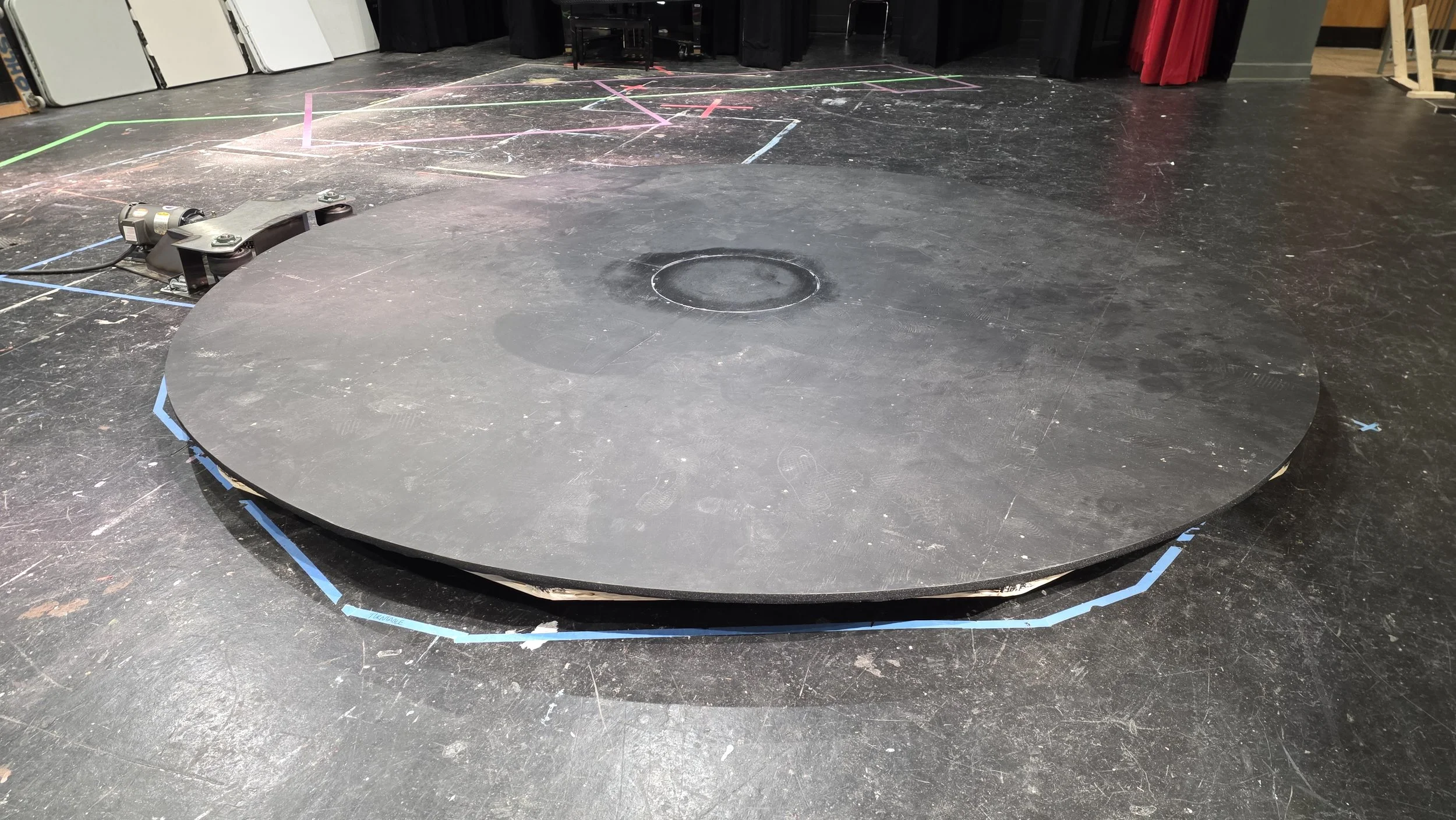
When people watched Hadestown, they saw a stage that moved effortlessly beneath the performers. They saw Orpheus surrounded by spinning workers, transitions that felt almost cinematic, and a piece of scenery that became part of the storytelling rather than just the set.
What they didn't see were the hundreds of hours spent making sure that movement happened safely, reliably, and consistently.
When I first took on this project, I expected to spend most of my time building.
I was wrong.
The physical construction was only one part of the process. The real challenge was learning how to think like a systems designer.
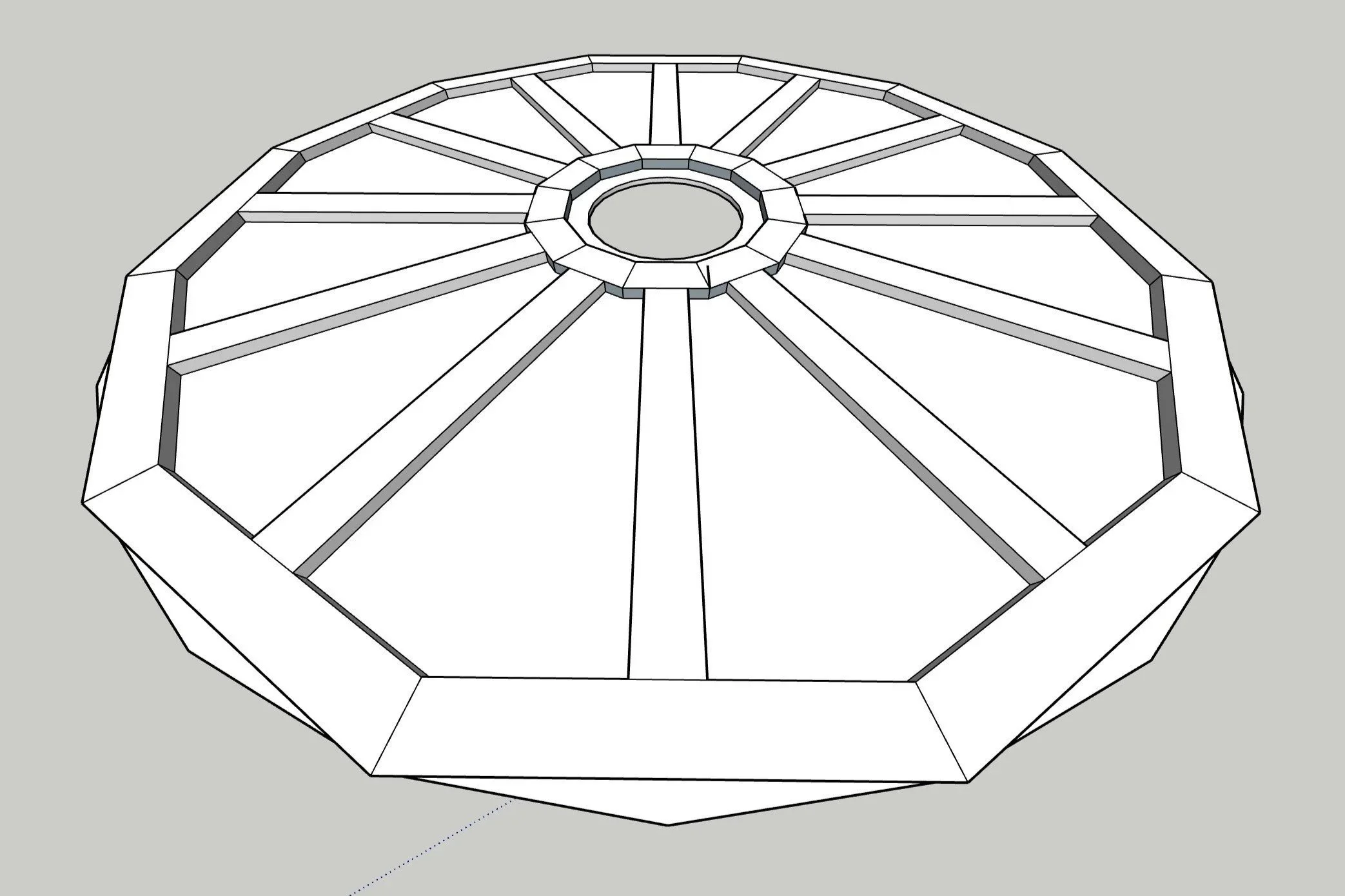
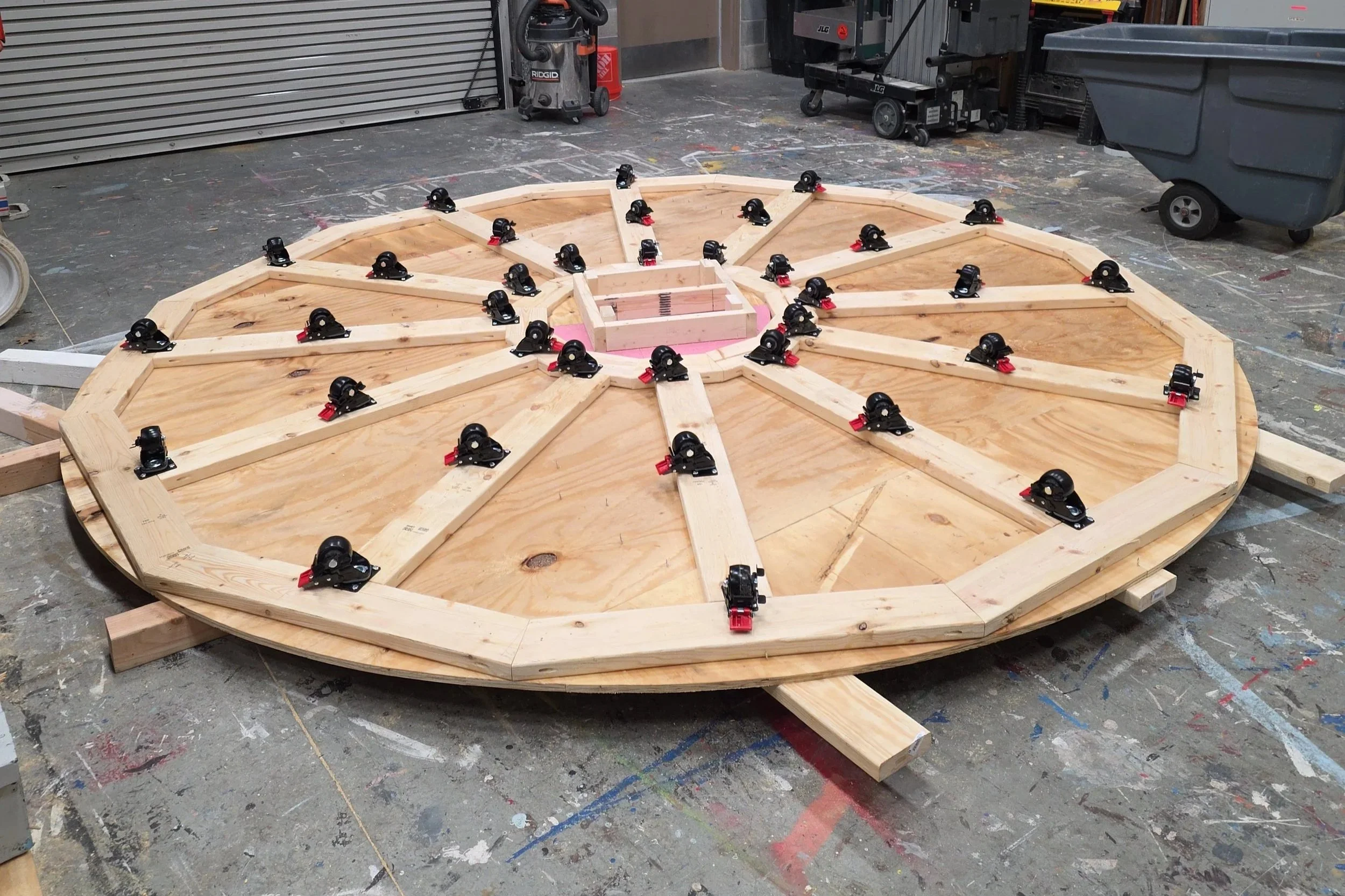
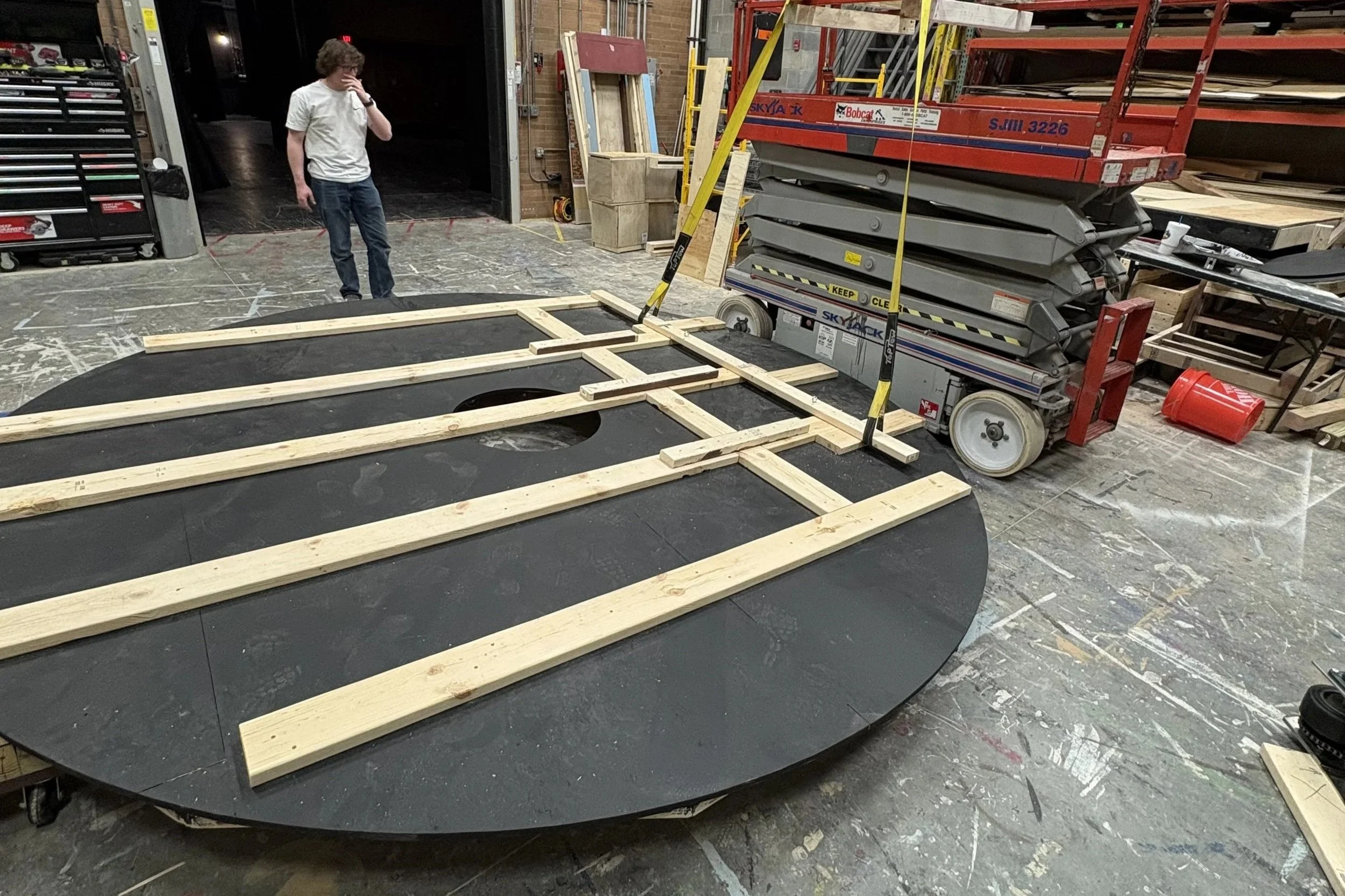
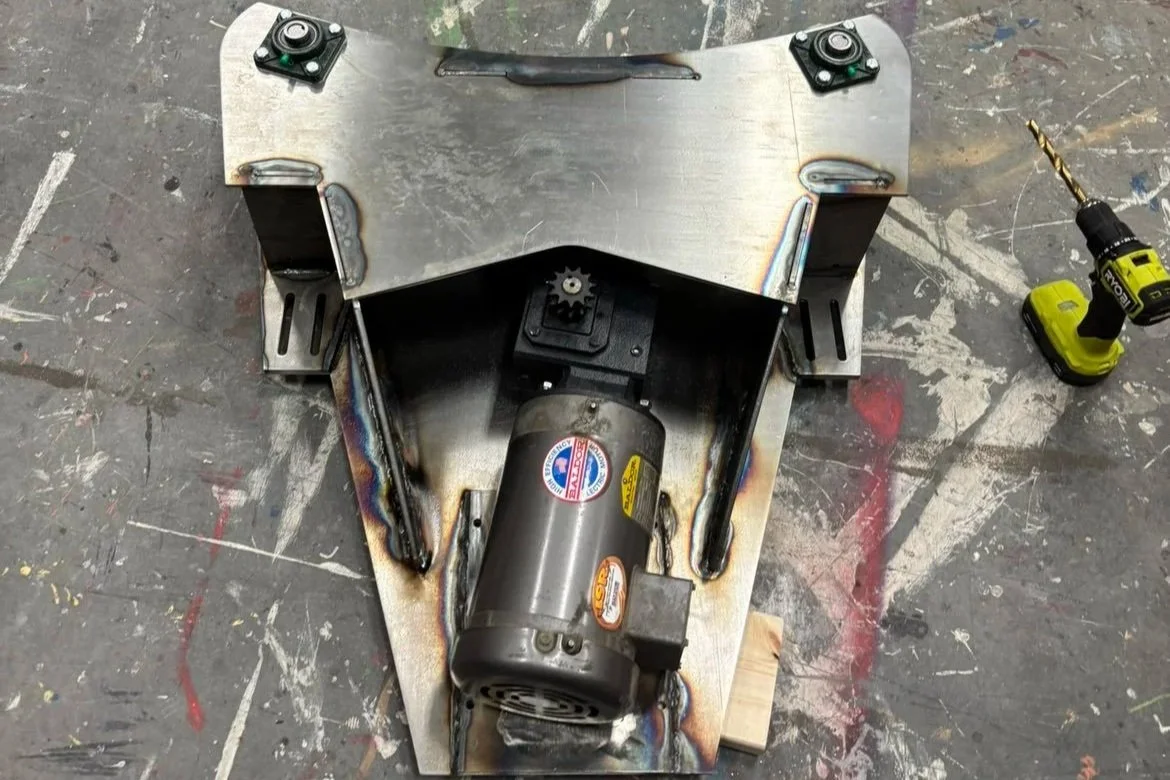
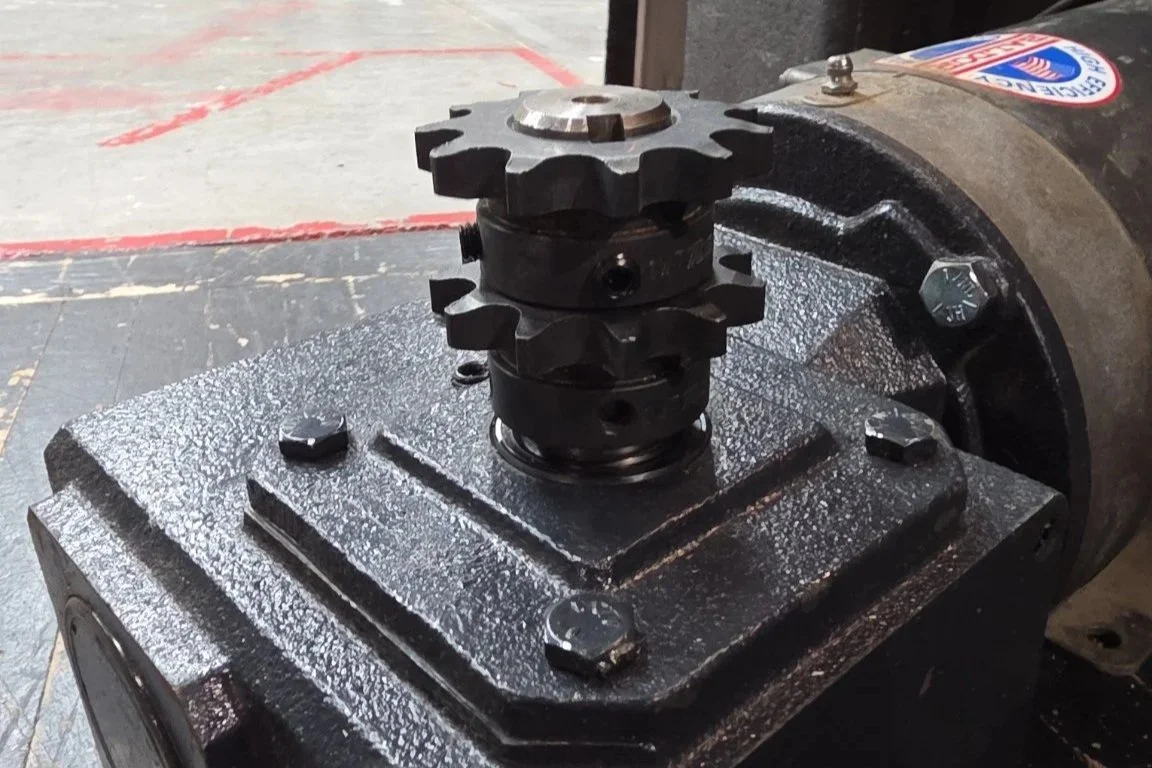
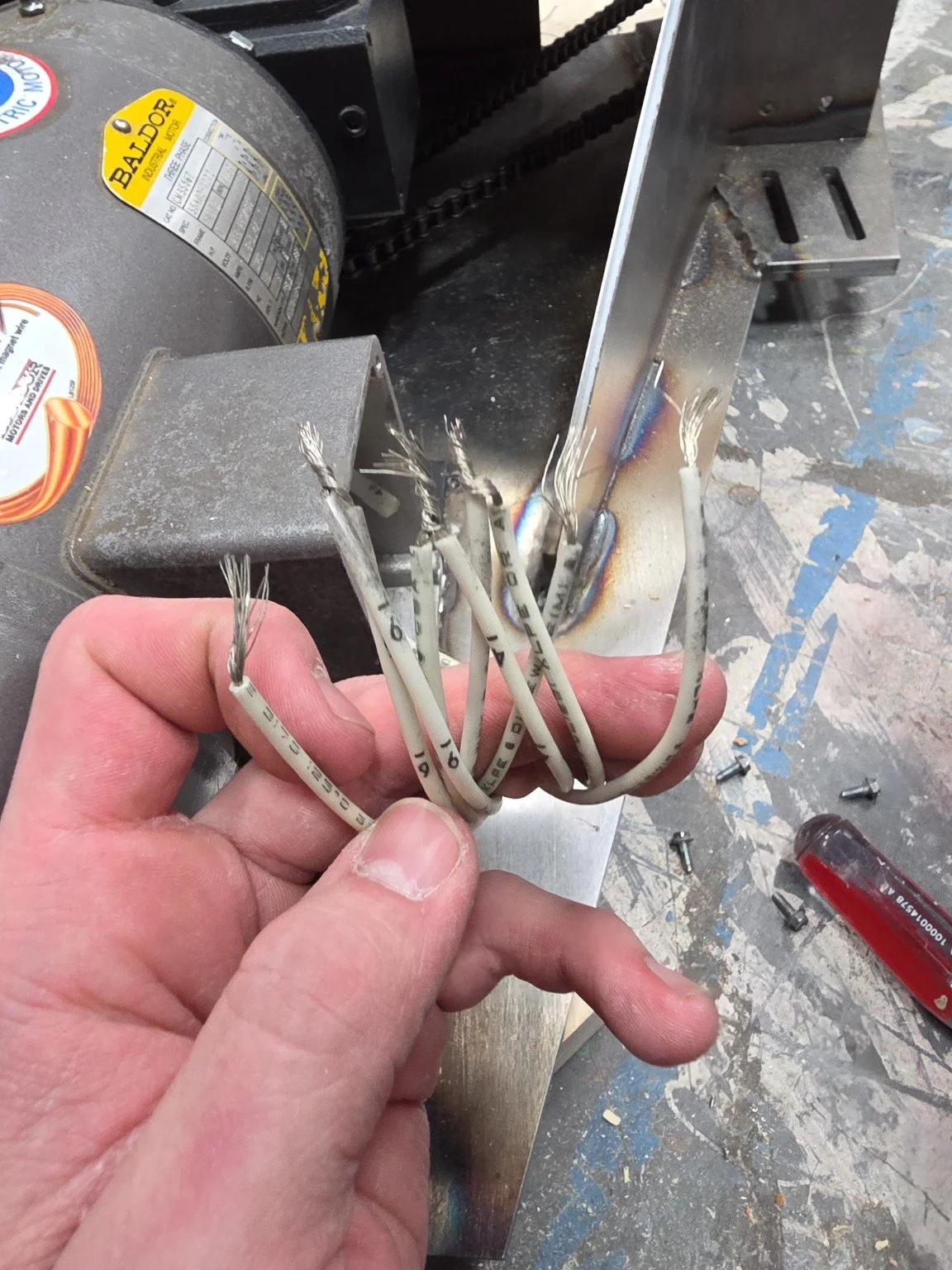
The project began with an open-source traction drive design (GitHub) that provided a solid starting point, but it quickly became clear that building a real machine is very different from following a set of drawings. Motor mounts didn't fit the documented frame size. The gearbox layout differed from the reference build. Chain geometry that appeared correct on paper became impossible once real tolerances entered the equation.
Instead of treating those problems as setbacks, they became the project.
One of the biggest lessons came surprisingly early: never trust documentation more than the hardware sitting in front of you. Every major subsystem had to be validated physically before moving forward. That mindset shaped everything that followed.
As the drivetrain came together, the project shifted from fabrication to integration. Every decision affected several others. Moving the motor changed chain alignment. Changing sprocket spacing affected clearances inside the frame. Solving one problem often revealed another.
That experience completely changed how I think about engineering.
Design isn't a sequence of isolated parts.
It's a conversation between systems.
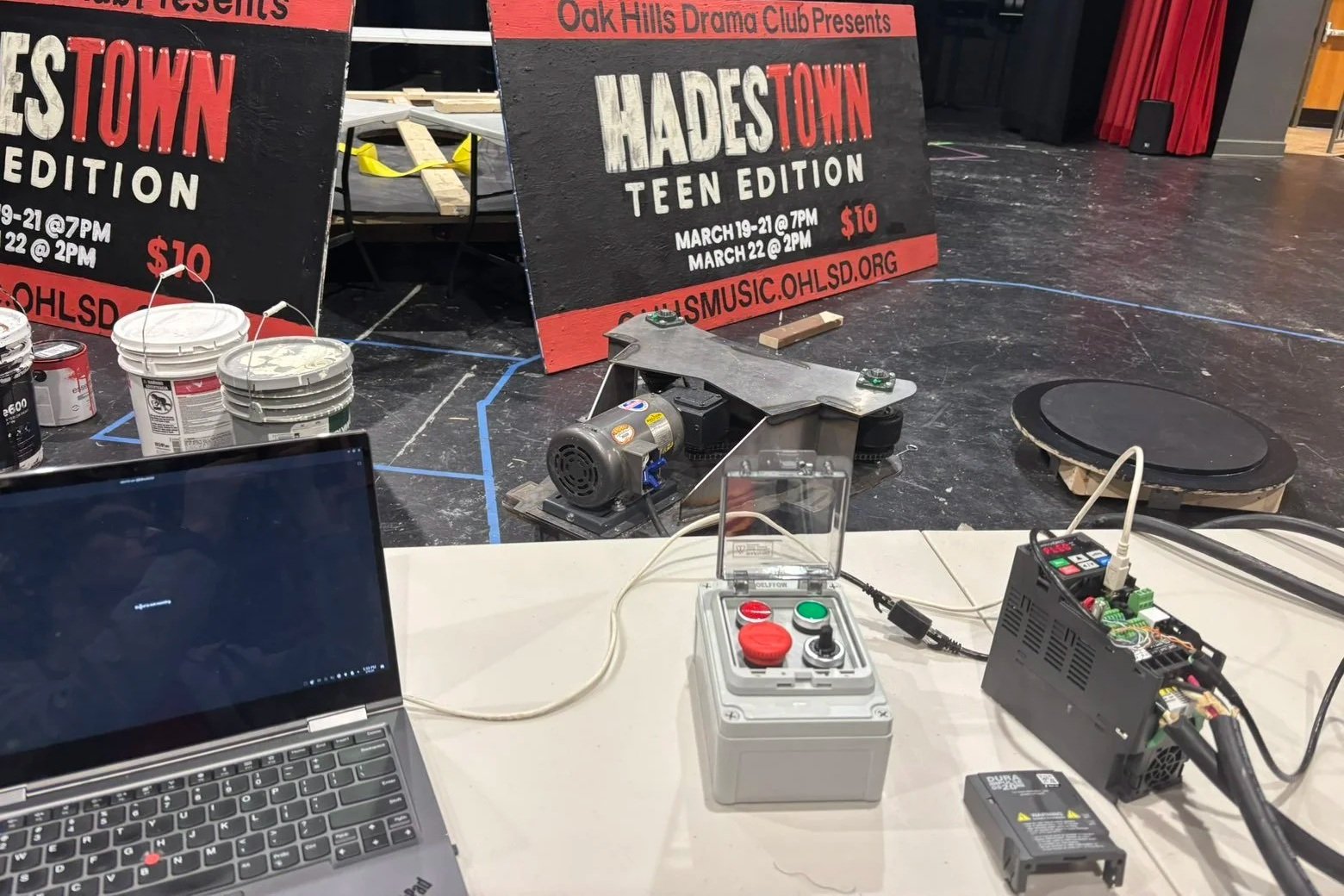
The electrical side of the project taught me a similar lesson. Building the controller wasn't particularly difficult compared to commissioning it. The Variable Frequency Drive appeared to be configured correctly, yet stubbornly ignored external commands. Hours of troubleshooting eventually led to a single higher-level parameter that kept the drive under keypad control despite every other setting appearing correct.
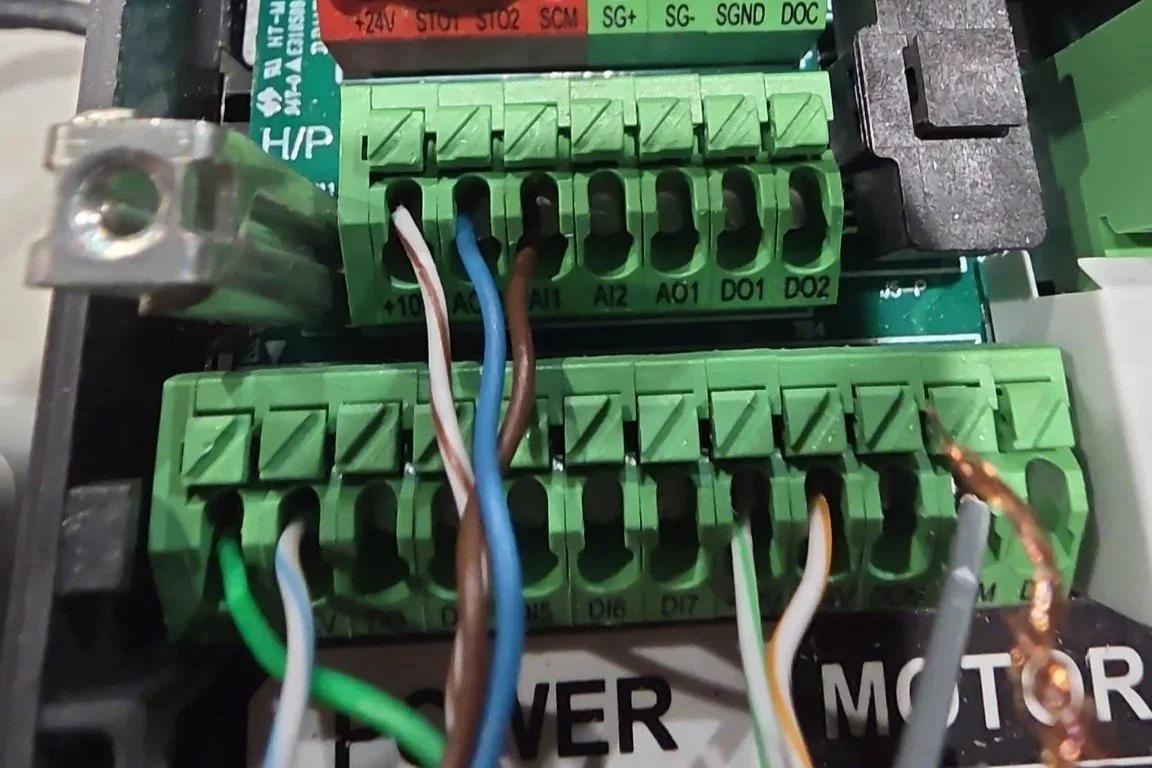
It was a reminder that a system can be almost right while still failing completely.
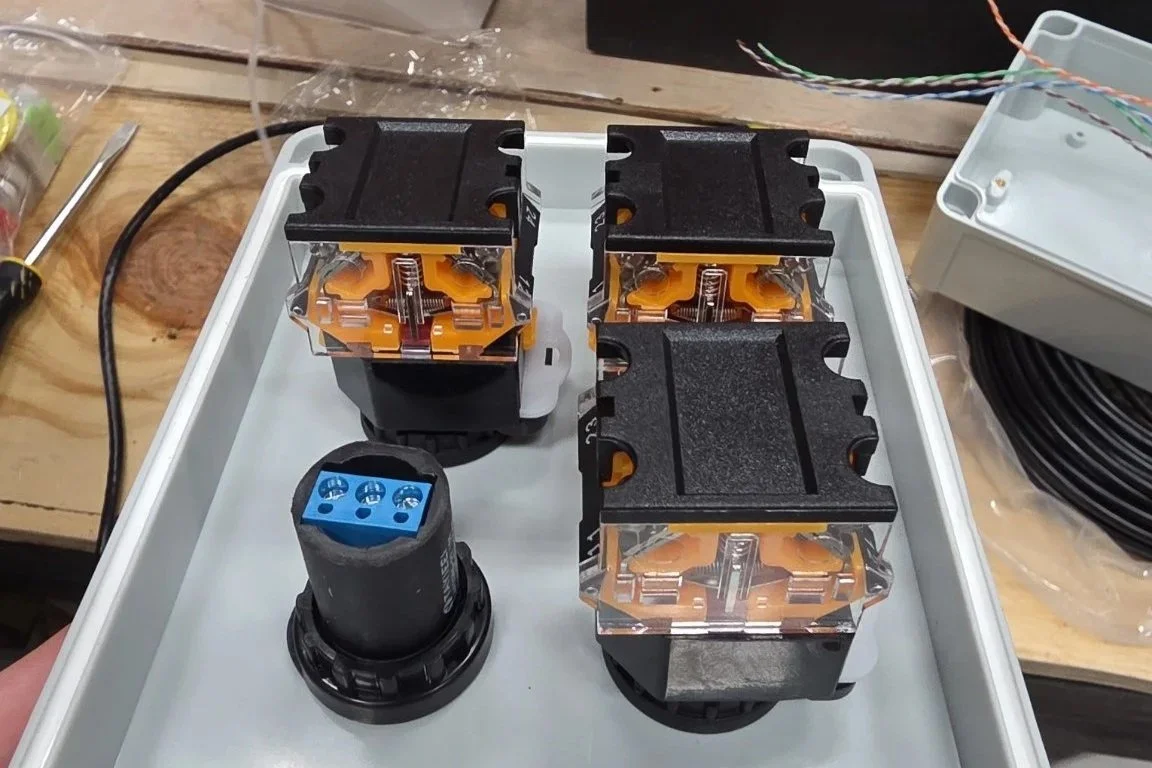
Safety became another defining moment in the project. Early control logic treated the emergency stop as just another control input. The final design instead used the VFD's Safe Torque Off (STO) functionality, physically removing the drive's ability to generate torque rather than simply interrupting a command signal.
That change represented something bigger than better wiring.
It represented a shift in mindset—from making the machine work to making the machine trustworthy.
Then came problems no CAD model could predict.
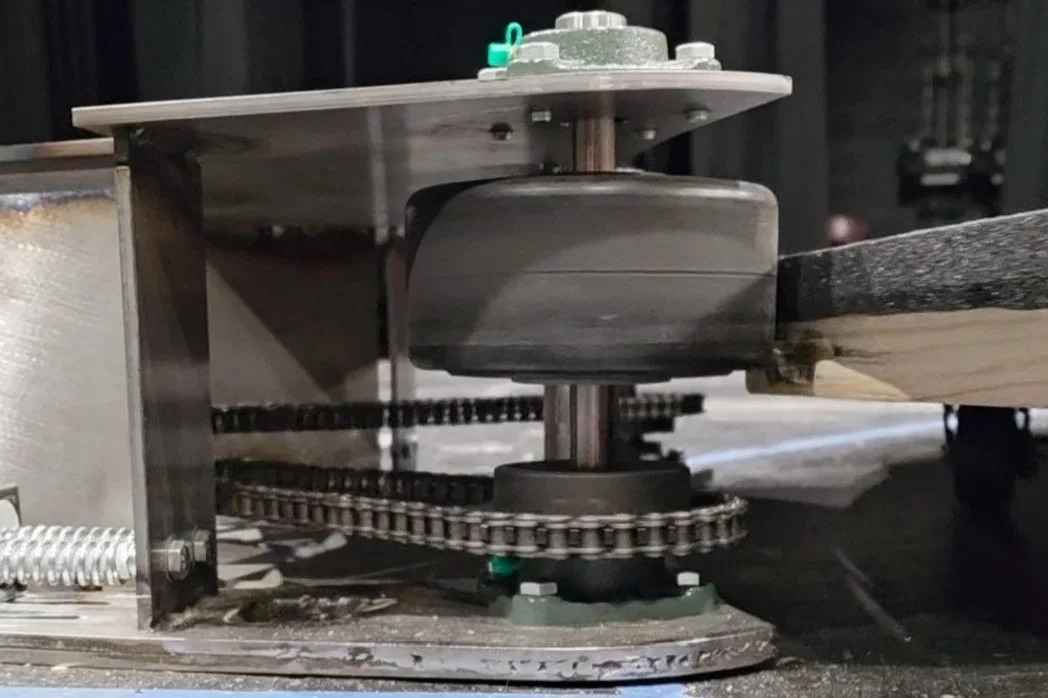
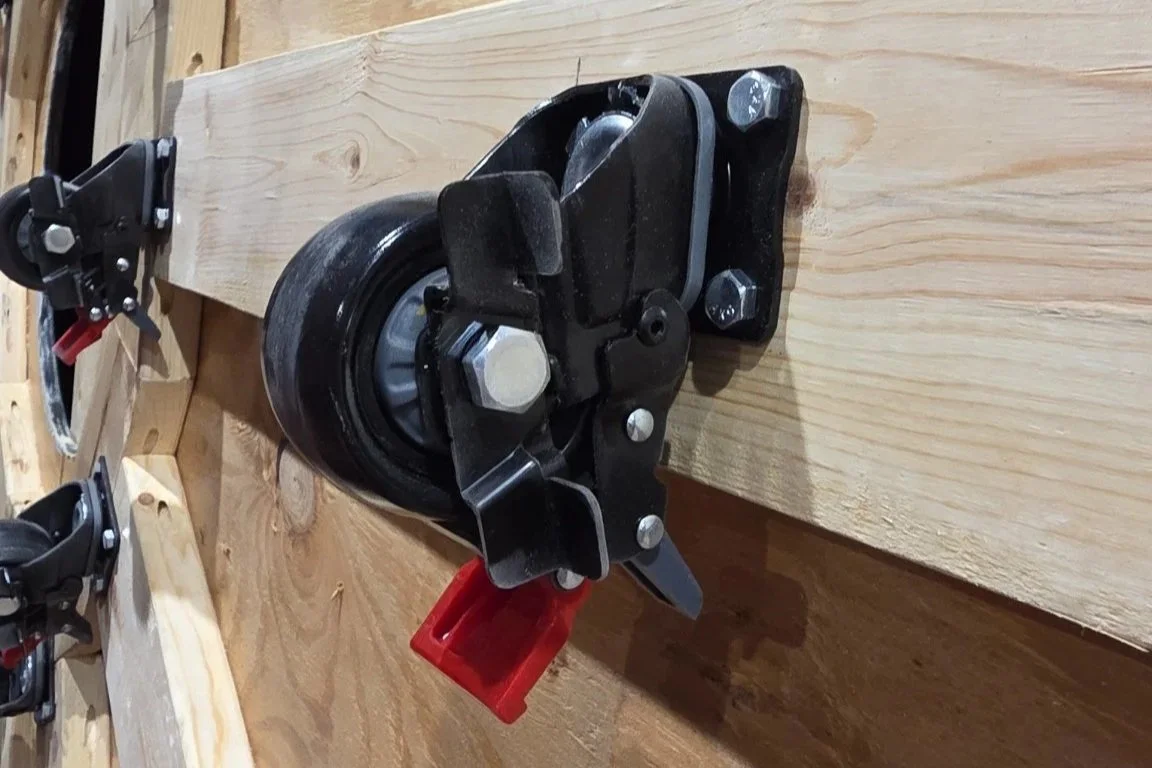
Grip tape that initially seemed like the perfect traction material peeled apart almost immediately under sustained shear forces. The plywood platform acted like a giant speaker, amplifying wheel vibration into a low-frequency rumble that echoed throughout the auditorium. Even after the machine was mechanically complete, refining its behavior became just as important as building it.
By opening night, the project had evolved far beyond its original design.
The finished system included a traction-driven mechanical platform, custom analog controls, distributed emergency stops, live camera monitoring for operation without line-of-sight, and countless small improvements discovered only through testing and iteration.
More importantly, it worked.
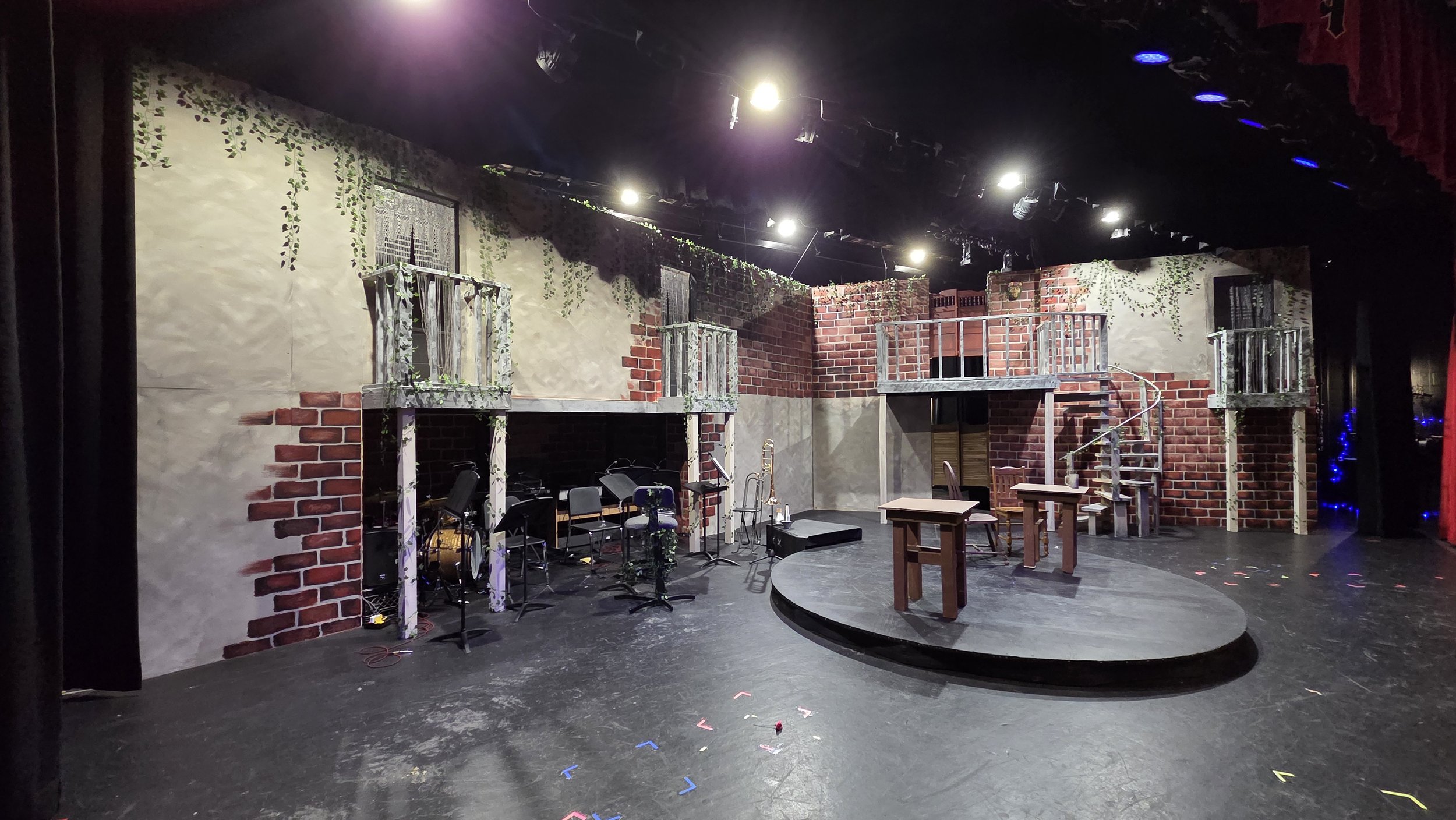
Fully Completed Set
Across four live performances, the turntable safely carried multiple performers through two-hour productions while becoming one of the visual centerpieces of the show.
Looking back, I don't think the most valuable thing I built was the turntable itself.
It was a way of thinking.
This project taught me to verify assumptions instead of accepting them, to design for adjustment instead of perfection, and to view commissioning as an essential part of the design process rather than something that happens after the design is finished.
As an industrial design student, those lessons have become just as valuable as any CAD model or fabrication technique I've learned.
Because in the end, great design isn't about creating something that works the first time.
It's about building something people can trust when it matters most.
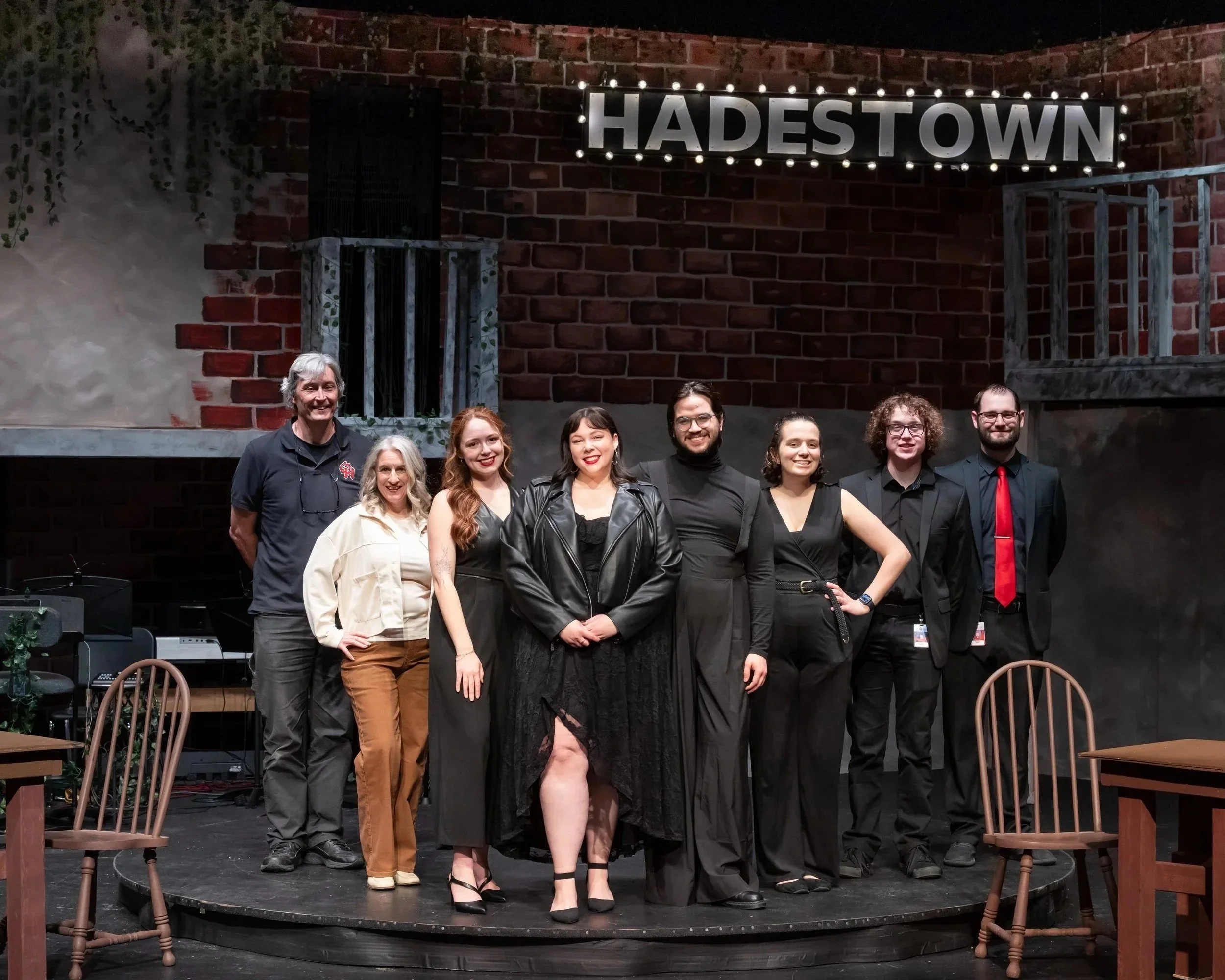
Pictured Left to Right: Linus Ryland, Amy Thompson, Elana Radigan, Josie Wass, Nick Rohr, Cassie Williams, Corey Willett, Josh Ward
